What You Pay
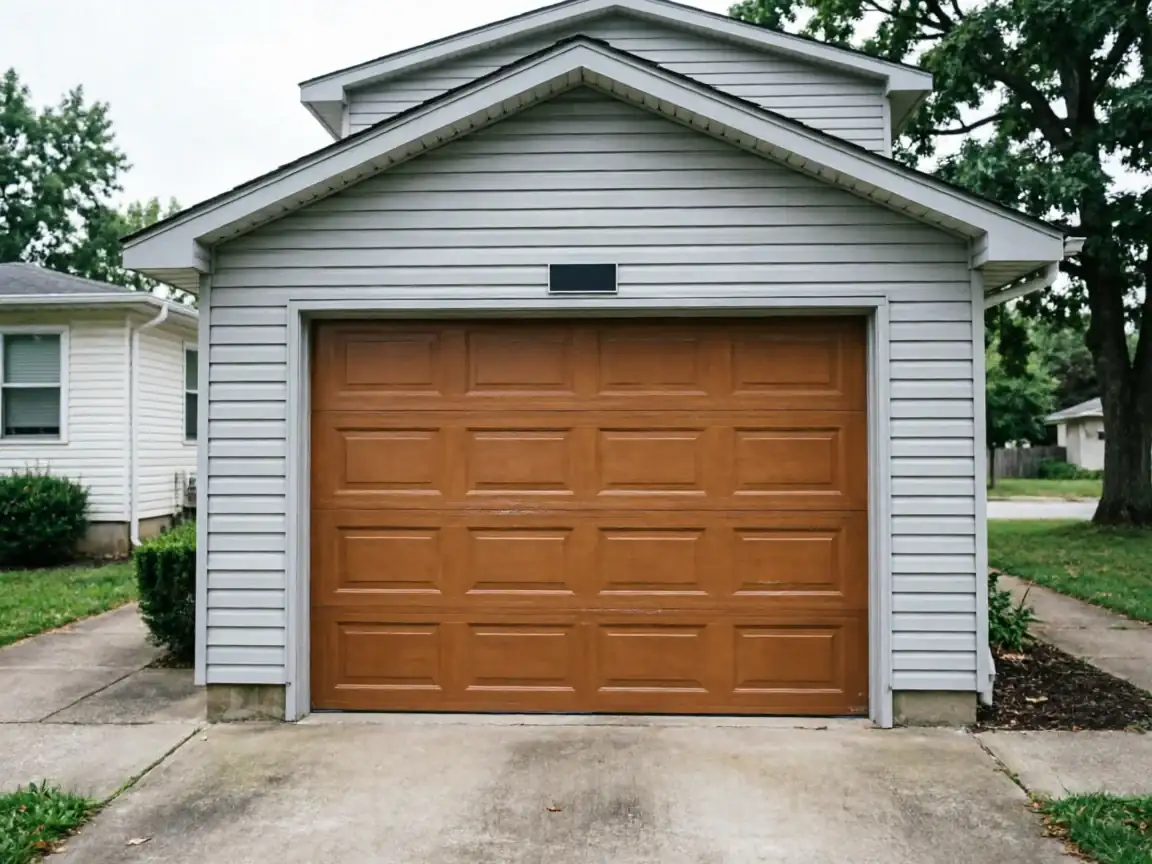
We can't give you a firm number without standing in front of the door and the opener, so we won't pretend otherwise here. What we can tell you is what drives the number up or down in this part of town. Most houses in Maple Grove went up between 1957 and 2007, with the bulk of that building happening in the 1980s and 90s, which means a lot of garages were framed for a standard 16x7 double door and a single 8x7 for the side door, if there is one. That's the size you're pricing, not some custom opening.
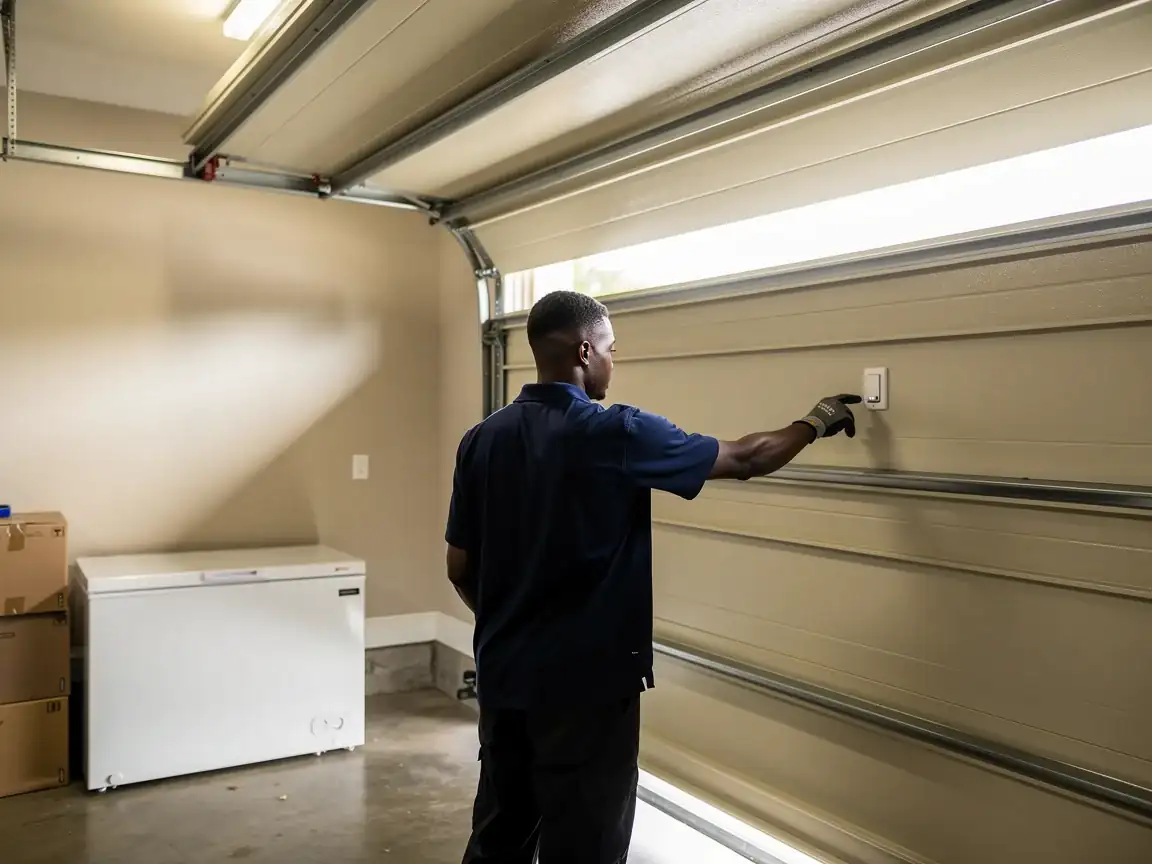
The bigger swing factor is insulation. Because this area sits in a cold-climate zone, an uninsulated steel door is a bad trade even when it's the cheaper sticker price - you feel it in the attached garage and sometimes in the room next to it. Most jobs here end up being an insulated steel door with a new opener, since openers from the original 1980s-90s build are long past their service life anyway.
Median household income in this service area runs $112,060, and at that level most owners choose full replacement with an insulated door over patching a 30-to-40-year-old door and hoping the next cold snap doesn't finish it off. That's not a sales pitch, it's just what we see people decide once they understand the tradeoff.
How Local Conditions Play In
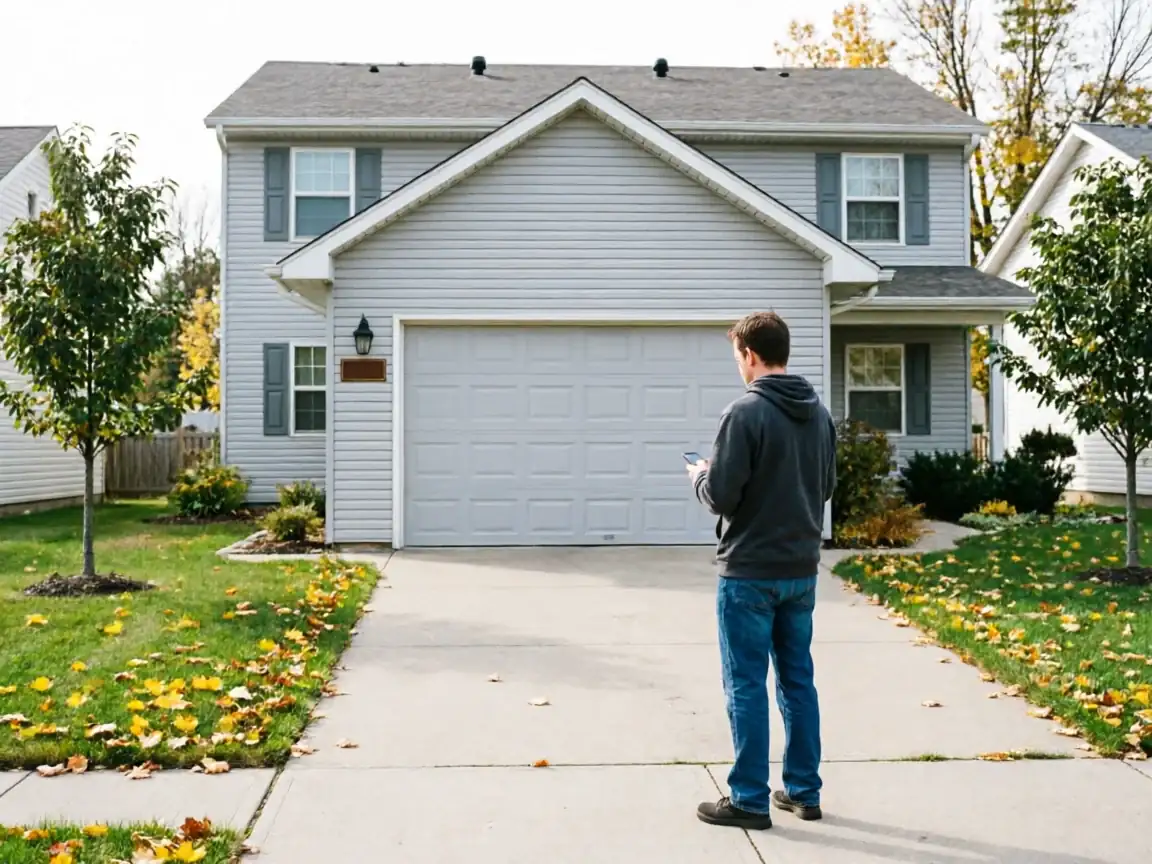
Maple Grove's housing stock runs 1957 to 2007
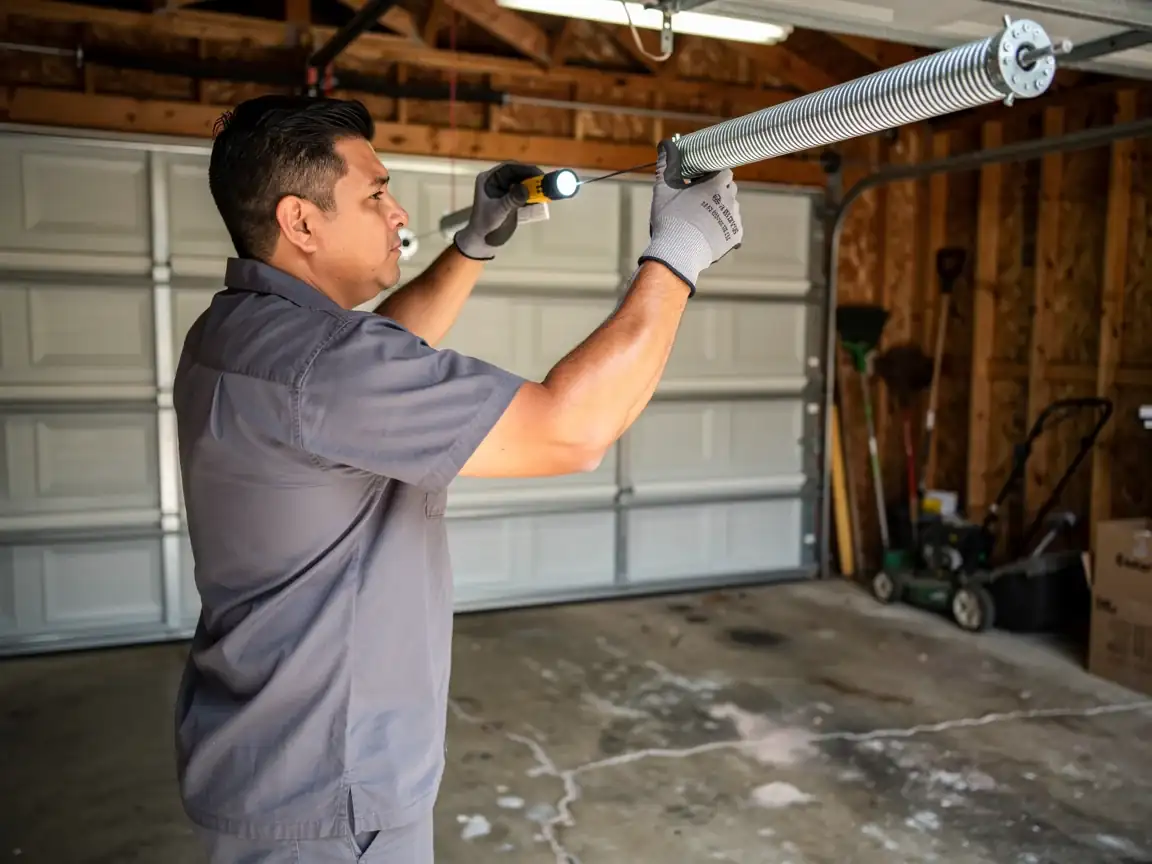
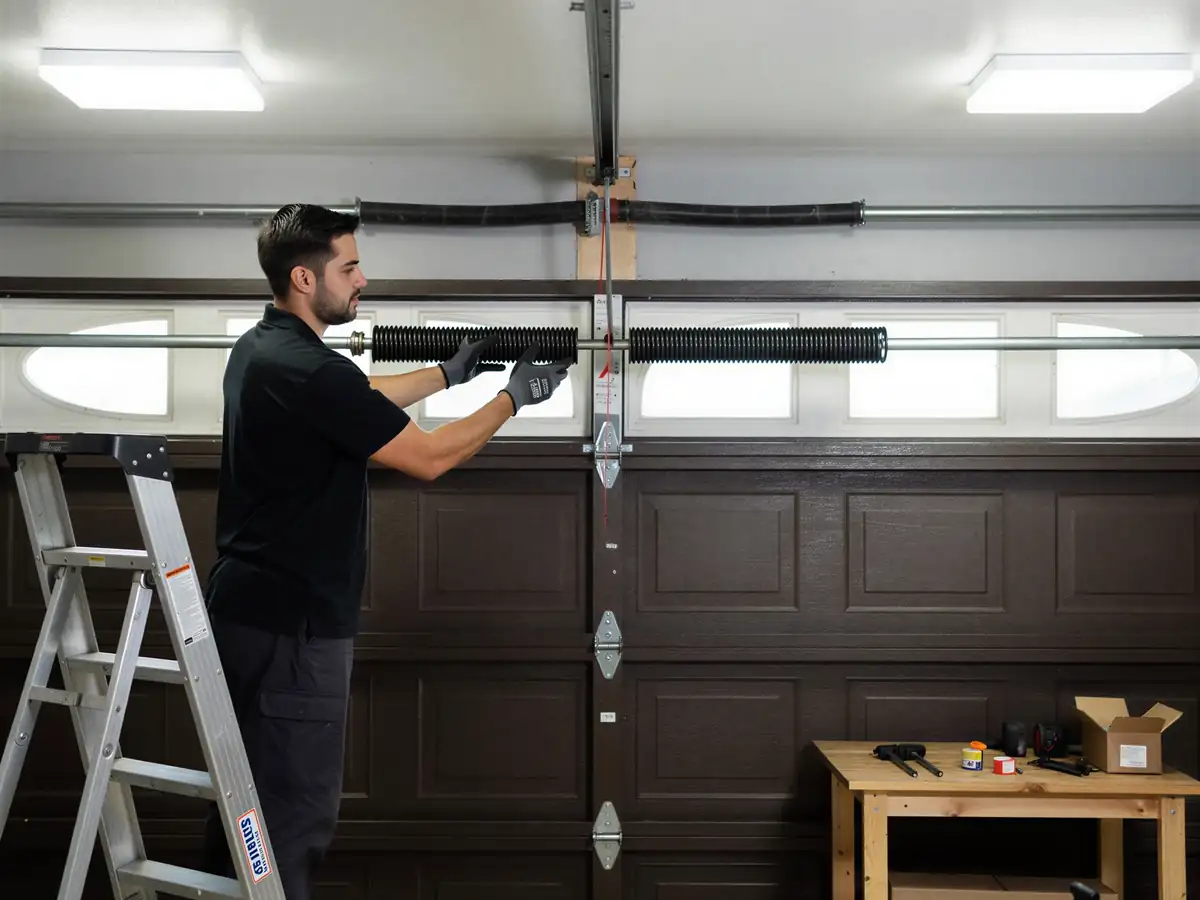
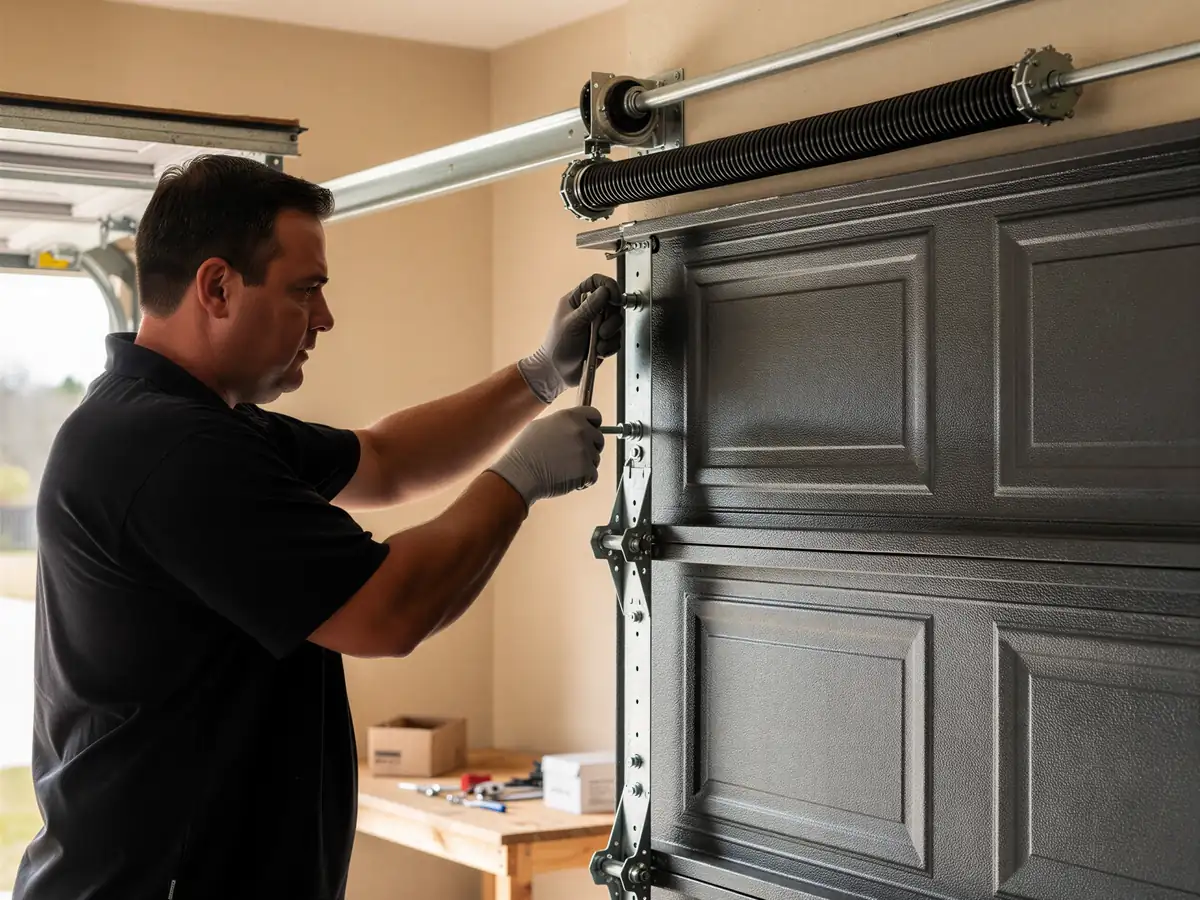
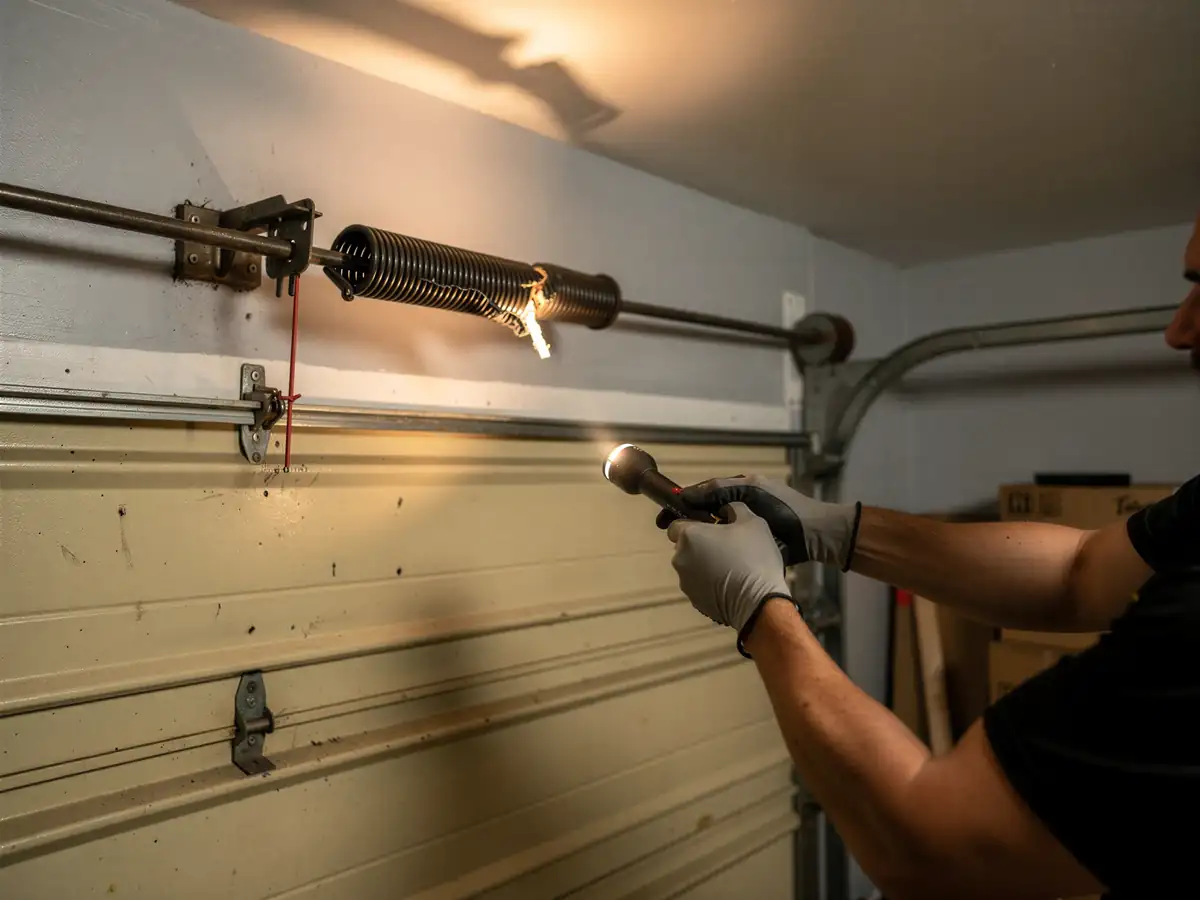
With a median build year of 1982, and that one fact explains more service calls than anything else. A door and track system installed when a house was built in the early 1980s is now well past 40 years old. Rollers wear out, tracks go out of plumb as the slab settles, and the torsion spring - rated for a set number of cycles - has usually used up that rating a long time ago.
- 40 years
Across the broader area, 290,218 households and 152,017 owner-occupied houses sit on roughly that same construction timeline
Concentrated in 57 named pockets of similar-era building. That's not a guess about your specific block, it's the pattern across the stock this company works on. If your neighbor on the next street already replaced a spring or an opener, there's a reasonable chance it's the same age hardware doing the same thing to your door next.
- 290,218 households
- 152,017 owner-occupied
Drive out toward Dayton or Corcoran, five and six miles off, or over to Osseo at three miles
And you'll find the same era of construction holding up the same aging hardware. That consistency across the area is exactly why we don't treat every call as a mystery - the failure modes repeat because the houses were built in the same stretch of years.
The Seasonal Bit
Maple Grove sits in a cold-climate zone classified as severe, and that matters for a garage door in ways that have nothing to do with how the door looks. Steel contracts in deep cold. On an older, uninsulated panel, that contraction stresses the seams and the hinges at exactly the spots already weakened by decades of cycling. Springs behave differently too - cold steel is less forgiving, and a spring that's been fraying for a year often lets go on the coldest morning of the stretch, not a mild one.
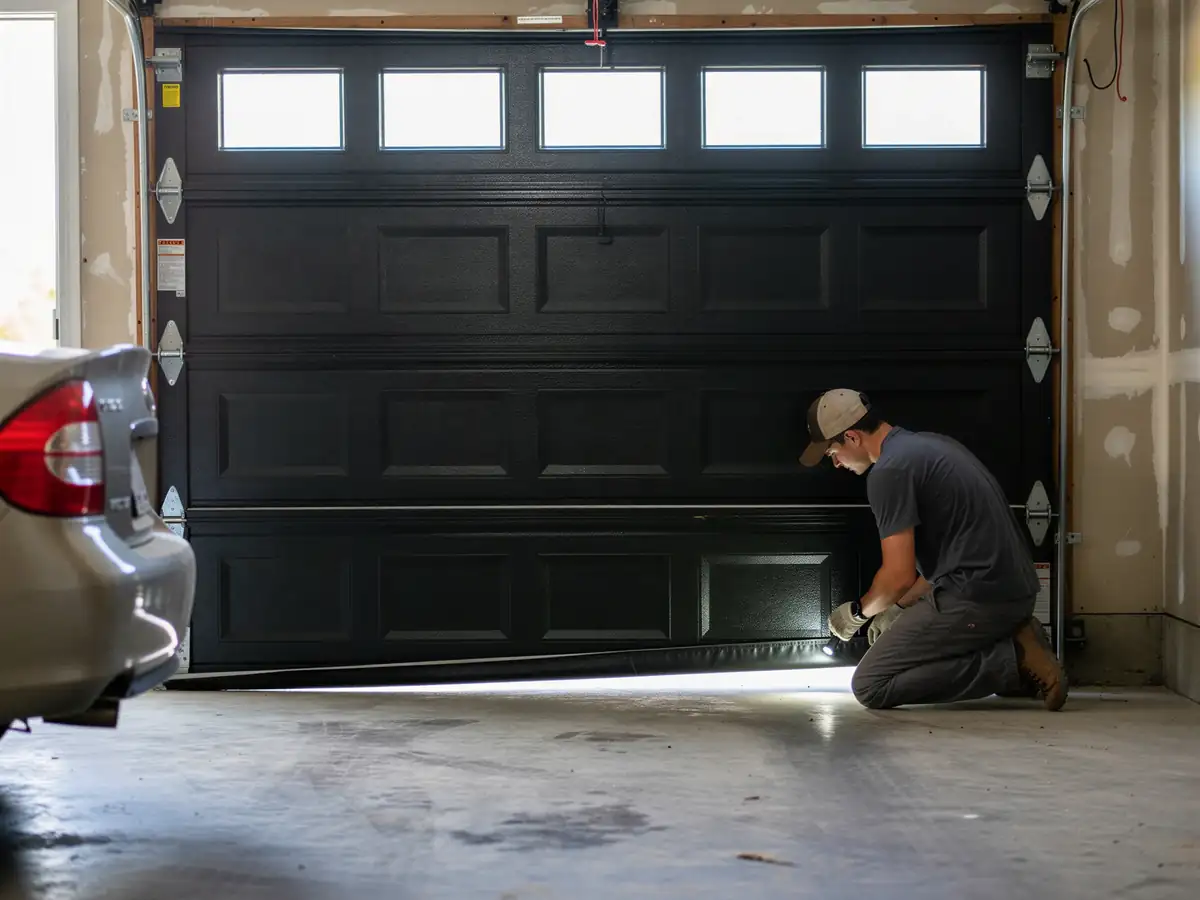
There's also the moisture side of it. Snow and ice melt off a warm car and refreeze at the bottom panel and the weatherstrip, and on a door that's already 30-plus years old, that's often the point where the bottom section finally rusts through or the seal stops sealing. We see a real jump in calls tied to the first hard cold snap each year, and it's almost always the same two or three failure points: the bottom panel, the spring, and an opener whose gears were never built for the duty cycle a cold garage puts on them.
None of this is unique to one street or one subdivision - it's the climate band this whole area sits in, acting on housing stock that's now old enough to show it.
What Is Going On
Put the two facts together - a service area built mostly between the late 1950s and the mid-2000s, median 1982, sitting in a severe cold-climate zone - and you get a predictable wave of garage door failures rather than random bad luck. The doors and openers installed when these houses were new are reaching or past the end of their realistic service life at the same time the area's coldest weather is putting the most stress on aging steel and worn springs.
That's the honest diagnosis for most calls we get: not a one-off defect, but a door doing exactly what a 35-to-45-year-old door does in this climate. The fix usually isn't a single part swap - it's recognizing that a spring, a bottom panel, and an opener motor from the same build year tend to fail in the same decade, sometimes the same winter.
We won't tell you every door needs full replacement; plenty of 1990s-era doors have solid frames and tracks worth keeping, and a spring or roller job is the right call there. But once you're looking at a cracked bottom panel on a door that's also lost its insulation value and has an opener grinding through winter mornings, patching one piece just means you're back out here for the next piece before long.