What You Pay
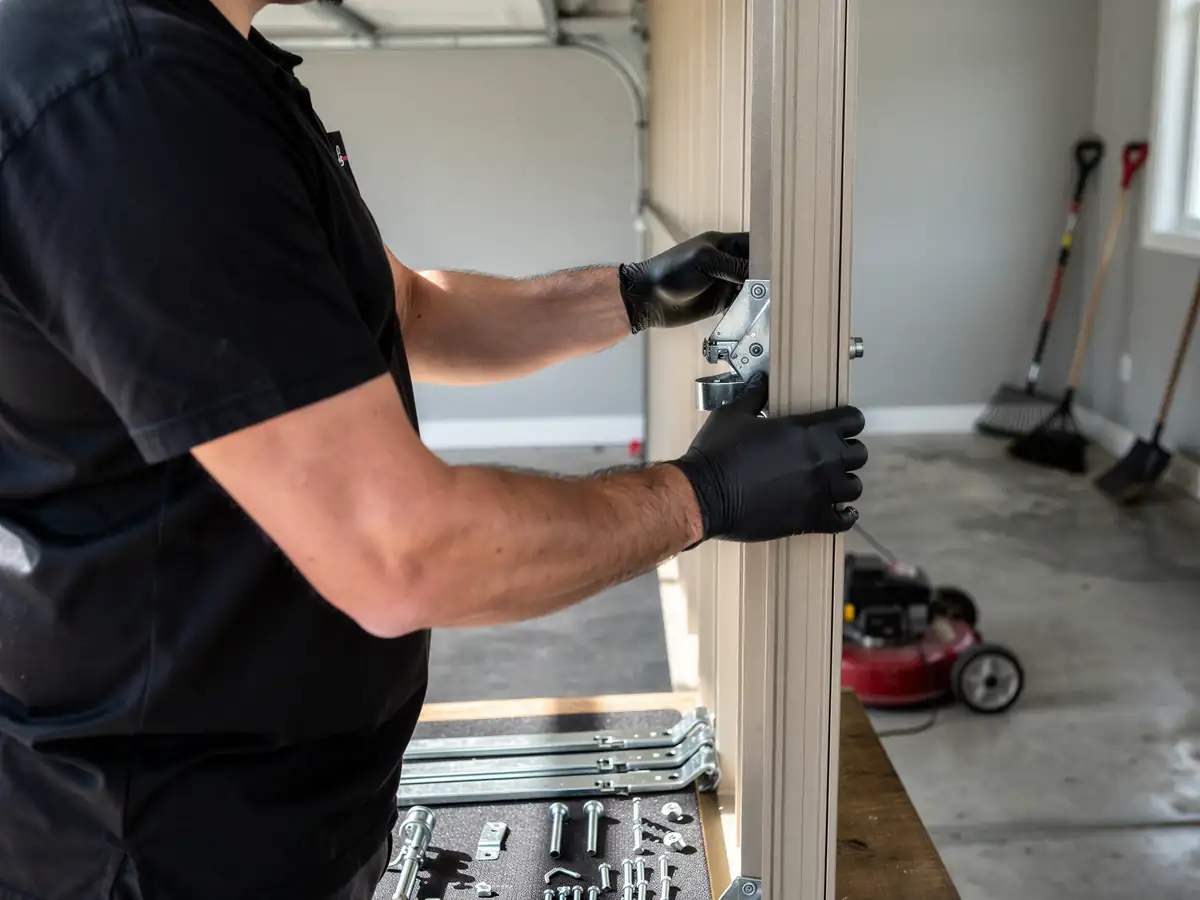
We don't post a flat number here because off-track repairs vary too much to be honest about it otherwise. A door that's simply bent back onto its rollers is a different job than one where the track itself has pulled away from the framing, or where a cable came off the drum and dragged the door sideways on the way down. What drives the cost in most Maple Grove calls is the age of the hardware. A lot of the housing stock here went up between 1957 and 2007, with the bulk of it from the 1980s and 90s boom, so we're often working with original galvanized track that's thirty-plus years old and has already taken some abuse from freeze-thaw cycles. Replacing a short run of track costs less than replacing the rollers, hinges, and track together, which is what we recommend when the whole system has worn evenly rather than failed in one spot. We'll tell you straight if a partial fix will hold or if you're better off doing it once. We don't invent a number before we've seen the door.
The Seasonal Bit
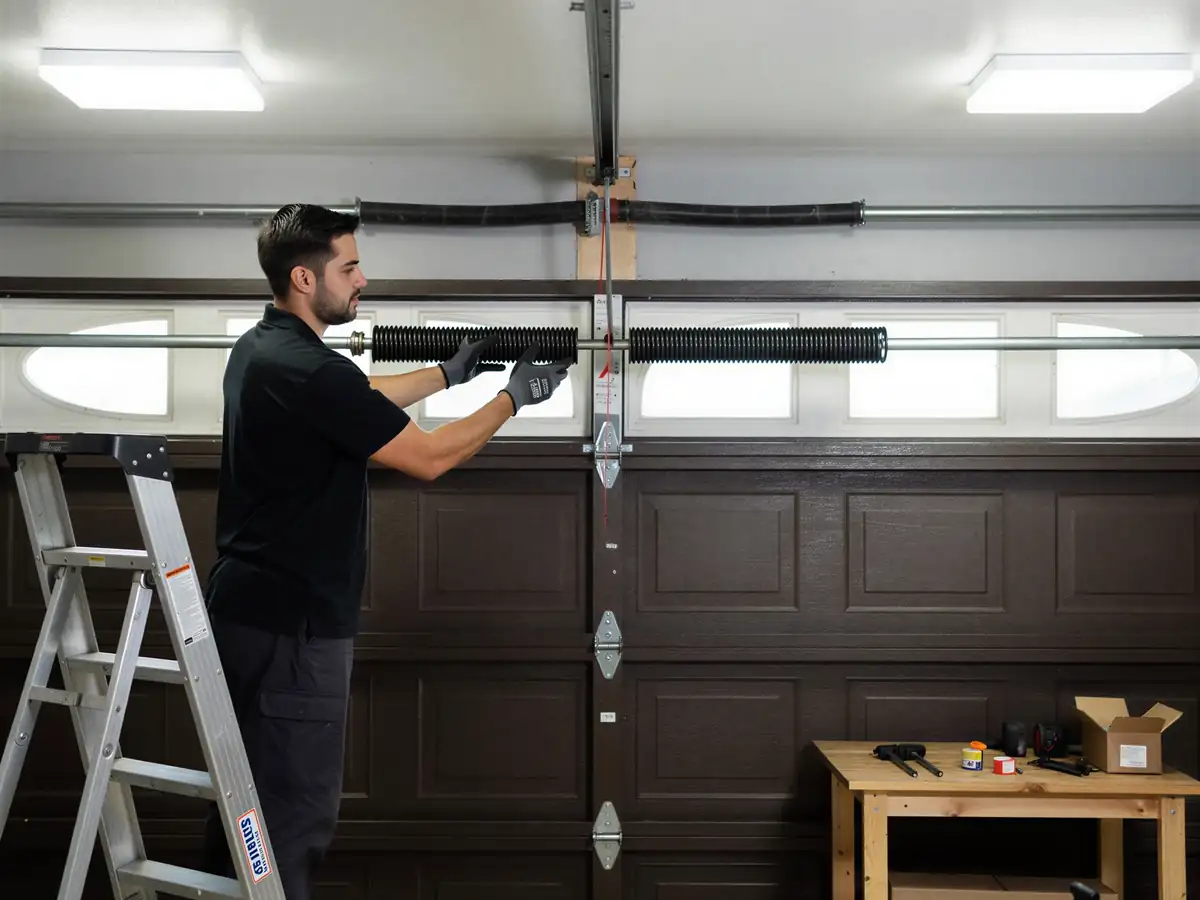
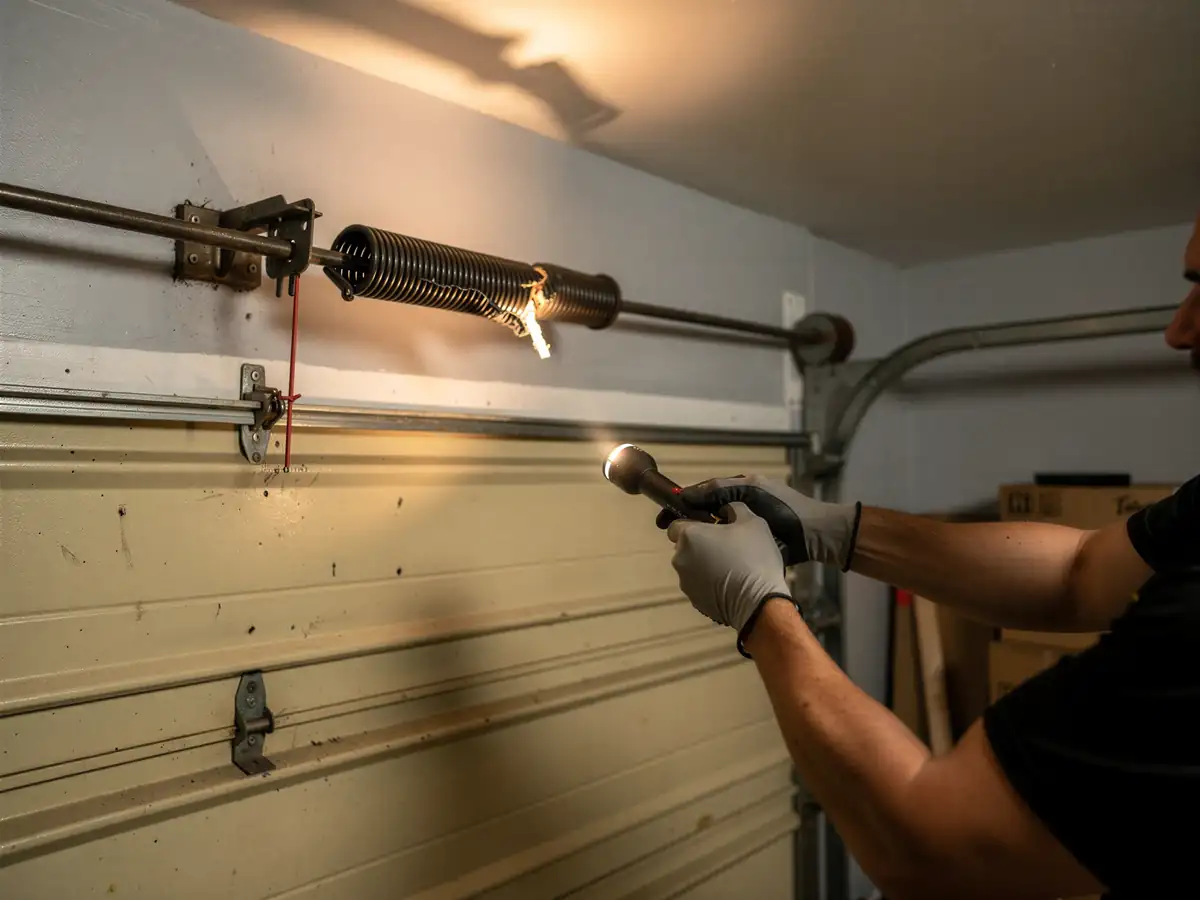
The worst time for a door to jump track here is the first hard cold snap of the season, not mid-January. Lubricant that was fine in October gets stiff fast once temperatures drop, and a roller that's already slightly worn will bind in the track instead of rolling smoothly through it. Bind long enough under spring tension and something gives - usually the roller stem shears or the track flares outward at the bind point. We see a run of these calls every year right as the cold actually sets in, more than we see them in the deep cold of February once everything's already adjusted. If your door started sounding rough in October, that's the warning, not the first jam. Spring tension in a severe cold climate doesn't forgive stiff rollers the way it might somewhere milder, so the window to catch this before the door actually leaves the track is short.
What Is Going On
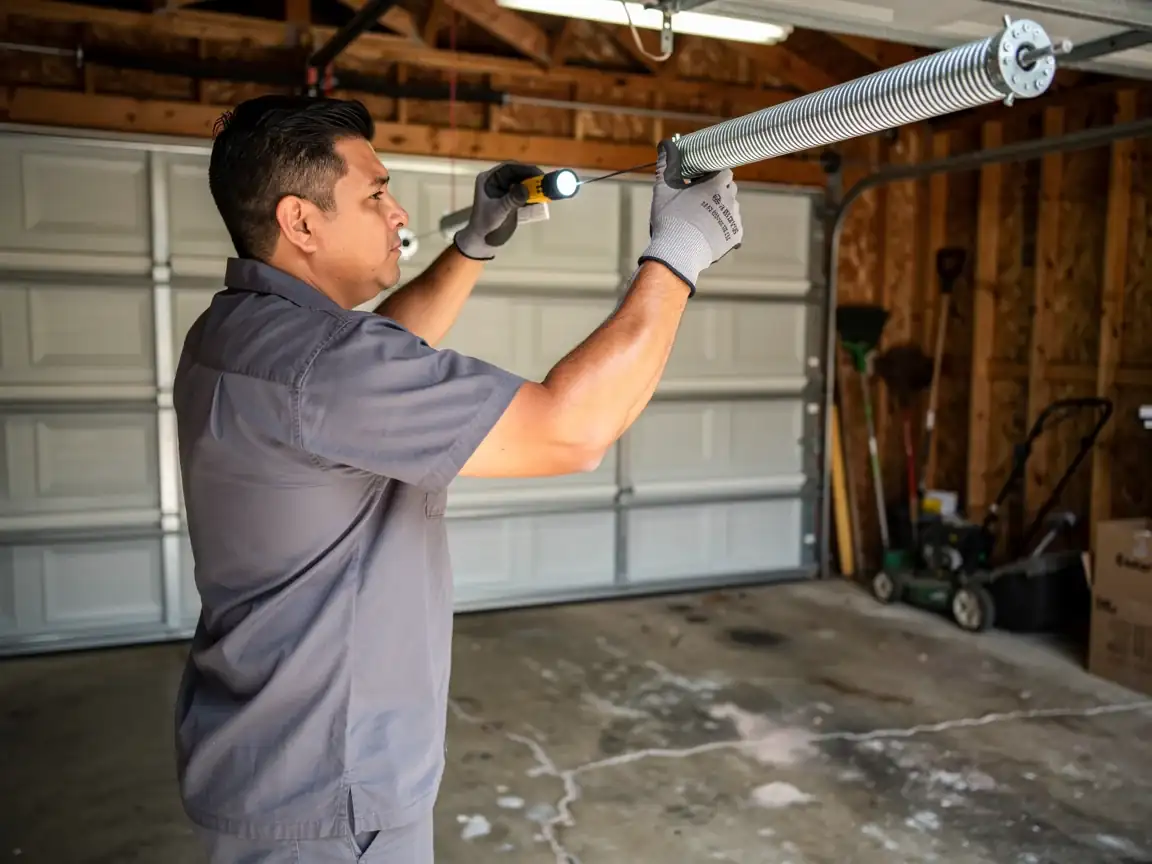
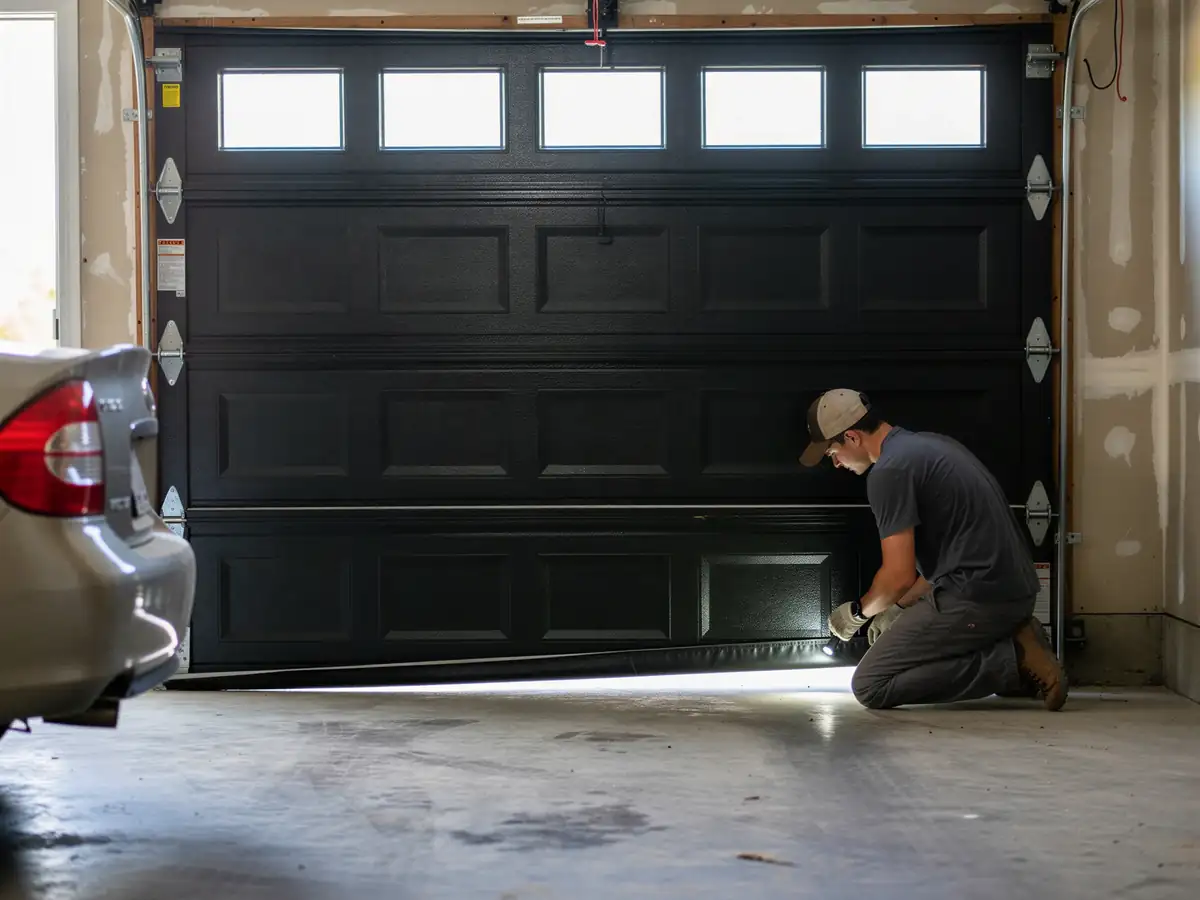
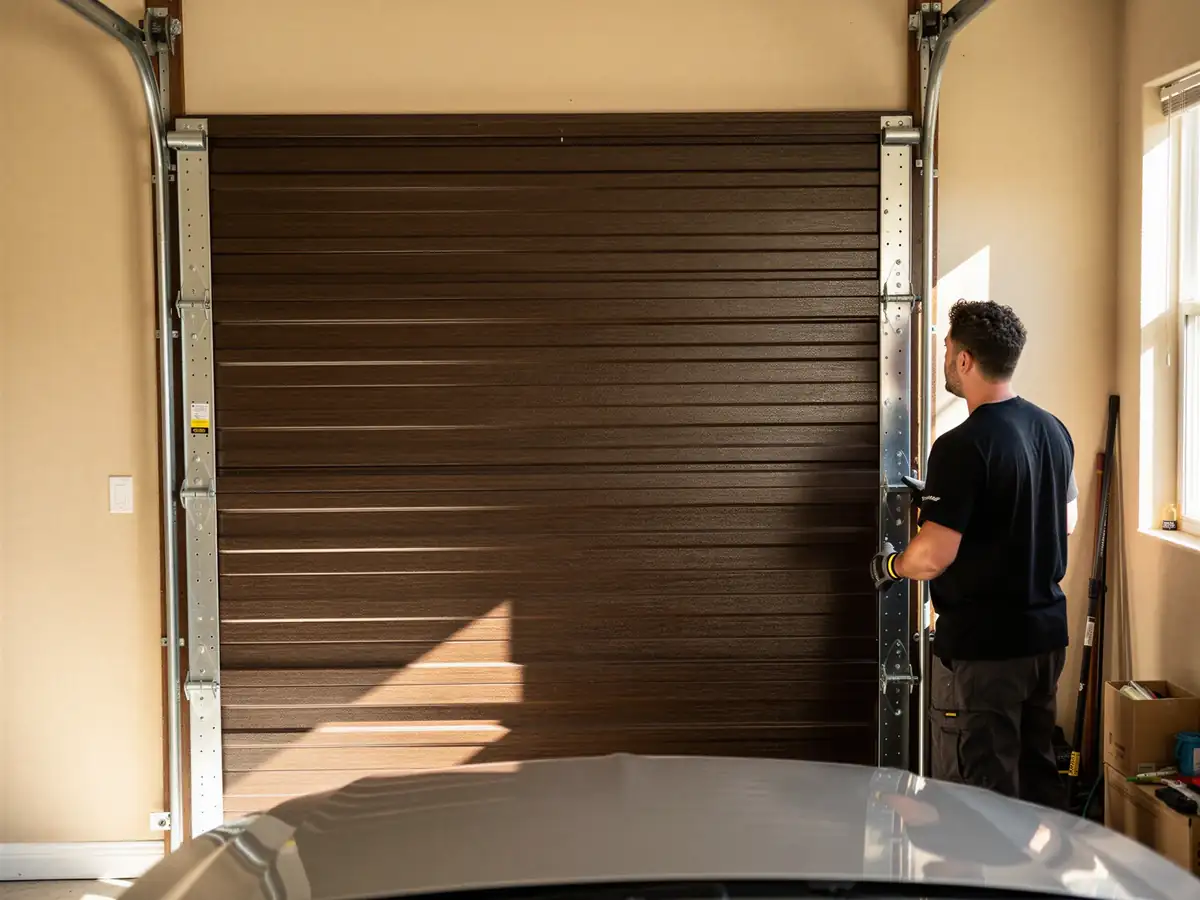
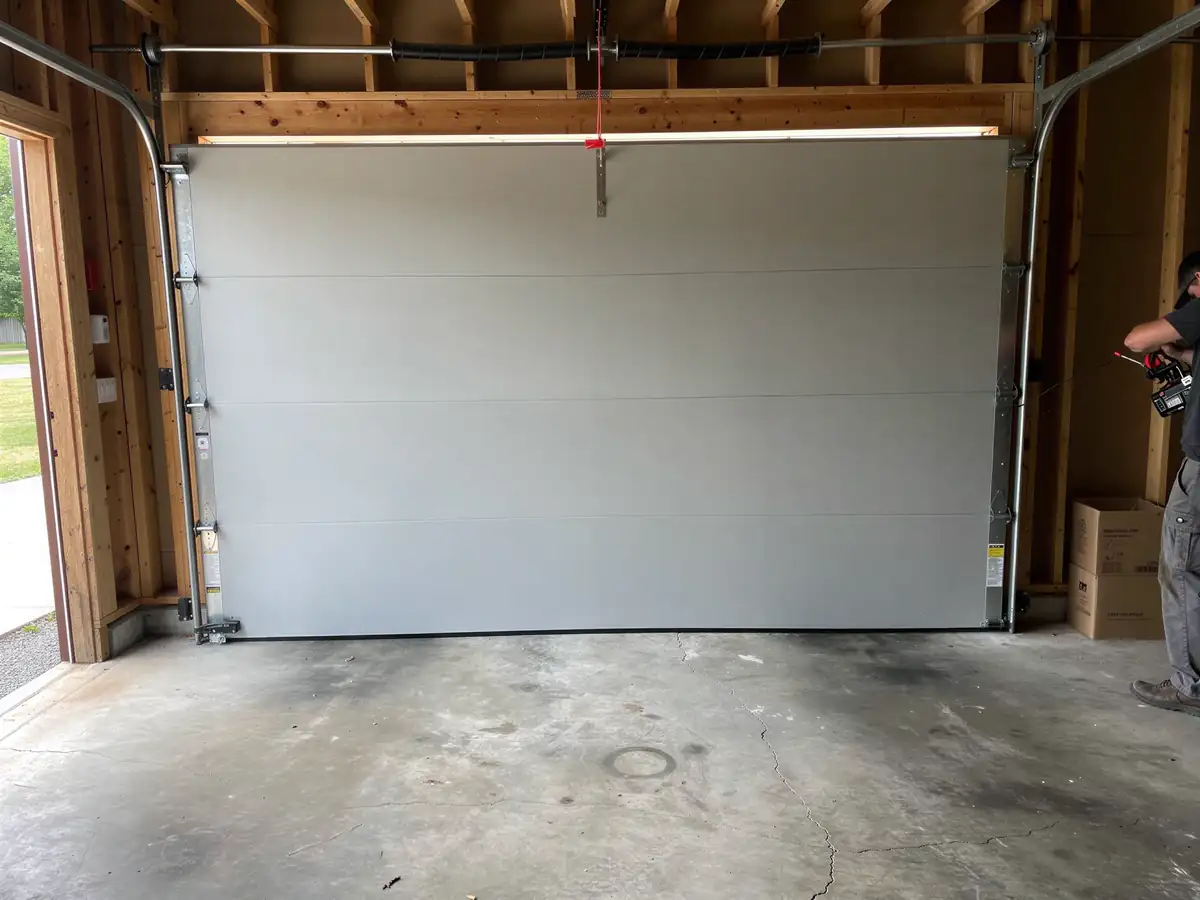
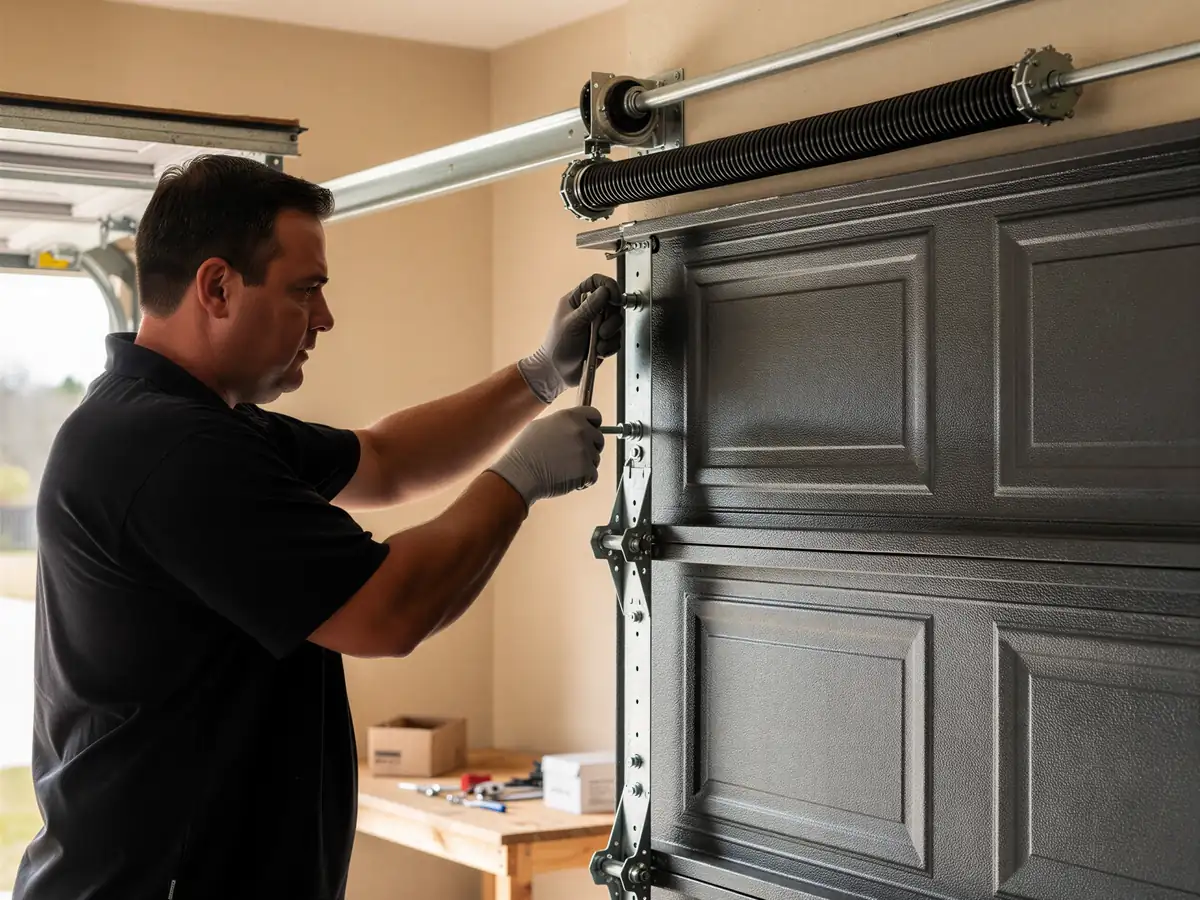
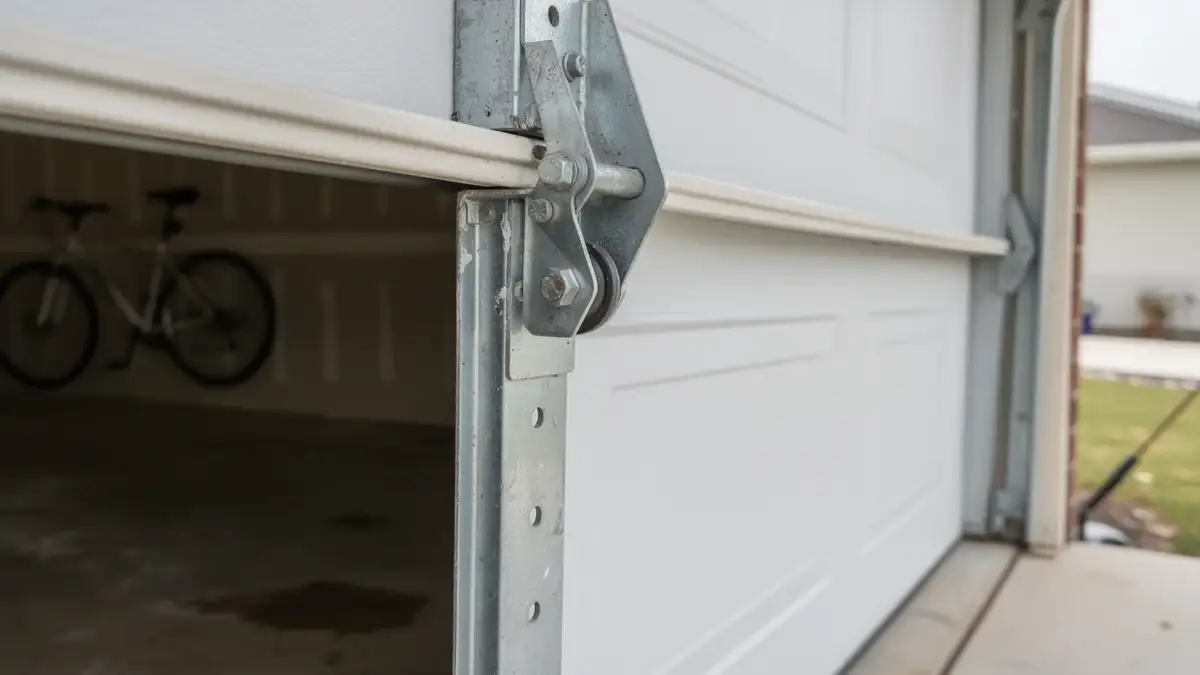
Most off-track calls break down into three causes once we're standing in front of the door. First, a roller has worn down or cracked and stopped tracking true, which lets the door edge drift sideways a little more with every cycle until it catches. Second, a cable has frayed or slipped off the drum, usually on one side only, which pulls the door unevenly and forces it against the track hard enough to bend it. Third, the track brackets have loosened from the jamb, often from the freeze-thaw movement we mentioned above, and the whole track has shifted out of alignment even though the door and rollers are fine. We check all three before touching anything, because forcing a door back onto a track that's actually bent, or re-hanging rollers when the real problem is a loose bracket, just means a repeat call. One honest limit: if the track is bent badly enough, or the door panel itself got racked in the process, bending it back rarely holds for long and replacing that section of track is the better use of your money.