What You Pay
We don't post a flat number here because what a noise costs to fix depends entirely on what's making it. A rattle from a loose bracket on a door built in the 1980s is a tightening job. A grinding sound from a worn roller on the same door, after forty-plus years of Minnesota winters working the hardware, is a roller swap. A deep thud followed by the door refusing to move is almost always a broken spring, and that's a different conversation than a squeak.
Most houses in this part of Maple Grove went up between 1957 and 2007, with the bulk of the stock dating to the 1980s and 90s. That matters for cost because doors and openers from that era weren't built with the sealed bearings and nylon rollers you see in newer installs. Parts wear differently, and sometimes the fix is cheaper than you'd expect because it's a known, common part. Sometimes it isn't, because the track or hardware spec on an older door isn't something every supplier stocks.
We'll tell you on the phone, before the truck rolls, if a noise sounds like a $40 fix or a $400 one based on what you describe. We won't quote a number without hearing it first.
How Local Conditions Play In
A door that's quiet in July can start talking to you in January
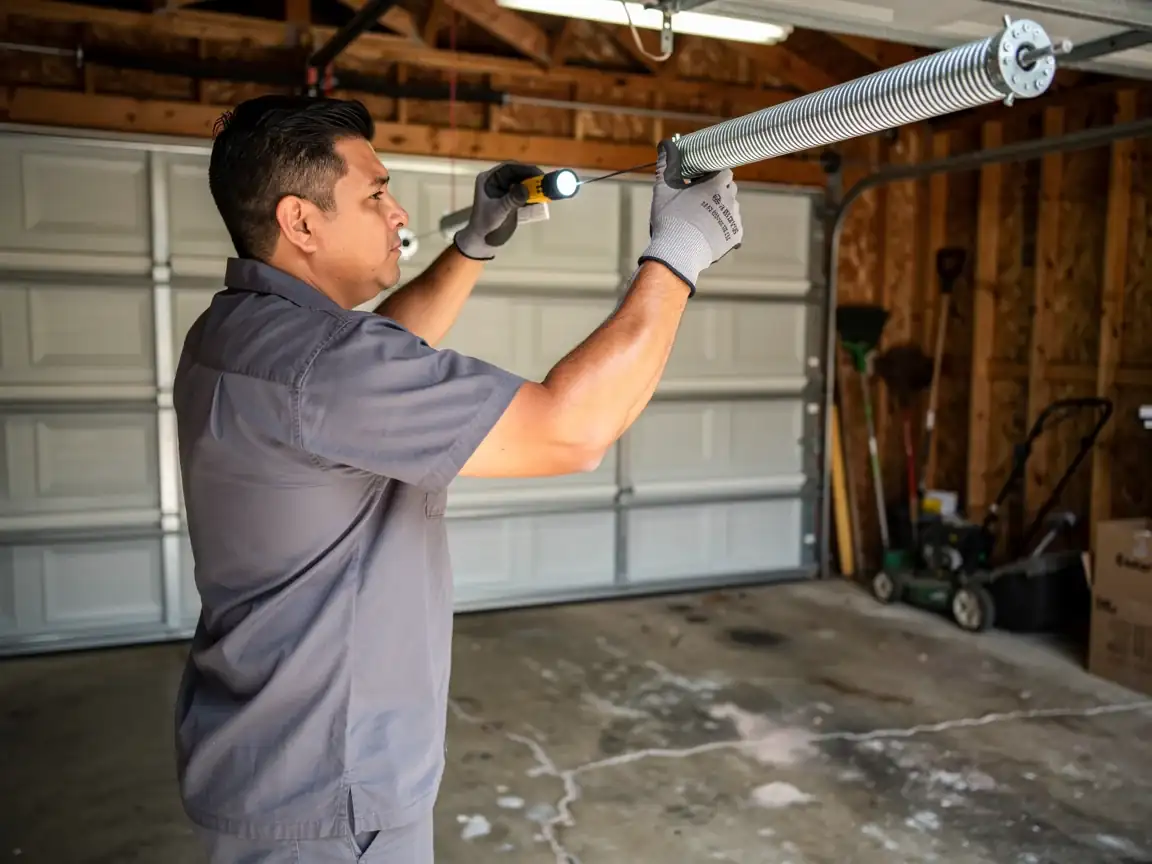
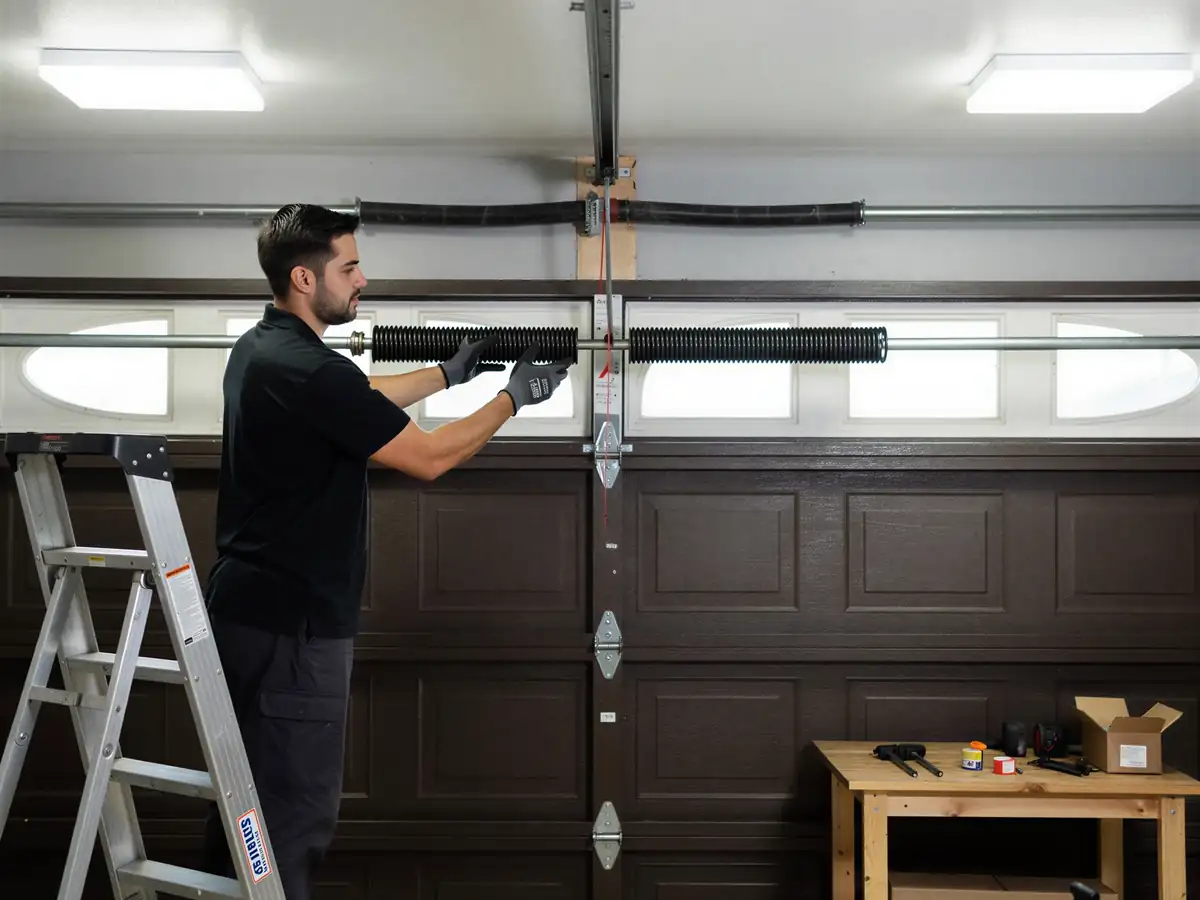
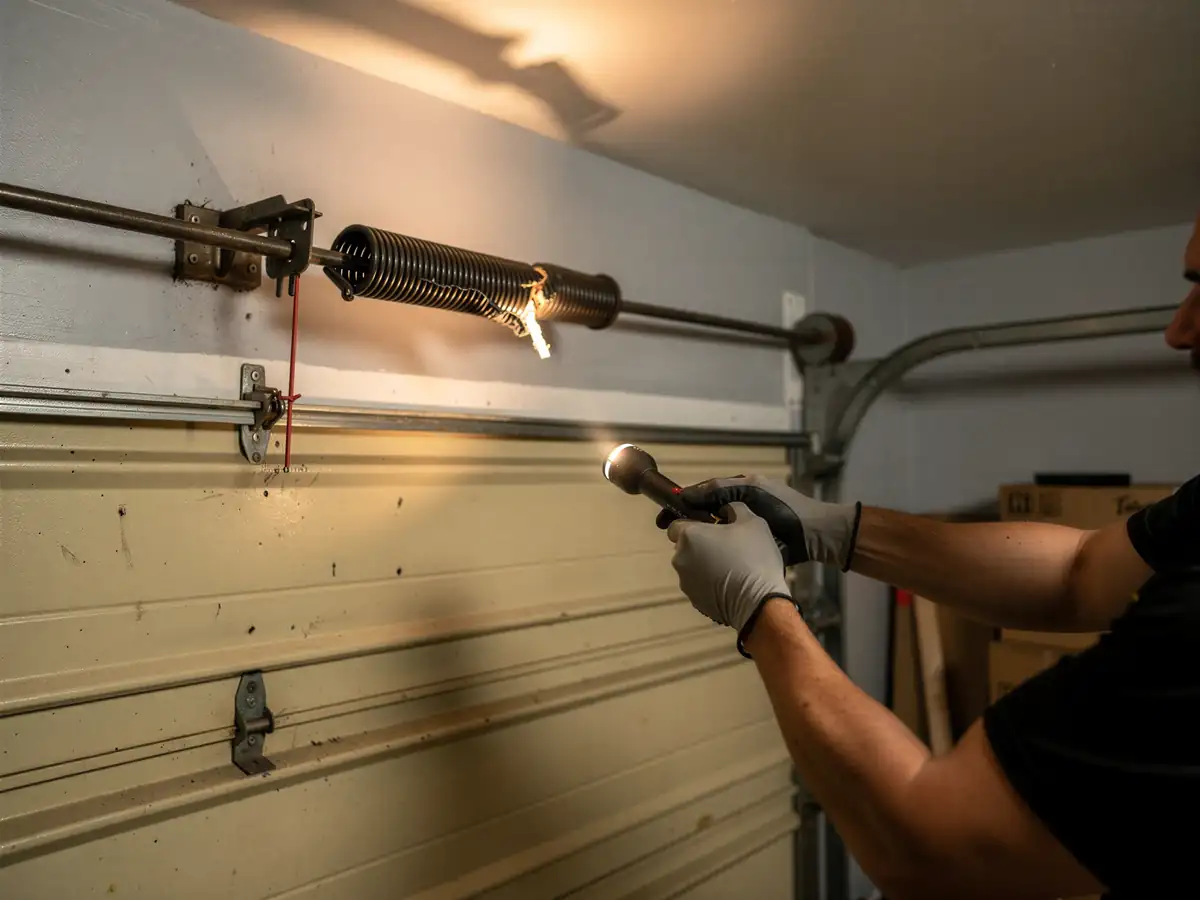
And that's not your imagination. This area sits in a cold climate band with severe winter conditions, and garage door hardware feels that temperature swing more than almost any other moving part on the house. Steel contracts in the cold. Lubricant thickens. Torsion springs, which are under constant tension whether the door is open or closed, lose a little flex and start making a different sound when they cycle.
Houses built in the 1960s and 70s in this area often still run original track and hinge hardware sized for an earlier generation of doors
Lighter panels, different roller specs. When that hardware ages in cold swings year after year, the noises it makes are specific: a metallic scrape as a worn roller drags in a track that's slightly out of plumb, or a sharp pop as a hinge with a dry pivot finally lets go.
Newer builds from the 1990s and 2000s, more common in some of the 57 named areas that make up this city's housing stock
Usually have factory nylon rollers and better-sealed bearings, so the noises you hear from those doors tend to point somewhere else - an opener gear, a loose J-arm, or a cable starting to fray.
The Seasonal Bit
The first real cold stretch of the year is when the phone starts ringing with noise complaints, and it's not because doors break more in winter - it's because cold makes existing problems audible. A spring that was starting to fatigue in September will groan on a 10-degree morning when it wouldn't have made a sound in August. Grease that was fine all summer gets stiff enough to resist rather than lubricate, so a roller that was turning smoothly starts to chatter against the track instead.
In a climate with the kind of severe cold swings this area gets, that seasonal shift isn't subtle. We see the same pattern every year: quiet doors in June, squeaky ones by November, and a run of spring failures once temperatures really drop and stay down. If your door has been making a new sound since the weather turned, that timing is the clue, not a coincidence.
One limitation worth saying plainly: we can't lubricate away a spring that's actually failing. If the sound is a low groan under load rather than a dry squeak, that's wear, not a maintenance gap, and the honest answer is to replace the spring before it breaks under tension rather than keep oiling around it.
What Is Going On
Here's a rough guide to what you're hearing. A rhythmic metal-on-metal grinding as the door moves usually means a roller that's worn past its bearing life - common on original hardware from houses built before the late 1980s. A loud bang followed by the door feeling heavy or refusing to open is almost certainly a broken torsion spring; don't force it, and don't let anyone under the door until it's dealt with. A high-pitched squeal that comes and goes with temperature is often just a hinge or roller that needs lubrication, more of an annoyance than a hazard.
A rattling that seems to come from the opener unit itself, especially on houses with openers installed any time from the 1990s onward, is frequently a loose mounting bracket on the ceiling rather than anything wrong with the door below it. And a clicking or grinding right at the motor when the door won't move at all can mean a stripped gear inside the opener, which on older units is sometimes cheaper to replace outright than to repair piece by piece.
If you're not sure which of these you're hearing, describe it to us over the phone. Most noises sort into a short list once we know the age of the door and what it sounds like at the moment it happens.