What You Pay
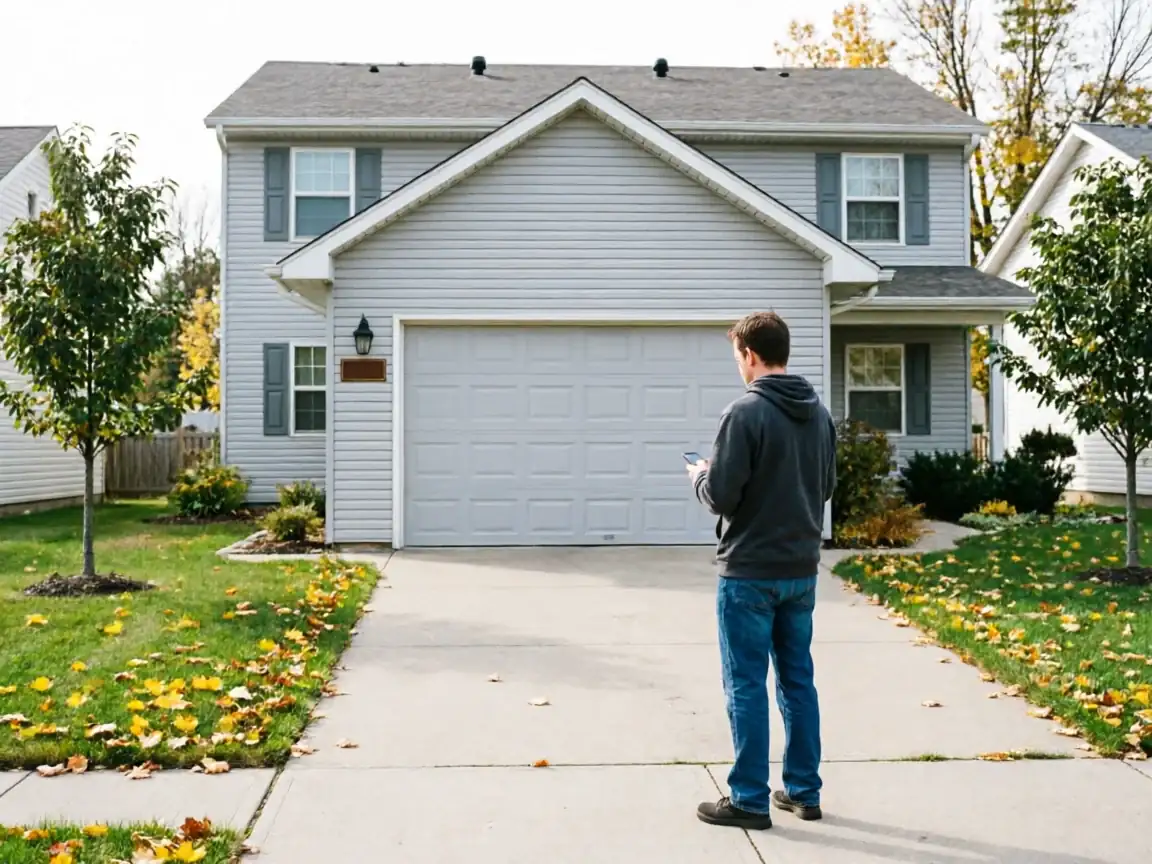
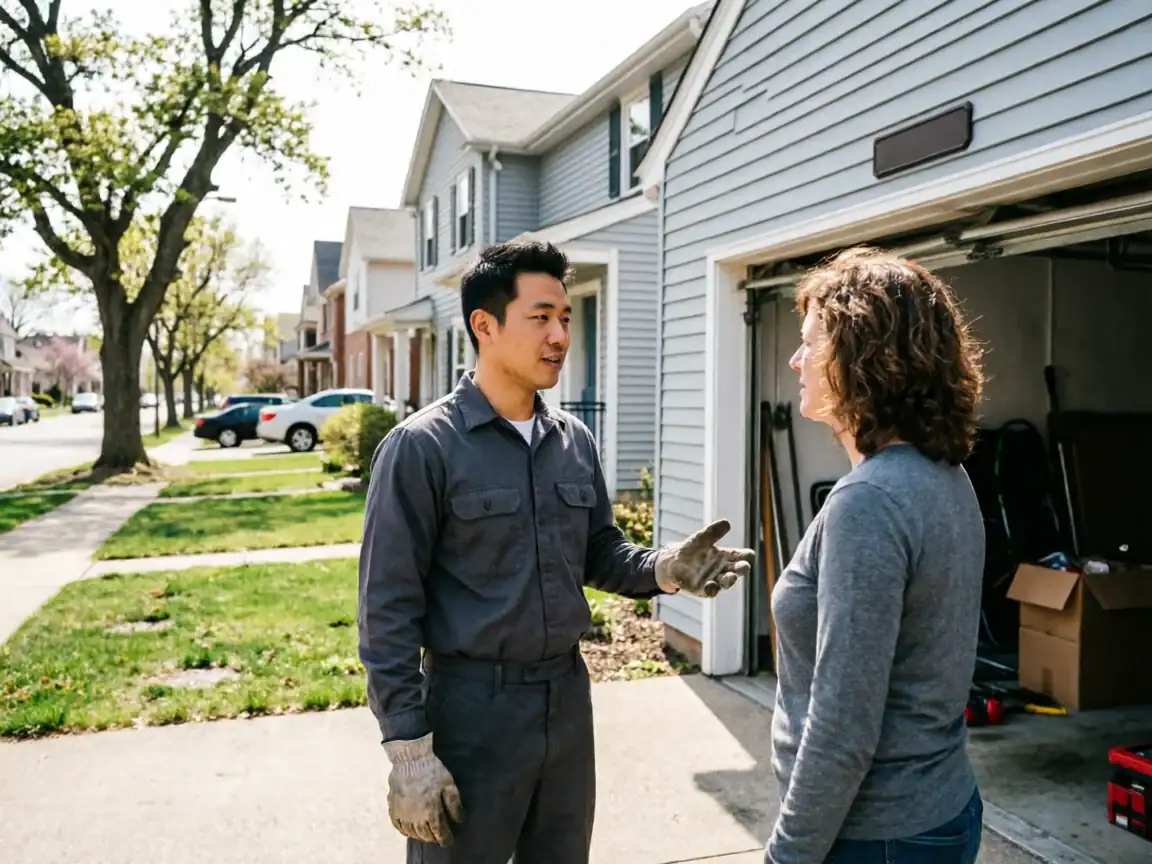
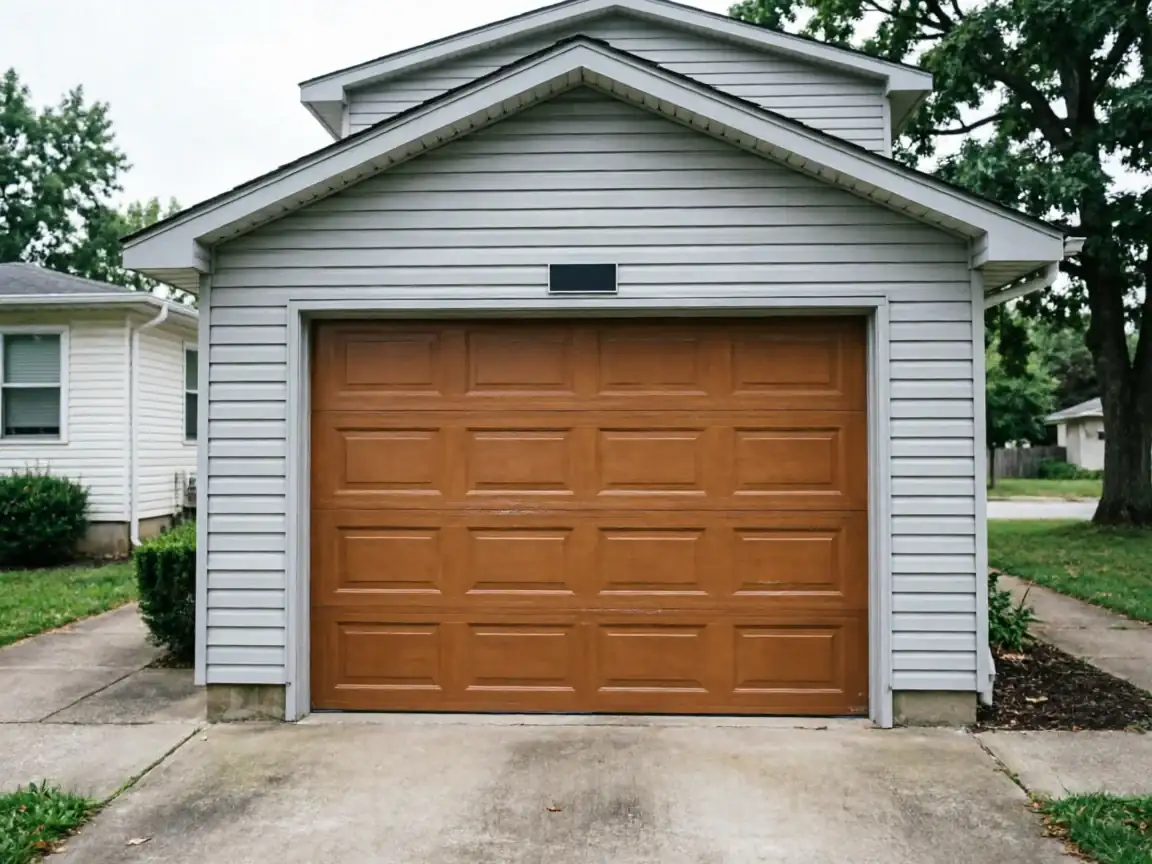
We're not going to put a number here that isn't backed by anything - pricing depends on what's actually wrong, and we don't have a published rate card to quote you from this page. What we can tell you is what drives the cost: whether it's a spring, a cable, a panel, or an opener board, and whether the part is still being made for a door that old. A lot of houses in this market were built between 1957 and 2007, with most of the stock landing in the 1980s and 90s, so a tech showing up to a service call is usually pricing against builder-grade hardware from that window, not a custom door. That means parts are generally available, which keeps the job from turning into a special-order wait. The honest limitation: if your door is a true original from the early end of that build range, we may need to source a part that isn't on the truck, and that adds a day or two. We'd rather tell you that up front than quote a number we can't hold to on this page.
The Seasonal Bit
This area sits in a cold-severe climate band, and that's the single biggest thing a service call has to account for here. Cold doesn't just stiffen grease - it shrinks seals, makes steel brittle at the edges where a roller catches, and puts extra load on a spring that's already working harder to lift a door that's heavier because the weatherstripping has gone rigid. A tech checking a door in this climate is looking at the bottom seal, the cable wear points, and whether the opener's force setting has crept up over the winter to compensate for a door that's dragging. None of that is specific to any one brand of door - it's specific to what cold-severe winters do to hardware over years, and it's why a service call out here almost always includes a cold-weather check even if that's not what you called about.
What Is Going On
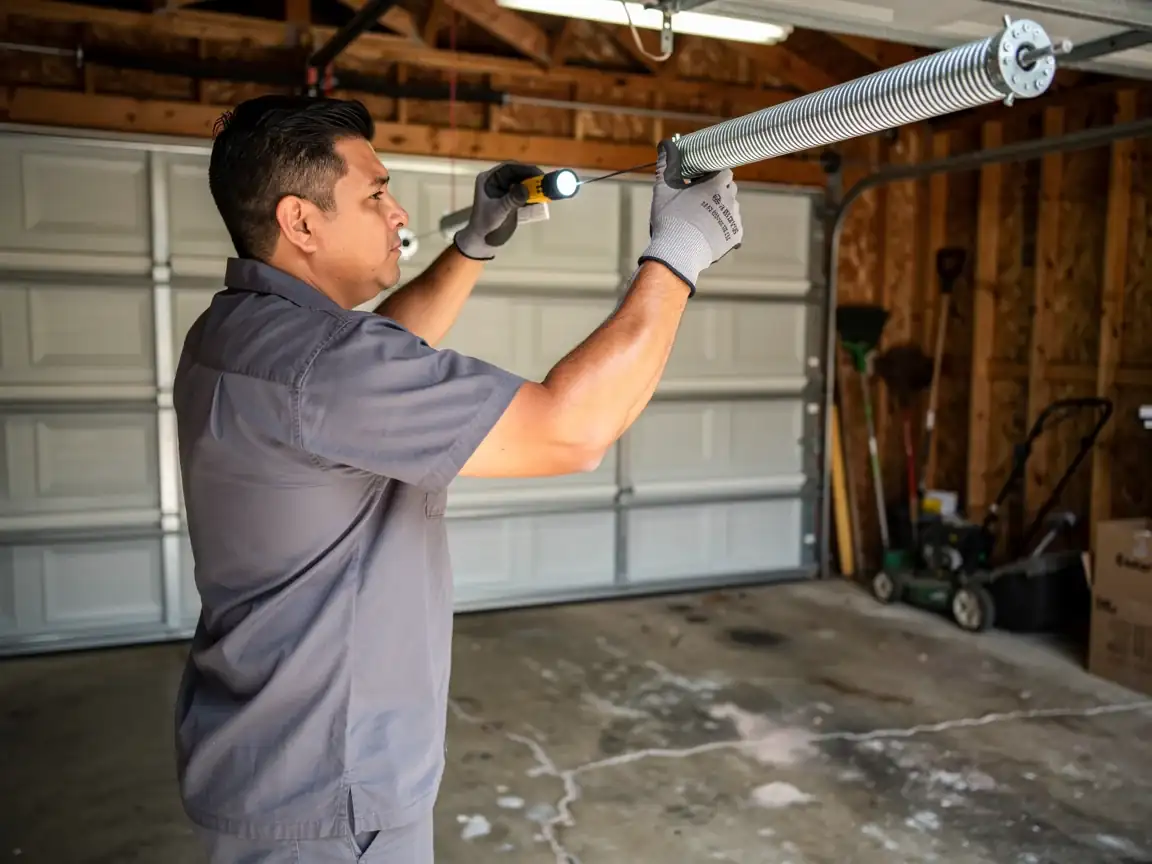
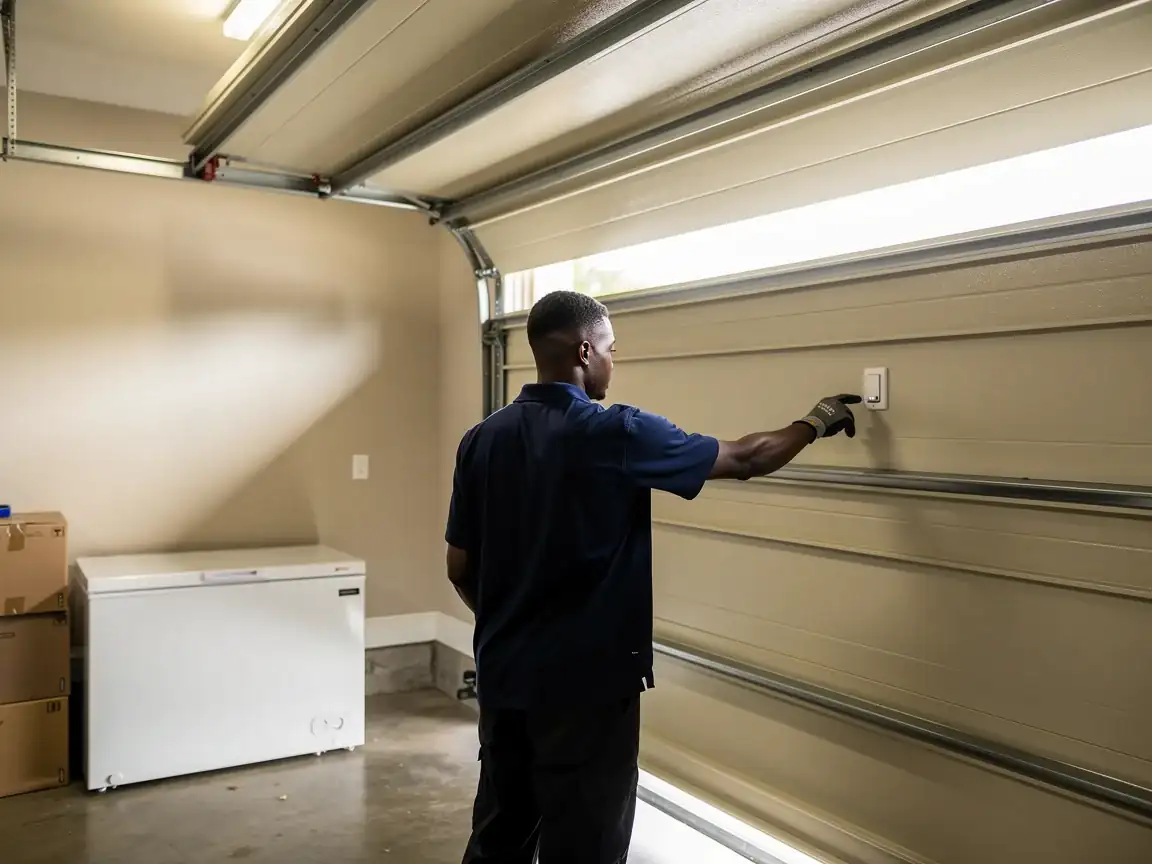
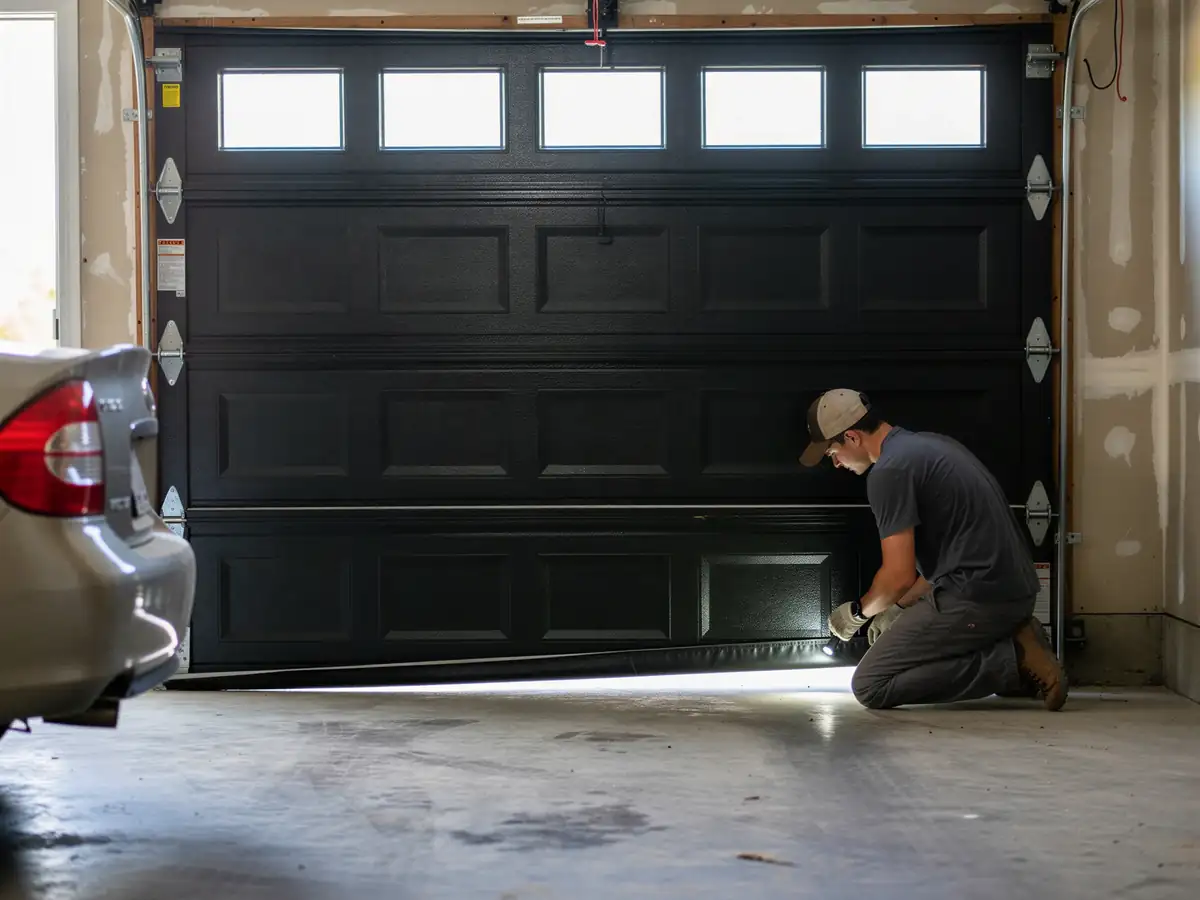
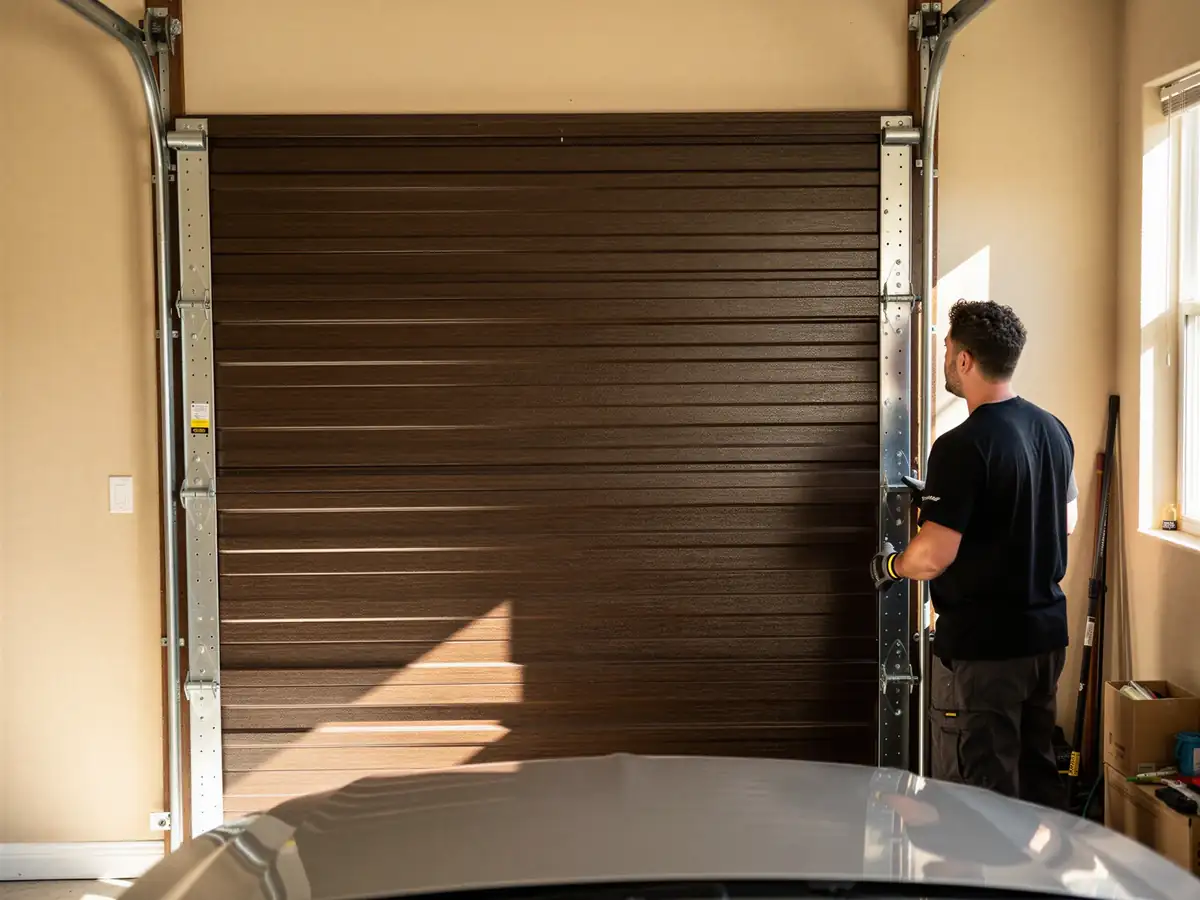
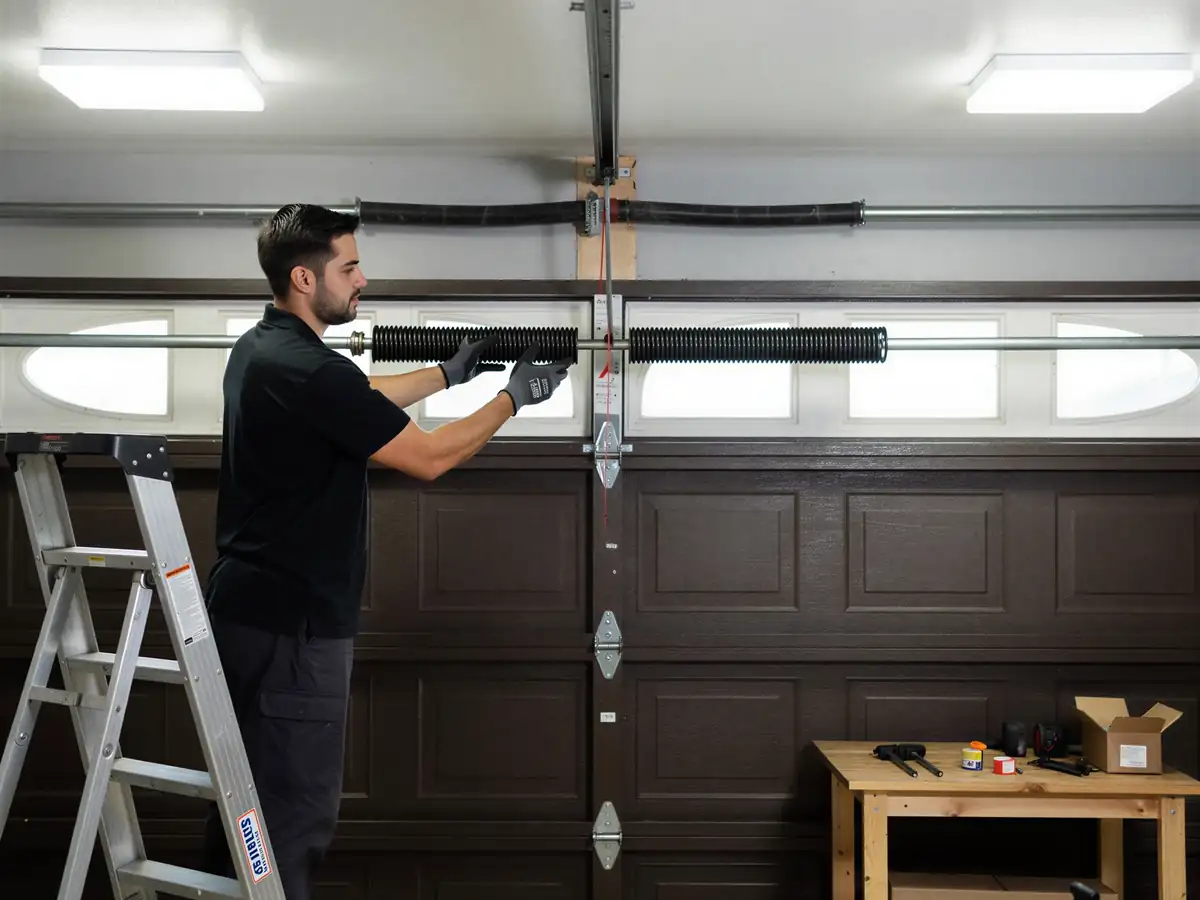
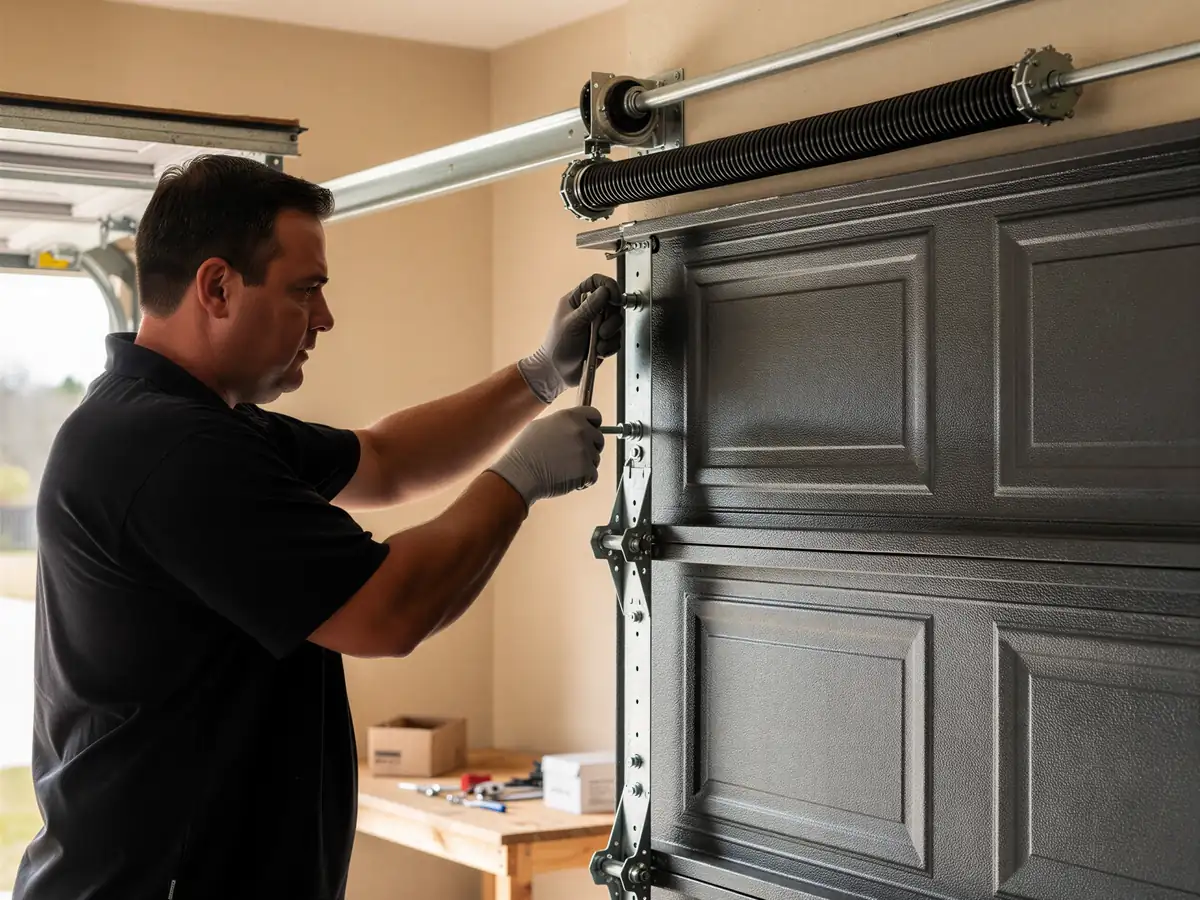
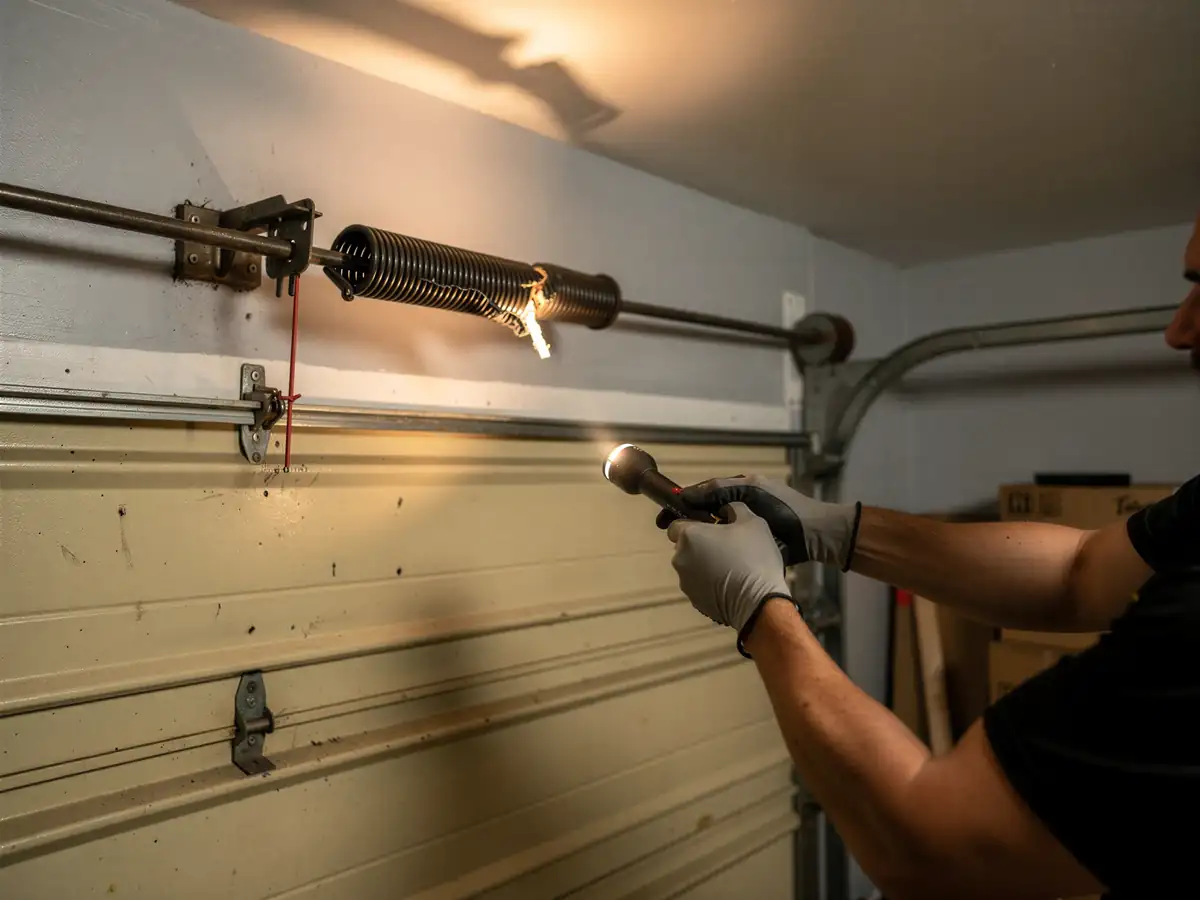
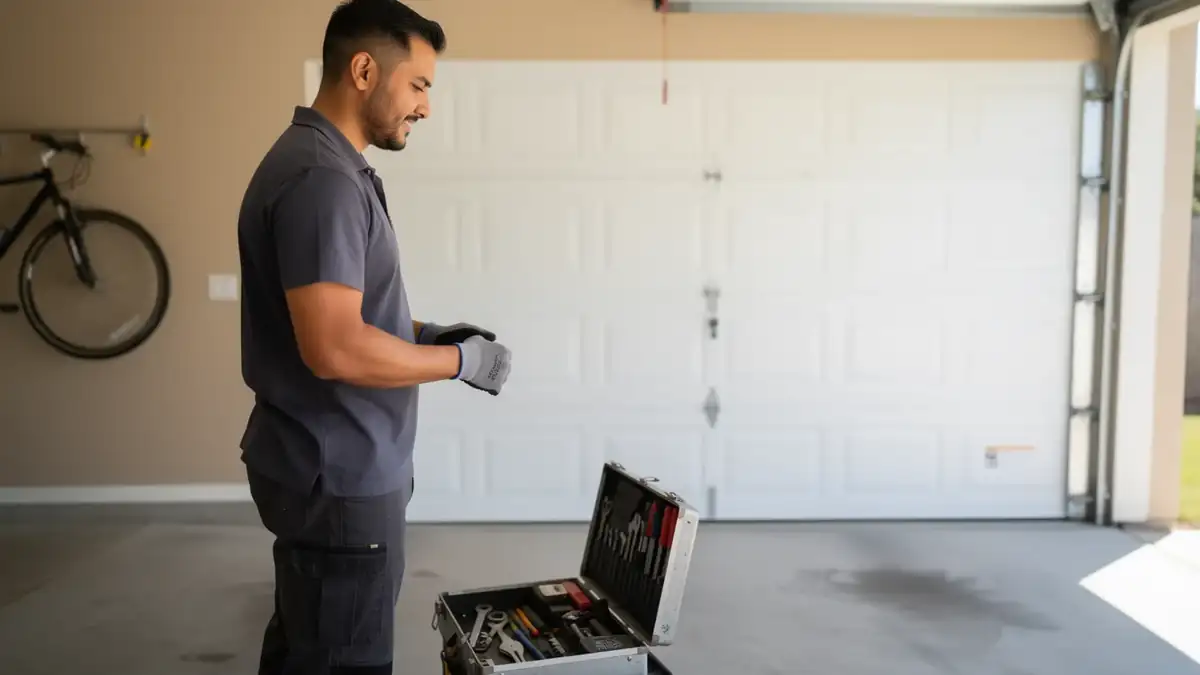
A service call starts with the thing you reported - the noise, the door that won't close, the opener that runs but the door doesn't move - and then widens out to the rest of the system, because on a door built in the 1980s or 90s, one worn part usually means its neighbors aren't far behind. We'll check spring tension, cable condition, track alignment, and roller wear, and we'll look at whether the opener's safety sensors are still reading correctly, since that's a common failure point on units from that era. We're not going to sell you a full replacement if a repair gets you another several years of use - but we will tell you when the repair cost is getting close to what a new door runs, because at that point patching it isn't doing you a favor. That's the actual scope: diagnose what you called about, flag what's adjacent, and give you a straight read on repair versus replace.