What You Pay
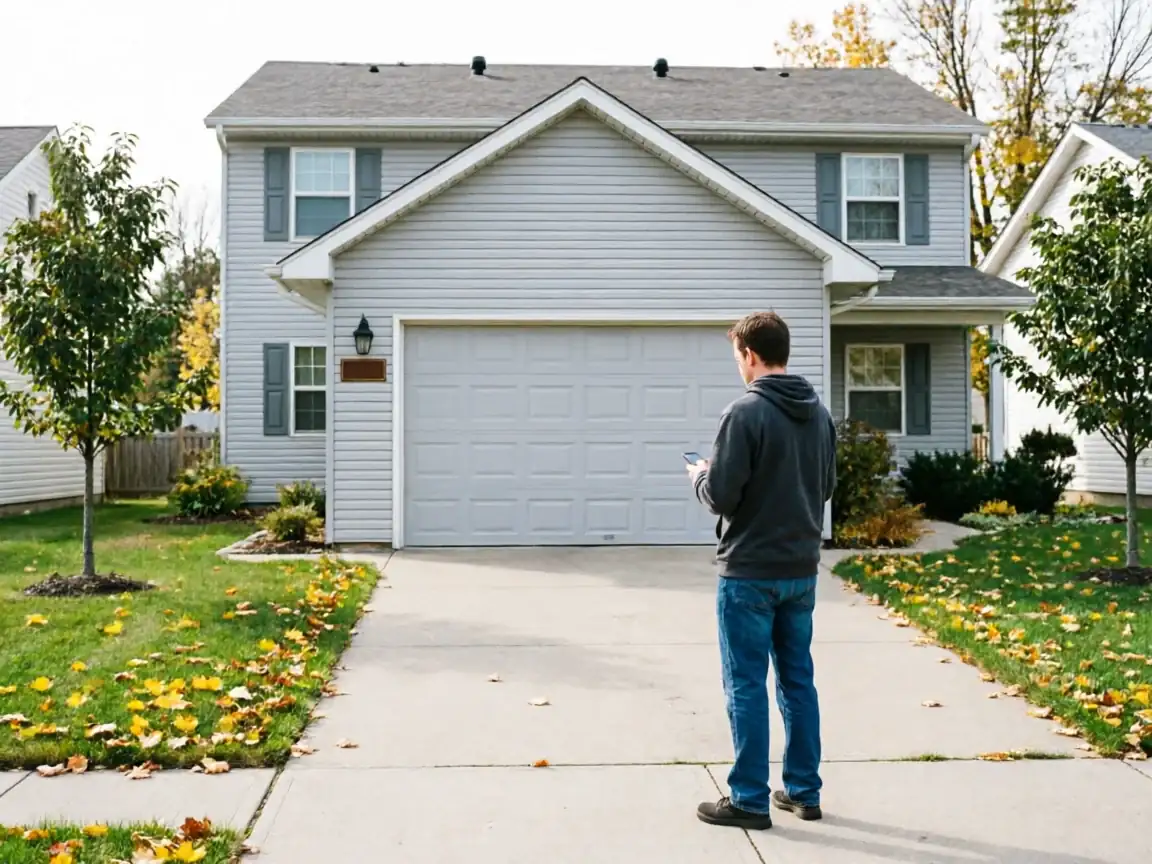
We don't quote a price here because it depends on what's actually wrong, but the housing stock in this area sets the range more than anything else. Most of the service area was built between 1957 and 2007, with the typical house dating to 1982. That matters because doors from that era are often original steel panels with no foam core, hung on torsion hardware sized for a lighter door than what's sold today.
A tech who replaces a spring on one of these older doors without checking the door's actual weight is guessing, and a mis-sized spring either snaps early or never gives you smooth lift. On the newer end of that 1957-2007 range, insulated doors and screw-drive or belt openers are more common, and those calls tend to be opener boards or sensor wiring rather than hardware.
With 152,017 owner-occupied houses in the broader area and a median household income of $112,060, most calls we get are repair calls, not replacement calls - the math usually favors fixing a sound door over swapping a working frame. That's not true everywhere, but it's true of the stock here.
How Local Conditions Play In
Maple Grove sits in a cold-severe climate band, and that changes what parts wear out first
Steel contracts in deep cold, which tightens torsion spring coils and can push a spring that's already near the end of its life over the edge in January rather than July. The same contraction stiffens cables and rollers, so a door that rolled quietly in September can start grinding by December with nothing visibly broken.
Lubricant matters more here than in a mild climate
Standard grease thickens and slows roller movement at low temperatures, which is part of why we check lubricant condition early rather than assuming a slow door means a dying opener.
Houses built across the 1957-2007 window in this area
The same stock you'll find out toward Osseo, Dayton, Champlin, and Corcoran - mostly weren't built with garage doors as a thermal priority, so gaps at the bottom seal and between panels let cold air pull moisture onto hardware. That moisture is what we're usually chasing when a cable or hinge shows rust ahead of schedule.
The Seasonal Bit
The swing from a cold-severe winter to a full Minnesota summer puts more stress on garage door hardware here than a lot of homeowners expect. Torsion springs lose a measurable amount of tension in extreme cold, which shows up as a door that feels heavier to lift by hand in February than it did in August, even with nothing broken.
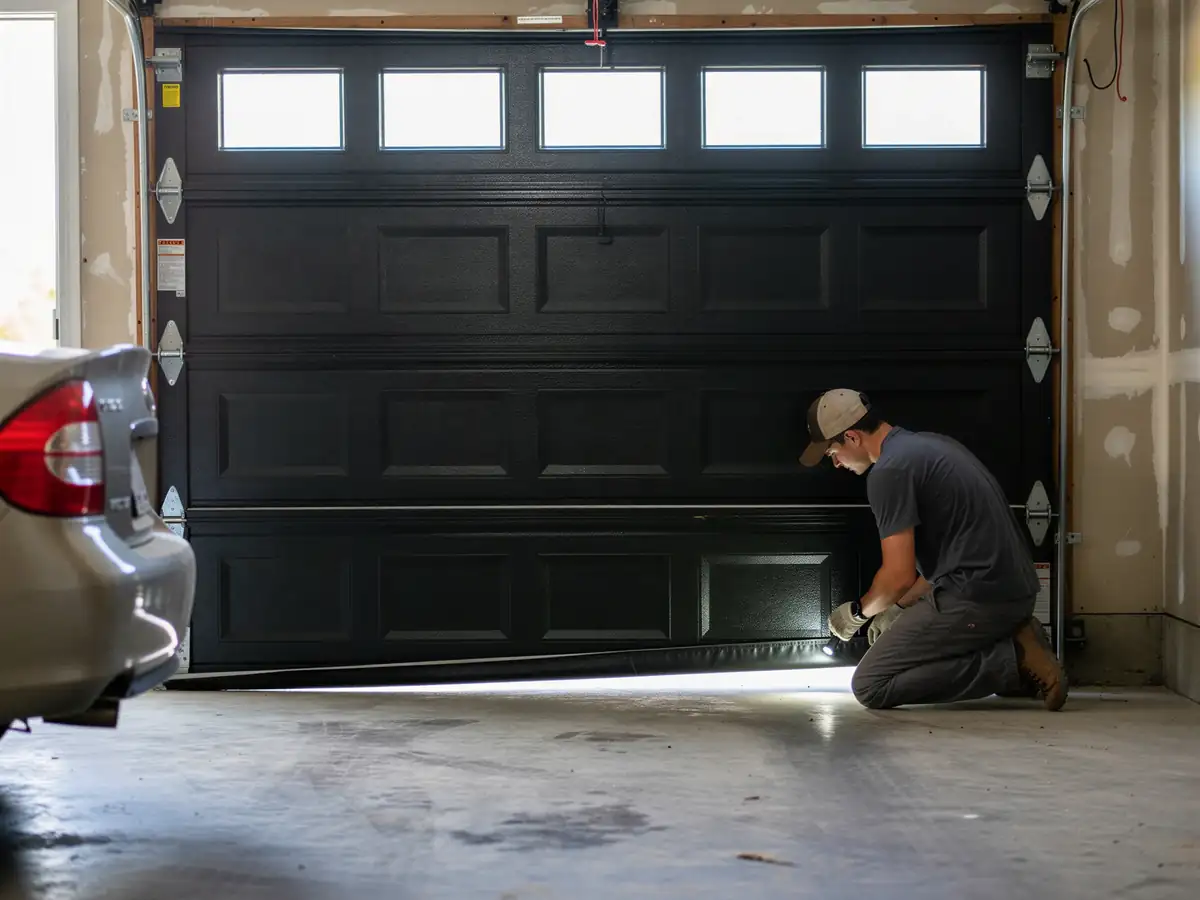
Opener photo-eyes are the other seasonal issue. Cold condensation and occasional ice on the sensor lenses can make a door refuse to close, and that's often mistaken for a dead opener board when it's really a thirty-second cleaning fix.
Track alignment shifts too. Houses on concrete slabs poured decades ago, common across the 1957-1982 median build range here, settle slightly over the years, and that settling is more noticeable after a hard freeze-thaw cycle than during a stable season. A track that's a quarter inch off alignment in July can bind completely once the slab contracts in a cold snap.
We don't push seasonal tune-ups as a blanket fix for every house, since a door in good shape doesn't need one just because the calendar changed.
What Is Going On
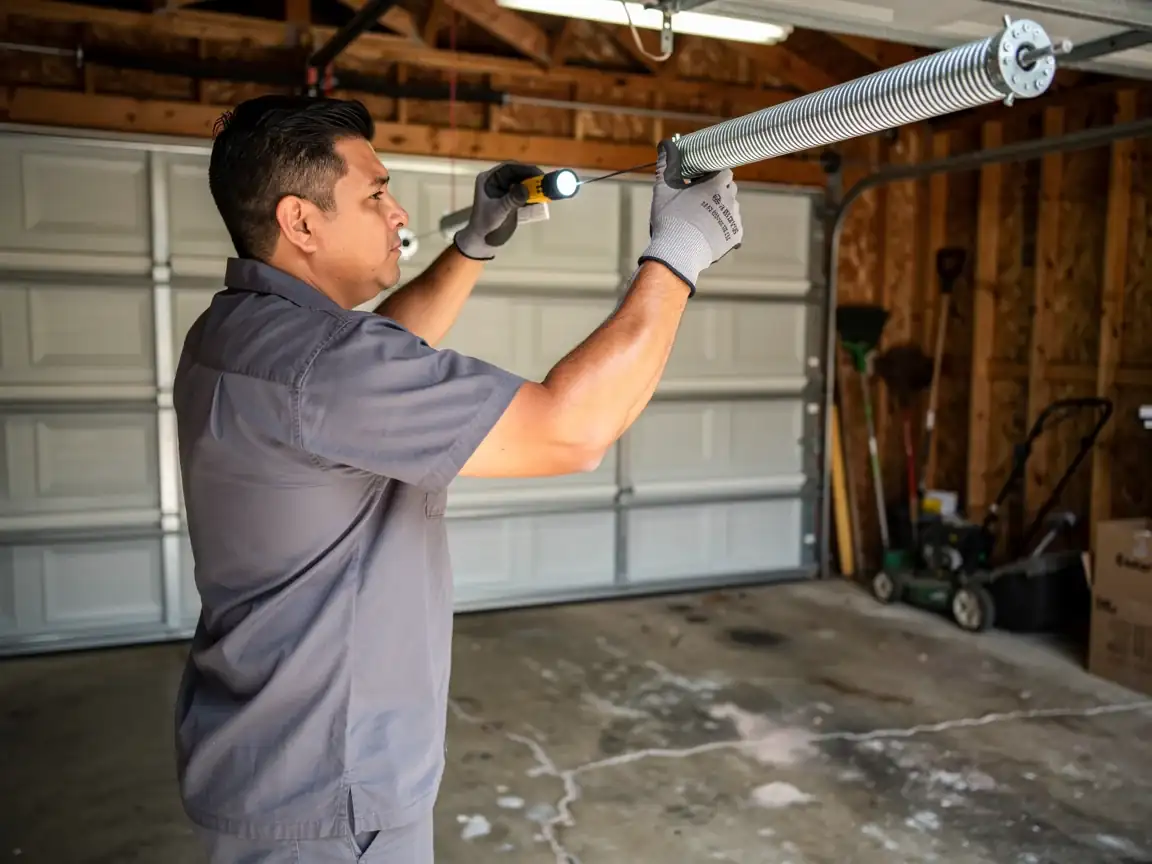
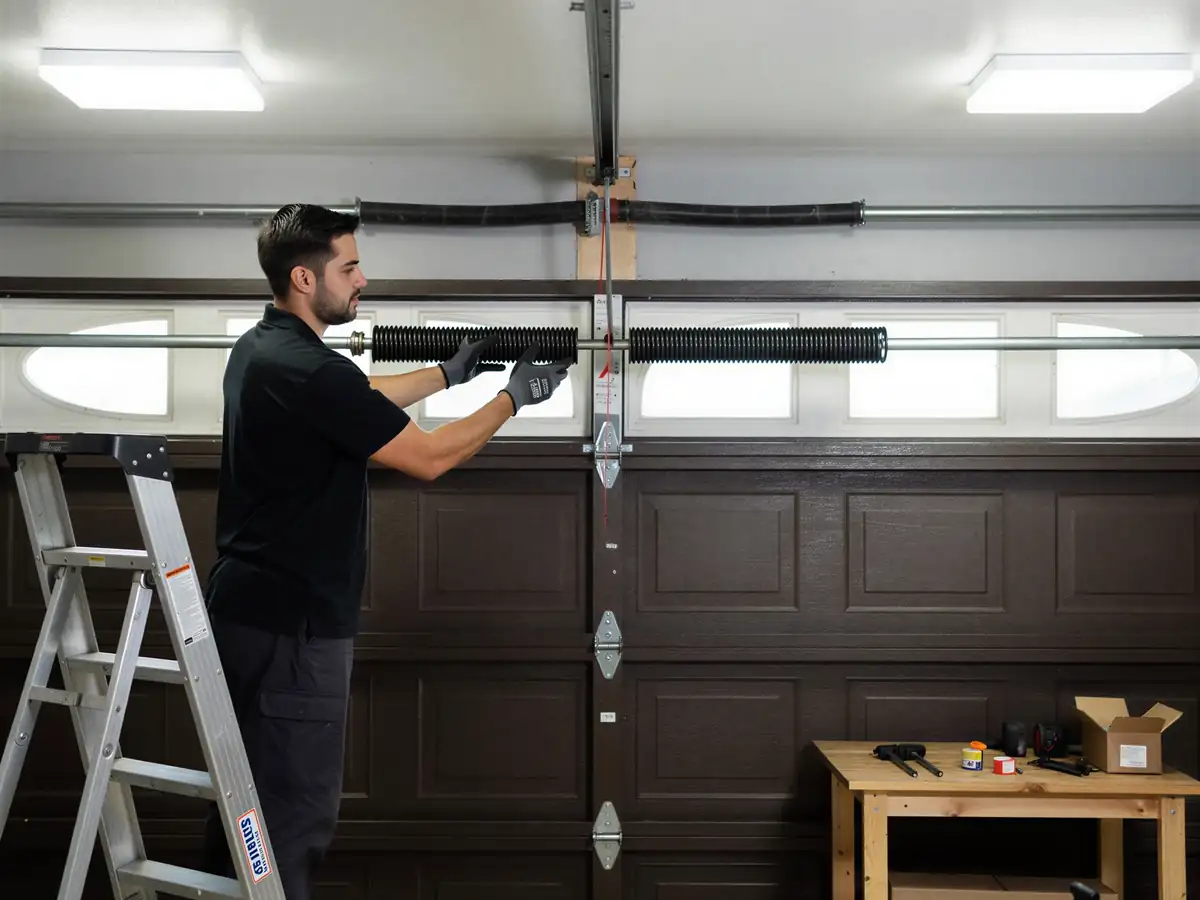
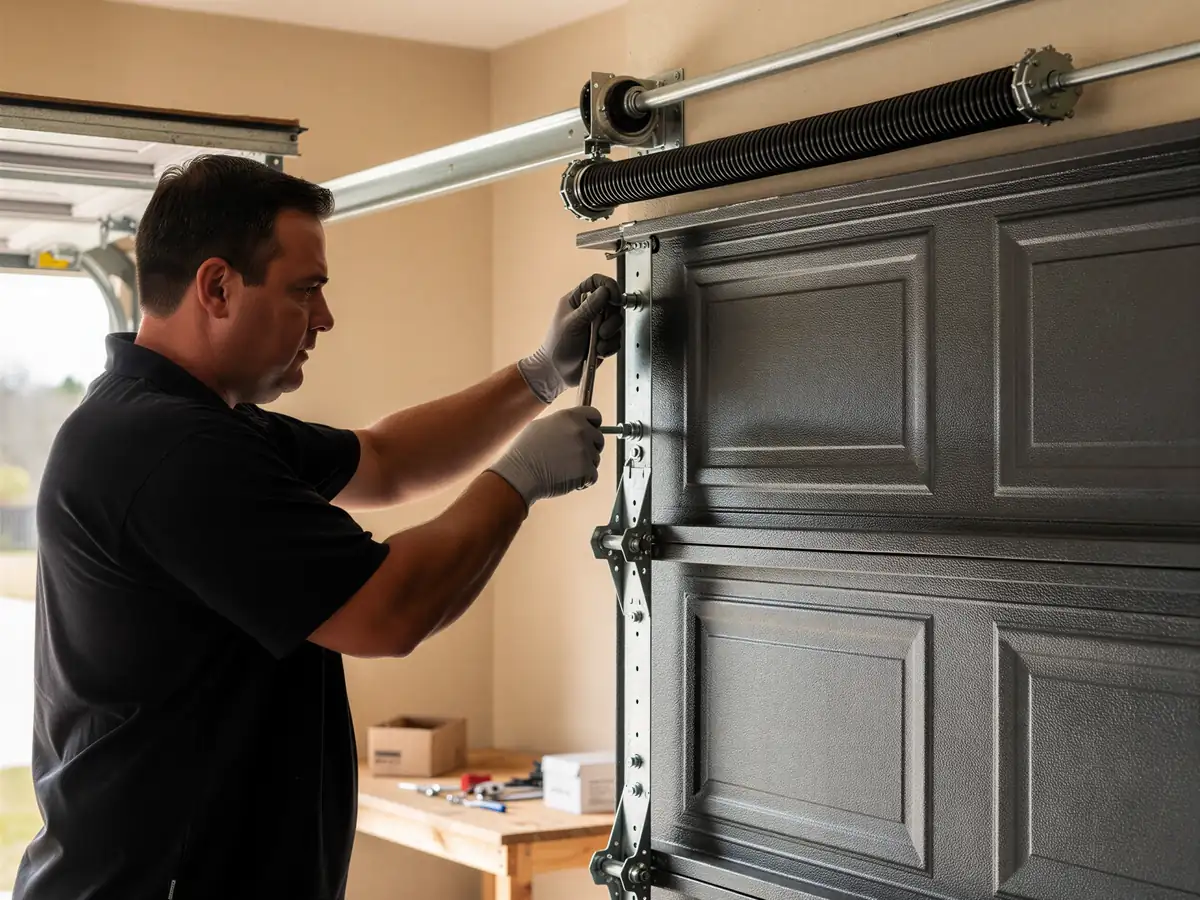
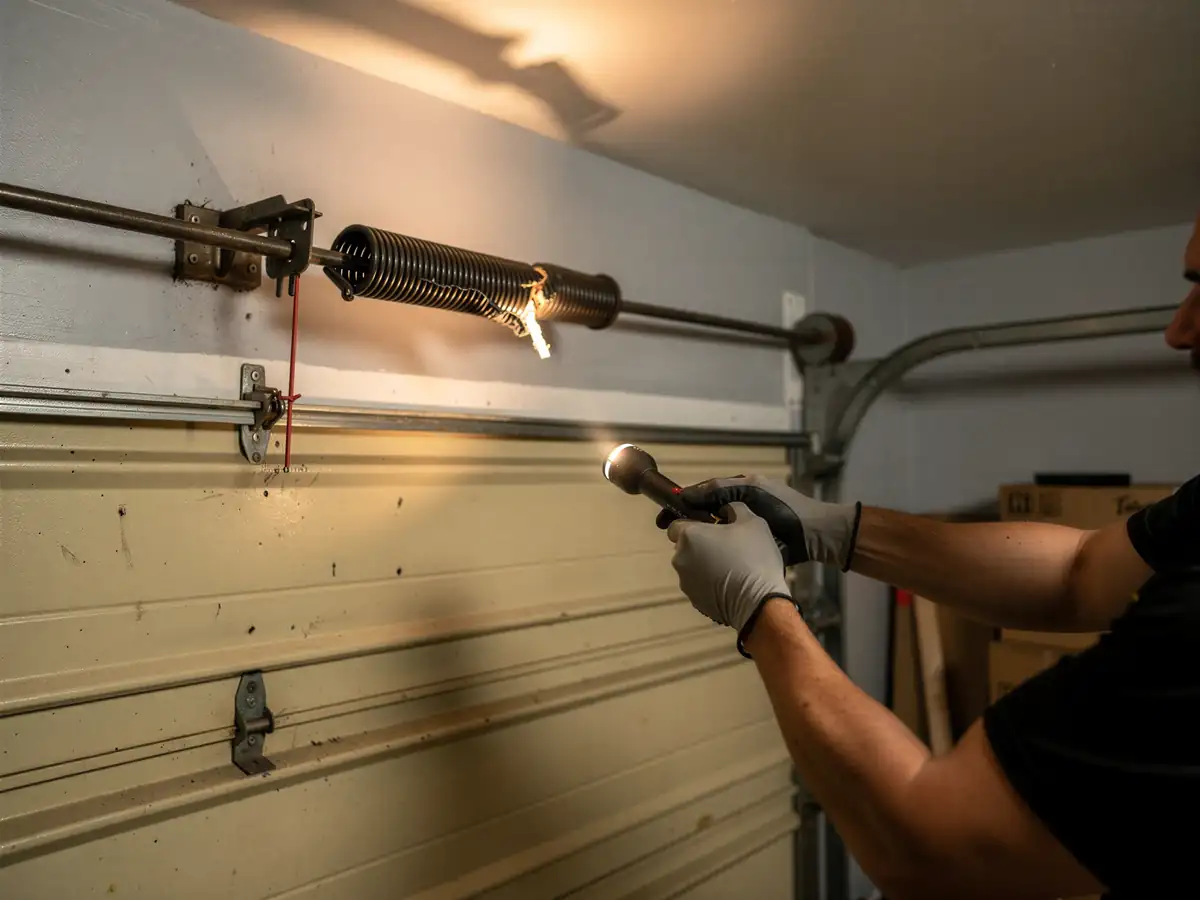
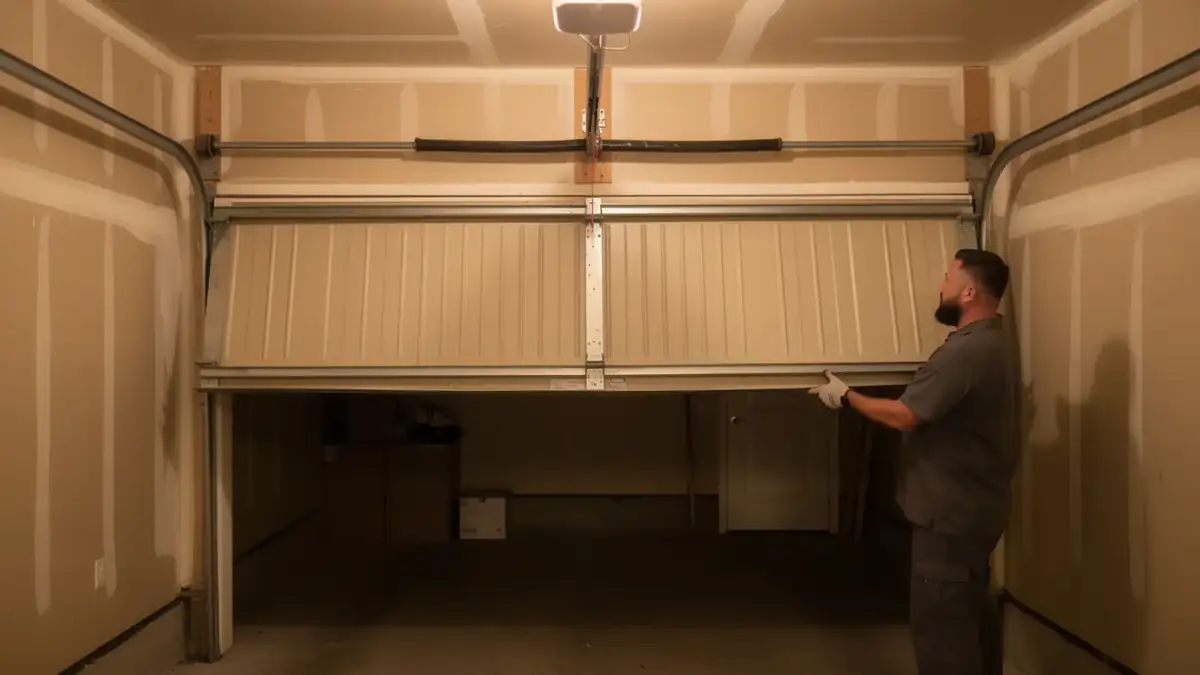
On a service call, we start at the spring, not the opener, because across this area's 1980s-median housing stock a worn or broken torsion spring is the most common reason a door won't open - more common than a bad opener board. We check the winding cone for cracks and the spring coils for gaps that mean lost tension.
Next is the cable and drum setup, since cold-severe winters here accelerate cable fraying at the drum groove faster than in a milder climate. Then rollers and track alignment, checking for the slab settling that's common in houses built in the 1957-2007 range.
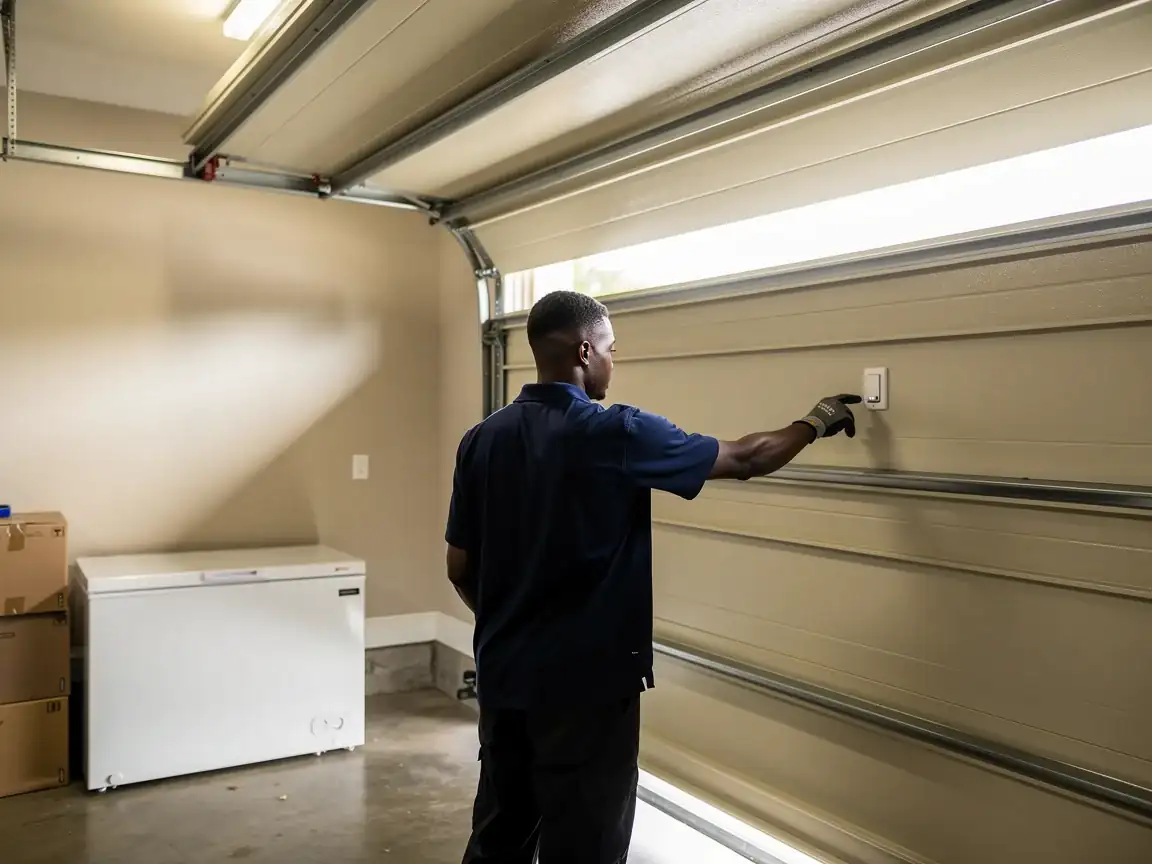
Only after hardware checks out do we look at the opener - force settings, photo-eye alignment, and logic board error codes. Jumping straight to the opener is the mistake that leads to replacing a $200 part when a $40 spring adjustment was the actual problem.
One honest limit: if a spring is original to a house built in the early part of that 1957-2007 window, we're not always able to match the exact wind and wire gauge on the truck, and that can mean a short wait on a special-order part rather than a same-day fix.