What You Pay
We won't quote you a number here, because we haven't seen your door, and a flat price on a page is usually a lie waiting to happen. What we can tell you is what drives the decision on a door that's been up since the 1980s or 90s, which describes a lot of garages in this area.
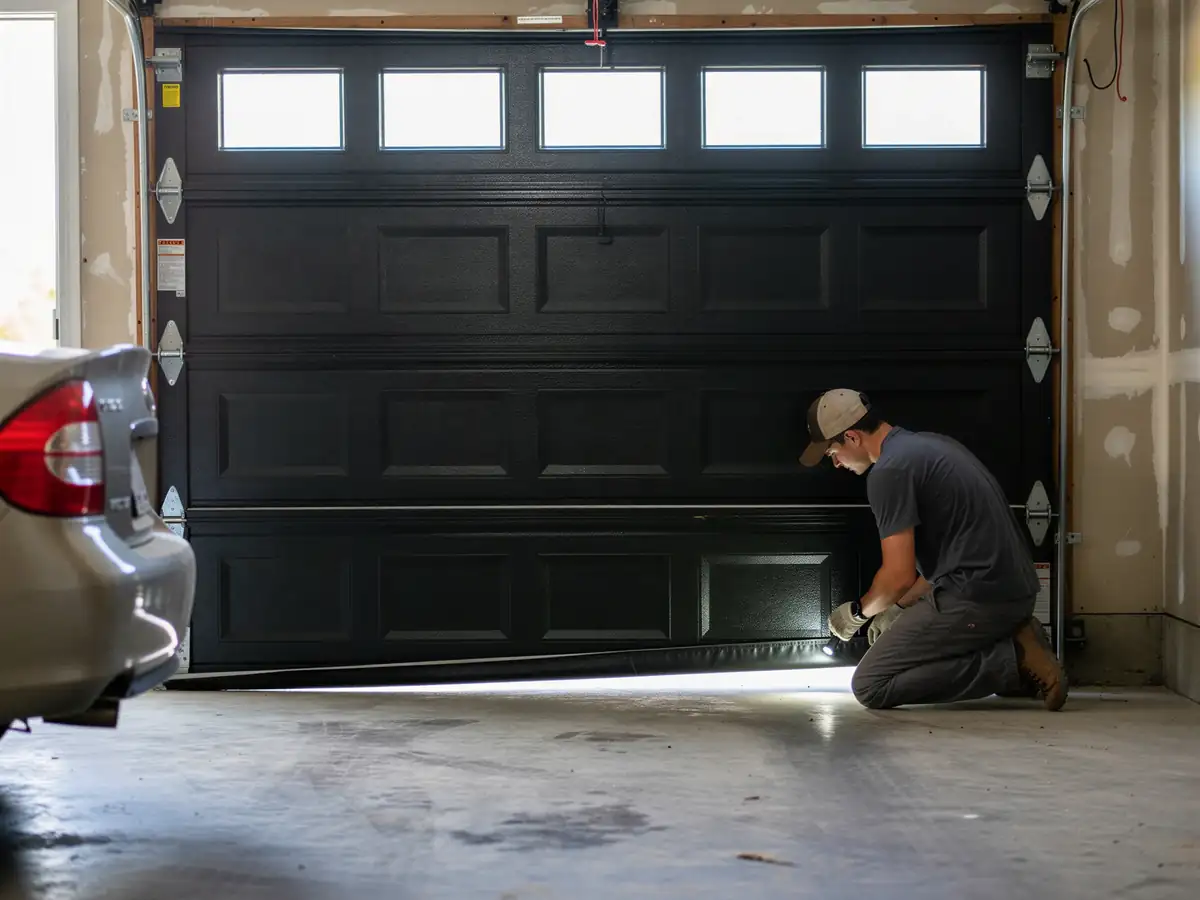
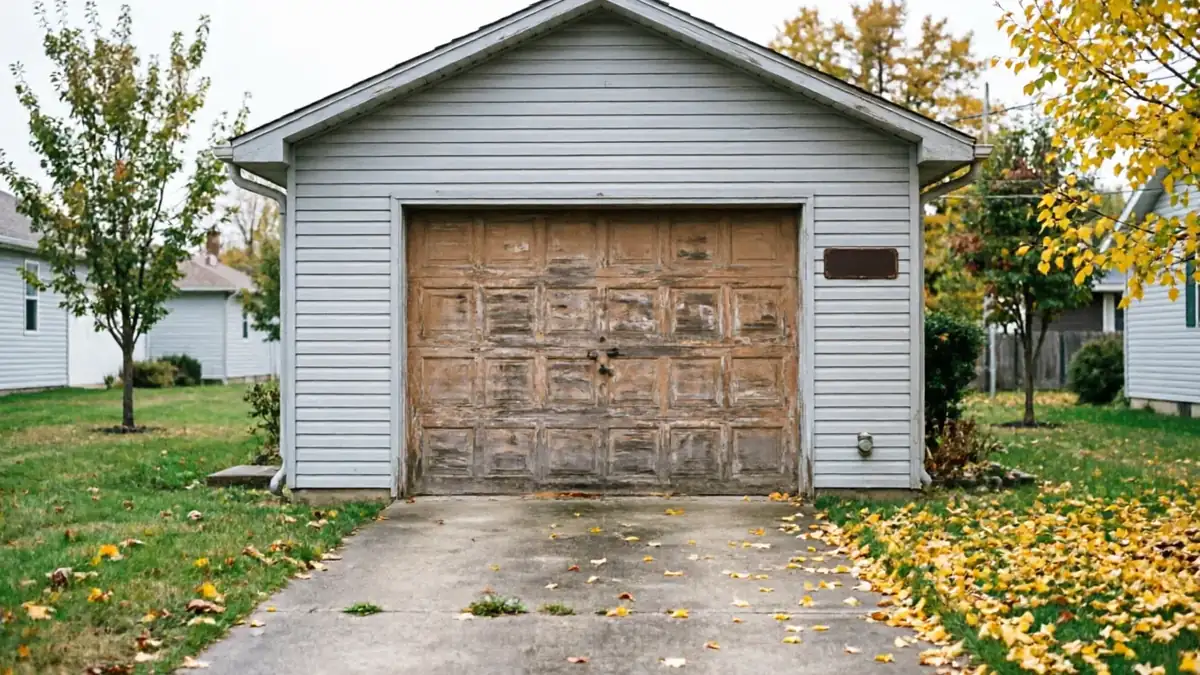
Most houses on this side of the Twin Cities went up between 1957 and 2007, with the median build year sitting at 1982. That means the typical door here is an older steel panel on a torsion spring system that was sized for an opening built decades ago. If the track is straight, the hardware is original single-spring, and the panels aren't rusted through at the bottom, a spring swap or roller job usually makes sense. If the door is sagging on its hinges, the panels are dented past square, or the opener is fighting a door that's binding, you're paying to patch something that's going to keep failing.
The honest limit here: once a steel door from that era needs a second major repair in under two years, we'll tell you to replace it. Parts for some of those original hardware setups are getting harder to source, and we're not going to keep billing you for a door that's done.
How Local Conditions Play In
Maple Grove sits in a climate band rated cold and severe
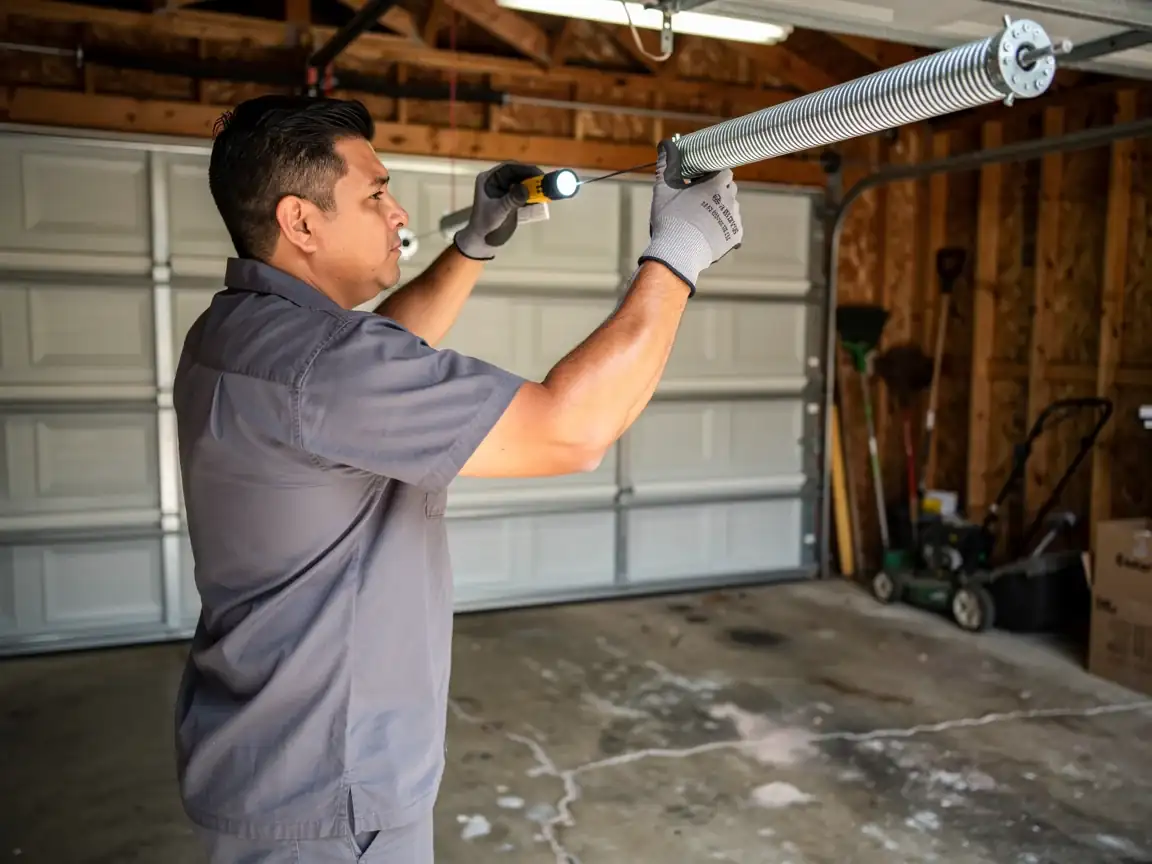
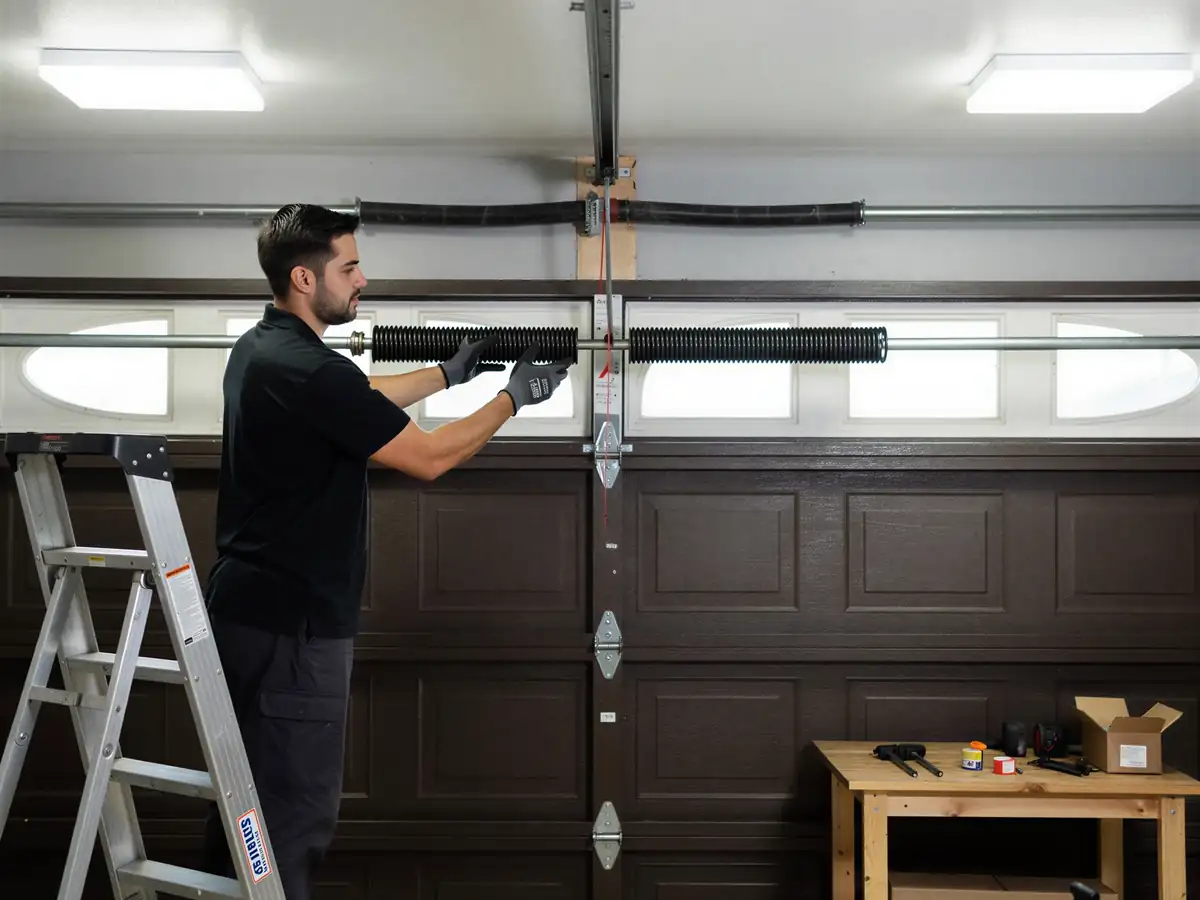
And that matters more for an old door than most homeowners think. Steel contracts in cold, and a torsion spring that's been cycling for thirty-plus winters loses tension faster once temperatures drop hard. On a door built to the 1980s or 90s standard - common across the 57 named areas that make up this kind of housing stock - that often means a single torsion spring doing a job that a modern double-spring setup handles with less strain.
Non-insulated steel panels from that era are the other issue
They were fine for the energy codes of the time, but against a severe cold band they let heat out of an attached garage fast, which is part of why so many of these doors get replaced for comfort reasons as much as function. If your door is from that build window and the garage runs noticeably colder than the rest of the house in January, that's the panel talking, not just the door seal.
We don't push insulated replacement on every repair call
If the spring is the only thing wrong, we fix the spring.
The Seasonal Bit
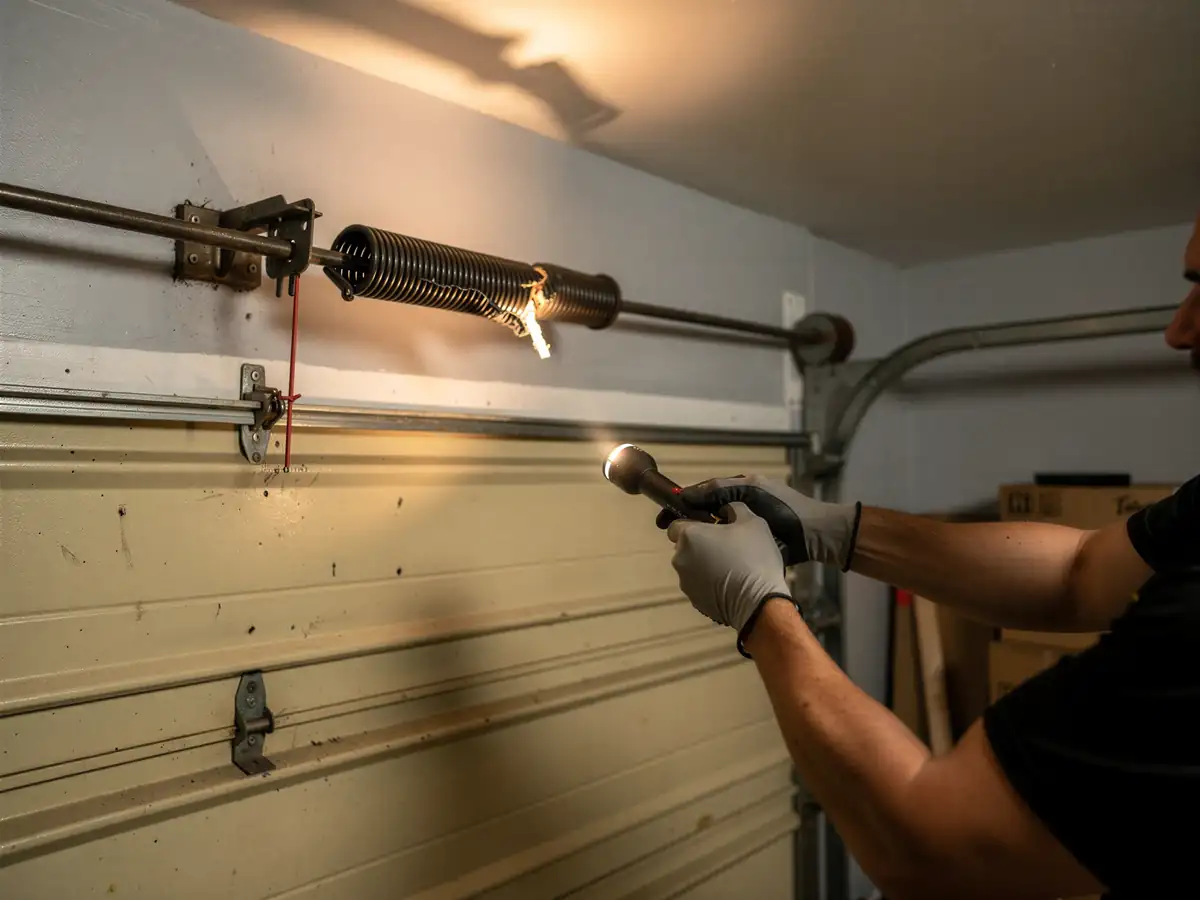
Cold snaps are when old doors in this climate band fail, not during a mild stretch in October. A torsion spring that's marginal will usually let go on the first hard cold morning of the season, because the metal has less give. If your door is from the 1957-2007 build range that covers most of this housing stock, and it's never had the spring replaced, winter is when you'll find out.
Median household income here runs $112,060, which puts a quality insulated replacement door within reach for most homeowners in this area rather than a stopgap repair every other winter. That's not a sales pitch - it's just the math on a door that's already past median build age and living in a severe cold climate. A repair now and a repair again next January can add up to more than one good door.
We do still recommend the cheaper fix first when it holds. Not every old door needs to become a project. But if you're calling us twice in one winter, that's the door telling you something, not bad luck.
What Is Going On
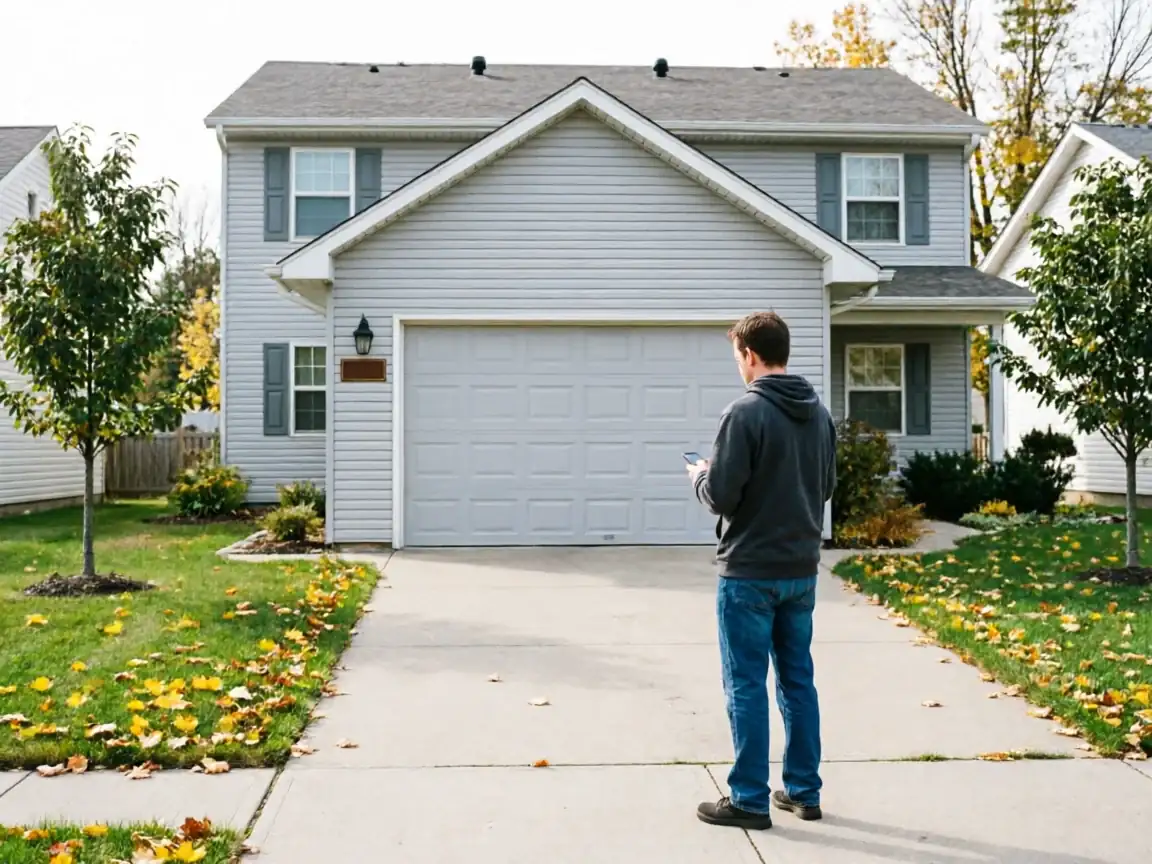
Across the broader service area - 290,218 households, 152,017 of them owner-occupied houses - a lot of garages are still running hardware that matches the 1980s and 90s build wave this region went through. That's not unique to one street or one subdivision; it's the housing stock itself, and it shows up whether you're near Osseo, out toward Dayton, or over by Champlin or Rogers.
What we see on repair calls is pretty consistent with that: original torsion springs well past their cycle life, steel panels with surface rust at the bottom where snowmelt sits, and openers from an earlier generation straining against doors they weren't matched to. None of that is dramatic. It's just what thirty-plus years and a cold climate do to a garage door.
The limitation worth saying plainly: we can't tell you over the phone whether your specific door is a repair or a replacement. Spring tension, panel condition, and track wear all matter, and they're different door to door even on the same block. A look at the door tells us more than a build year does.