What You Pay
We don't have a flat number to give you here, and anyone who quotes one over the phone without seeing your opener is guessing. What we can tell you is what drives the cost: whether the sensor eyes themselves are bad (cheap, usually) or whether the bracket they're mounted on has bent or the wire running to them has been nicked by a mower or a kid's bike. On the 1980s-and-90s opener units still running in a lot of Maple Grove garages, the wiring is original and brittle at the connectors, which is a different job than swapping a $20 sensor pair. Homes from the earlier end of our local stock, built back toward 1957, sometimes still have older brackets screwed into wood jambs that have shrunk over sixty-plus years, and that shift changes the alignment math entirely. We'll tell you straight if it's a five-minute fix or something that needs new hardware before we touch a wrench to it.
The Seasonal Bit
The worst time for a sensor call in Maple Grove is the first real cold snap of the year, not the dead of January. That's when the slab makes its biggest single move of the season, going from fall's relative stability into the first deep frost. Brackets that were sitting right at the edge of alignment all summer get pushed past it. Spring thaw does the same thing in reverse, a slower drift as the ground gives back the frost. If your opener suddenly starts reversing on close, or the light blinks and the door won't shut, check the lenses for dust first because that's free and easy, but if that's not it, look at whether the brackets are square to each other rather than assuming the sensors themselves are shot. A lot of good sensors get replaced in this climate when the actual problem is a quarter-inch of bracket movement.
What Is Going On
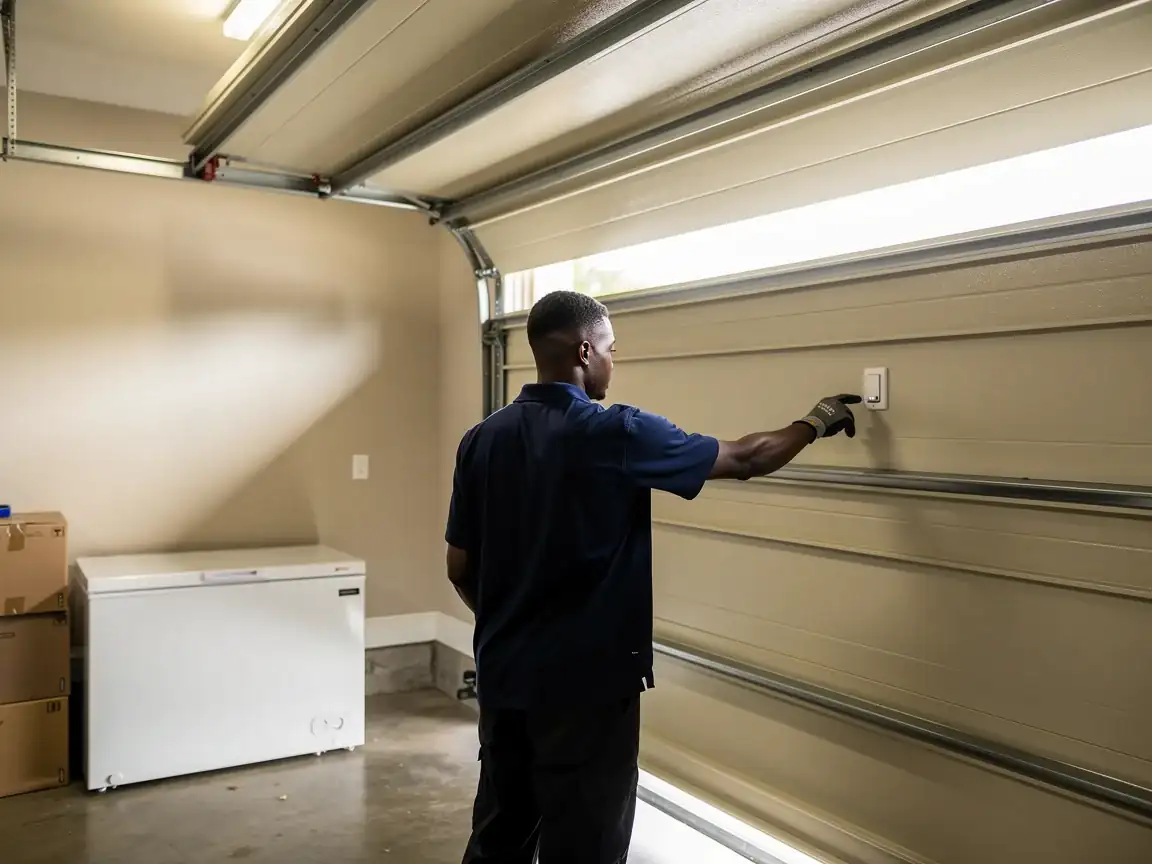
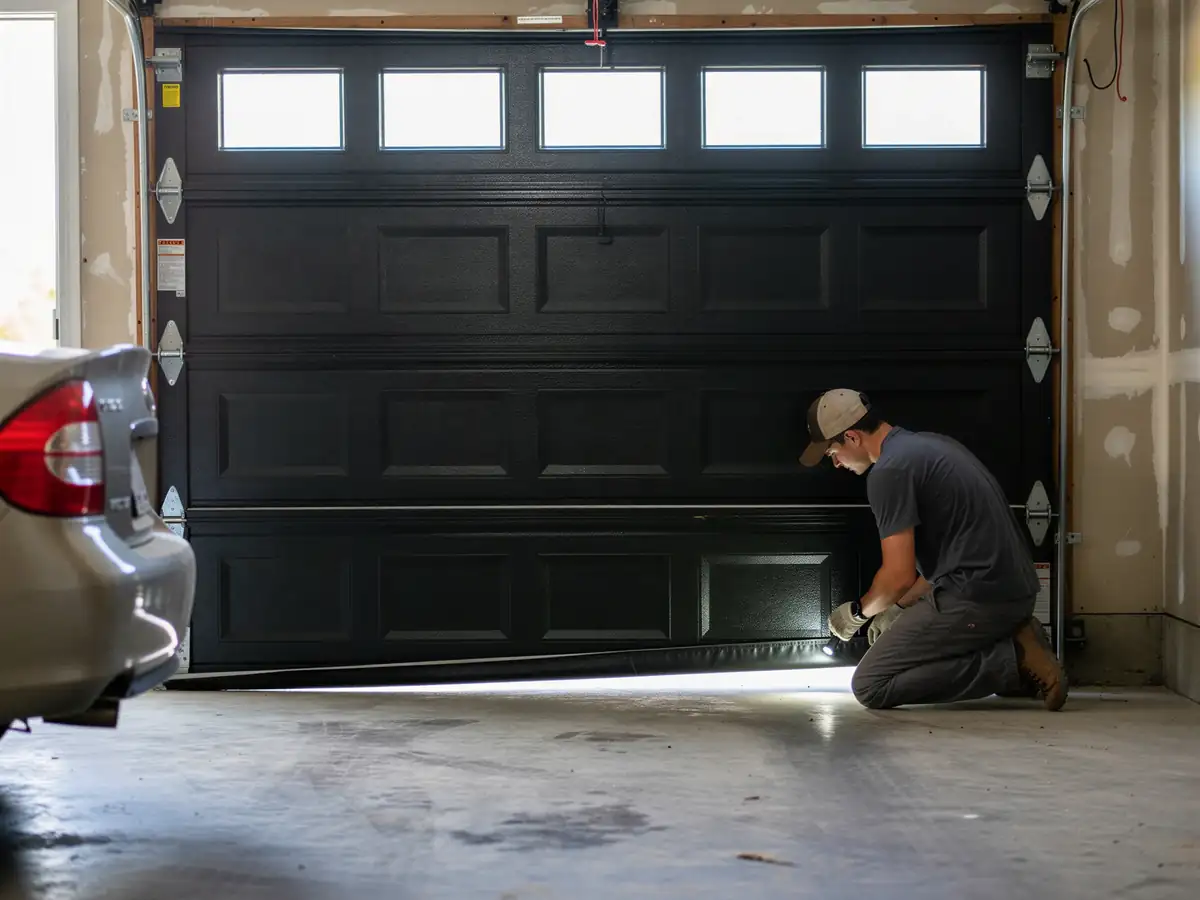
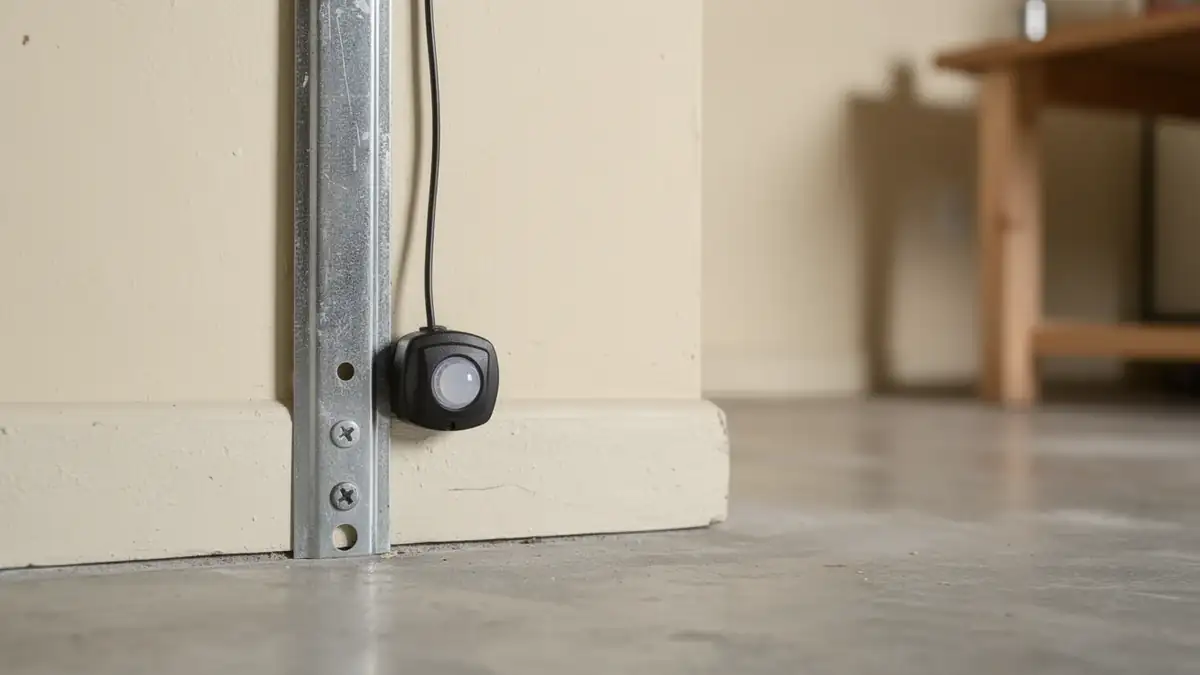
Underneath the blinking light, a safety sensor system is just two eyes that have to see each other in a dead straight line, low to the ground, a few inches off the slab. Anything that moves one bracket relative to the other breaks that line even when both units are functioning perfectly. In a service area where housing runs from 1957 to 2007 with most of the stock dating to the 1980s and 90s, we see the same pattern across dozens of named neighborhoods: original brackets, original wiring, and decades of slab movement nobody's checked. It's rarely the electronics. We realign more sensors than we replace, and we'd rather tell a homeowner that than sell a part they don't need. When a bracket's bent beyond re-aligning, or the bracket itself has rusted through on an older install, that's when replacement actually makes sense.