What You Pay
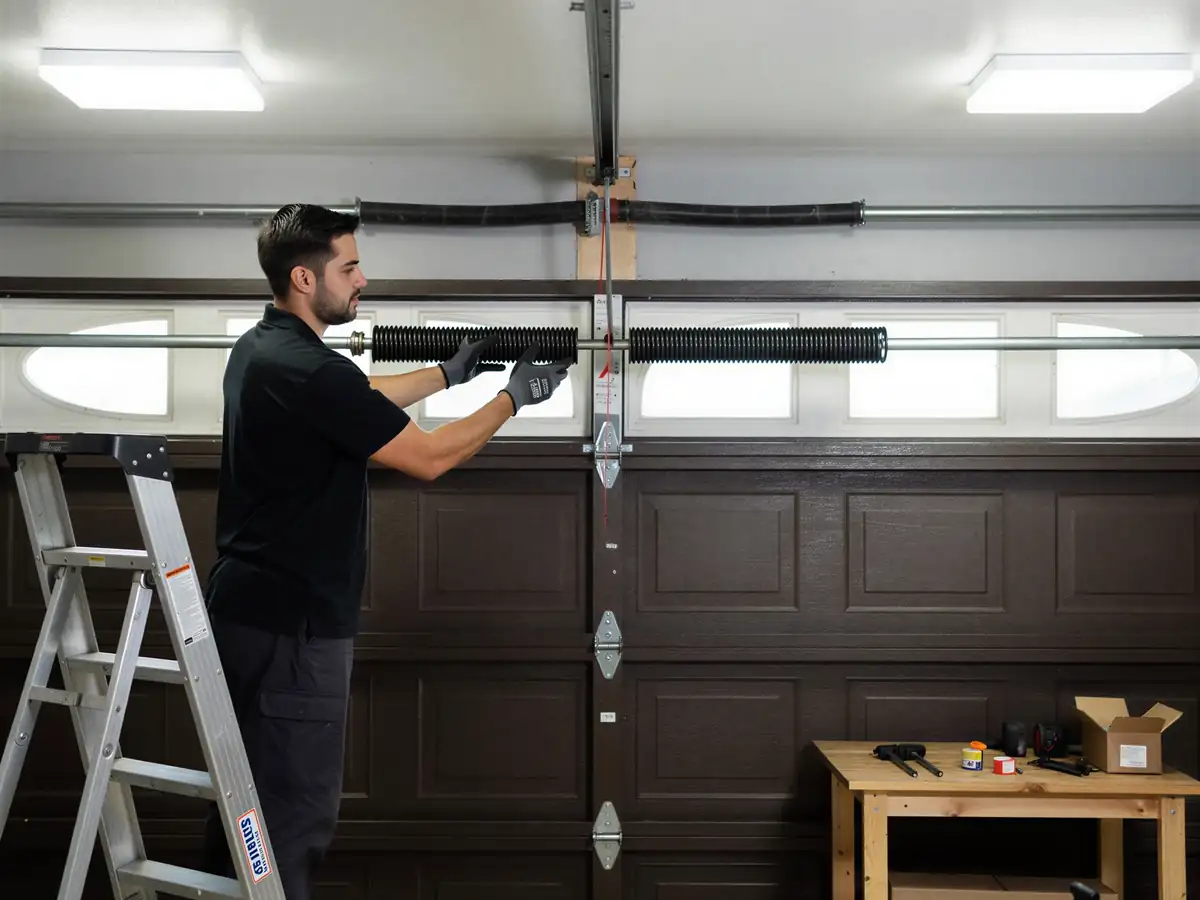
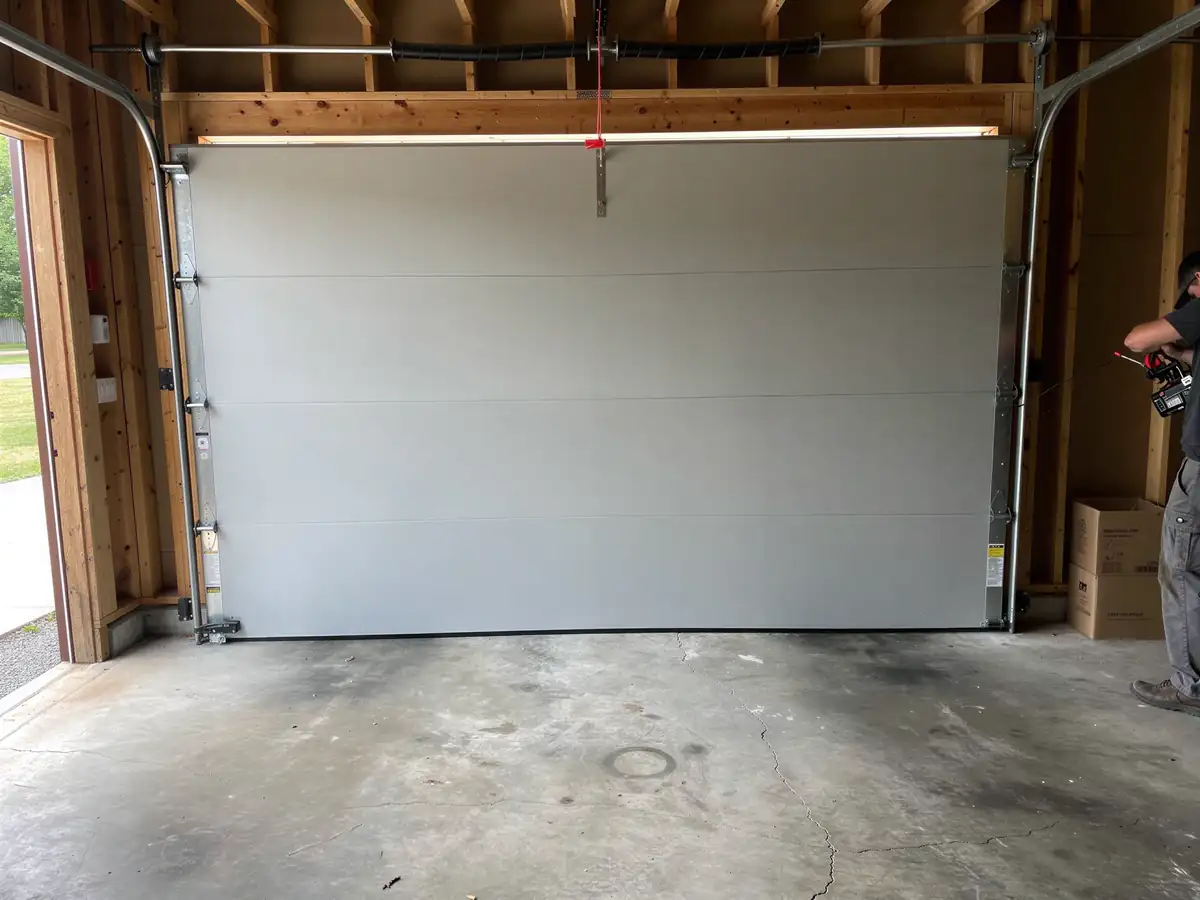
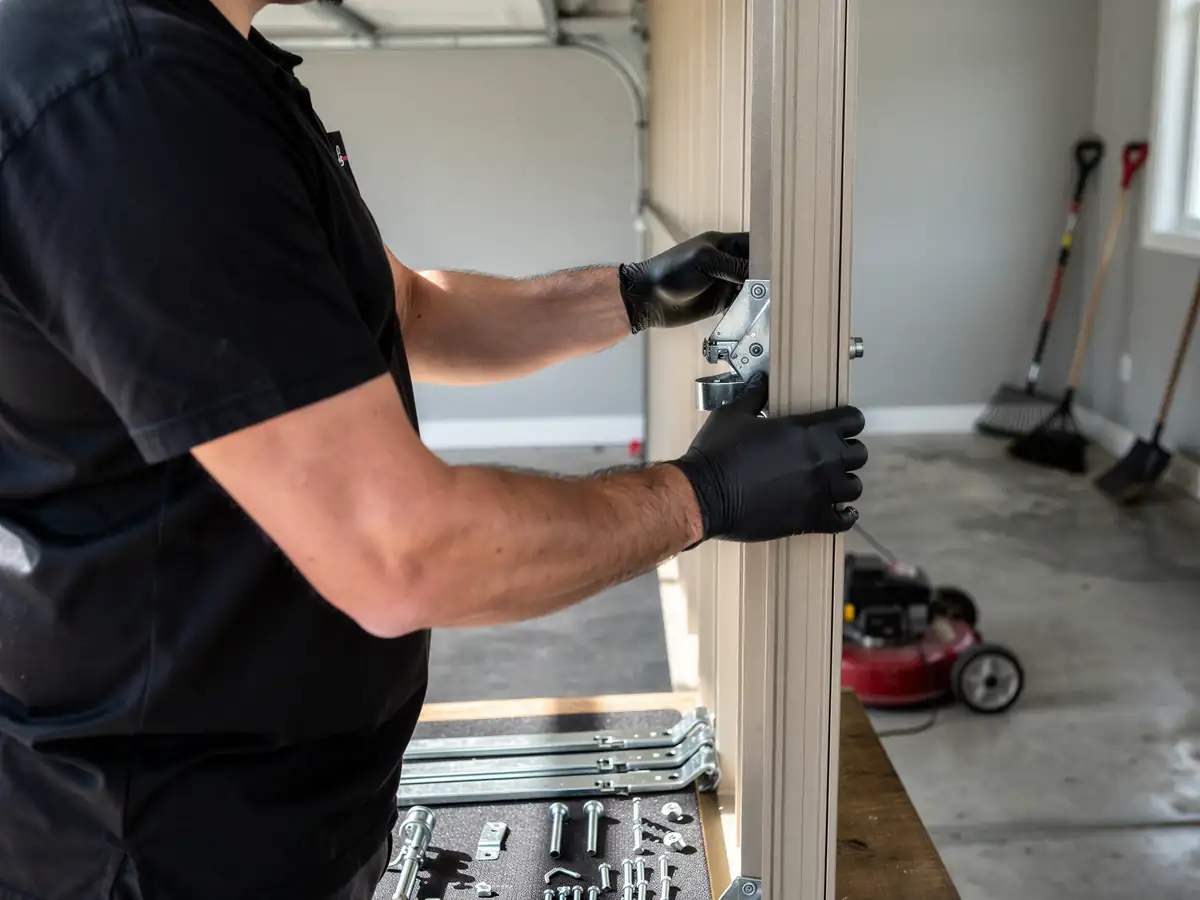
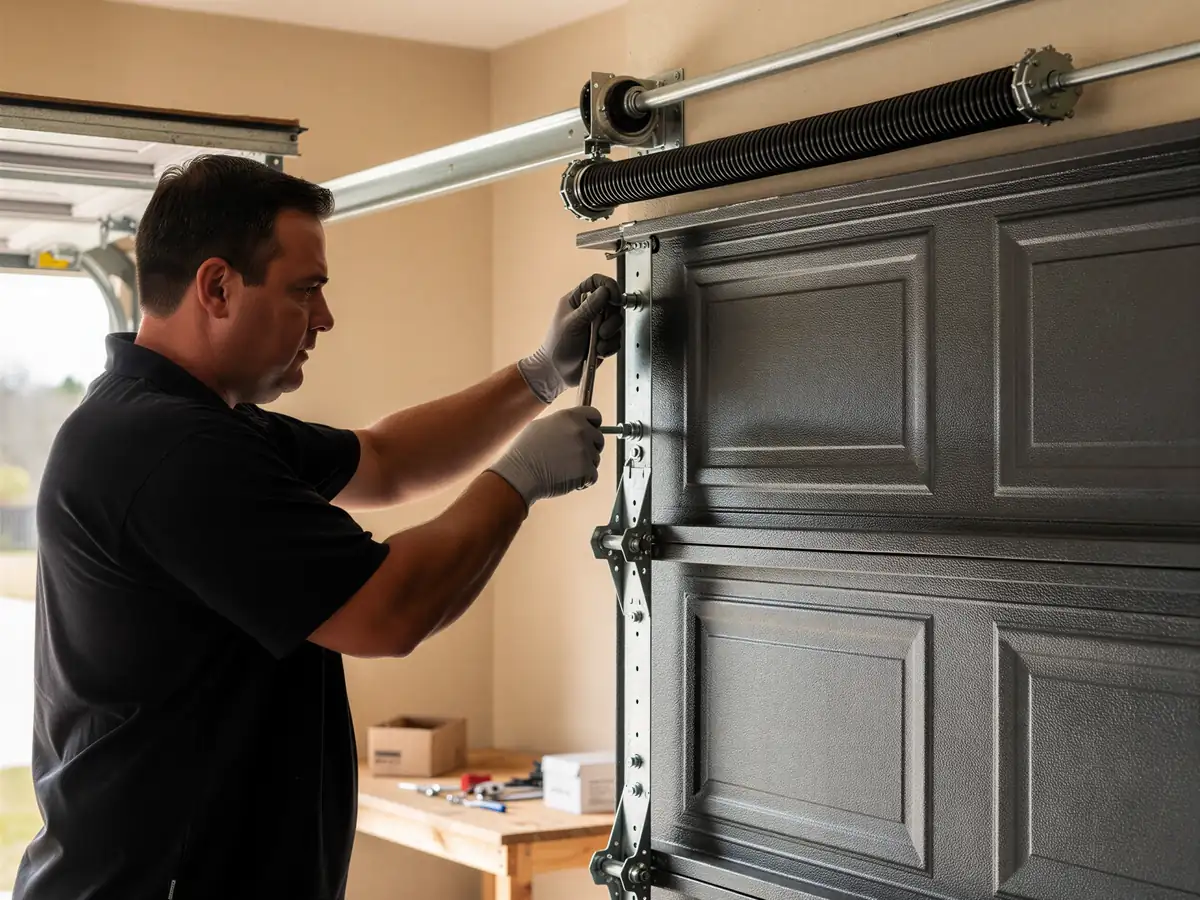
We don't post a flat number here because spring jobs in Maple Grove vary more than people expect. A house from the 1960s or 70s often has an older torsion setup with a single spring sized for a lighter door, while a lot of the 1980s-90s stock that makes up most of this area's housing came with heavier insulated doors and dual-spring systems. Swapping a single spring on an older door is a different job, with different parts, than replacing a matched pair on a newer insulated panel door.
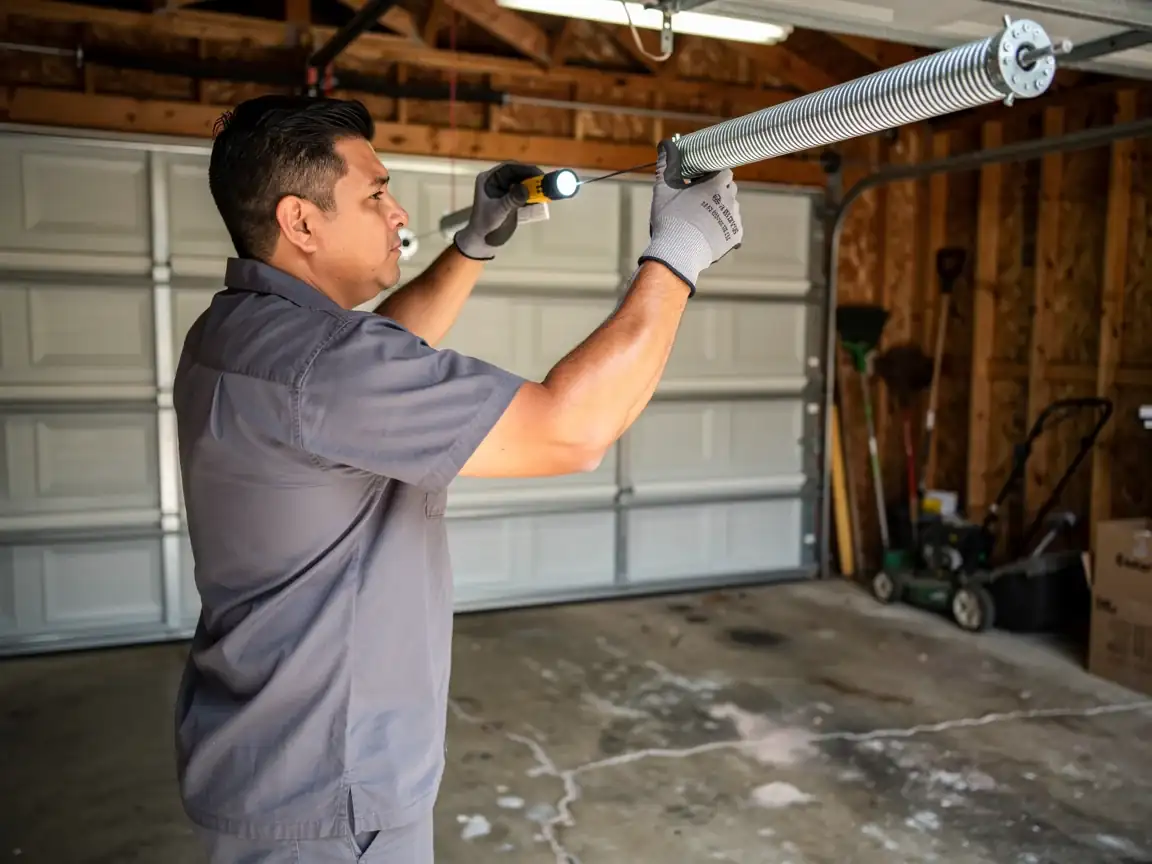
What we can tell you is what drives the number up or down: whether it's one spring or two, whether the drum and cable need to come off with it, and whether the opener's travel limits need resetting after. If your door was installed when the house was built sometime in that 1957-2007 window, the spring gauge was picked for that door's weight at the time - not for whatever opener or insulation upgrade got added later. That mismatch is common enough here that we check it on every call, because a spring that's undersized for the door will fail again no matter how well it's installed.
We'll give you the number for your door and your garage before we touch anything, not a guess over the phone.
How Local Conditions Play In
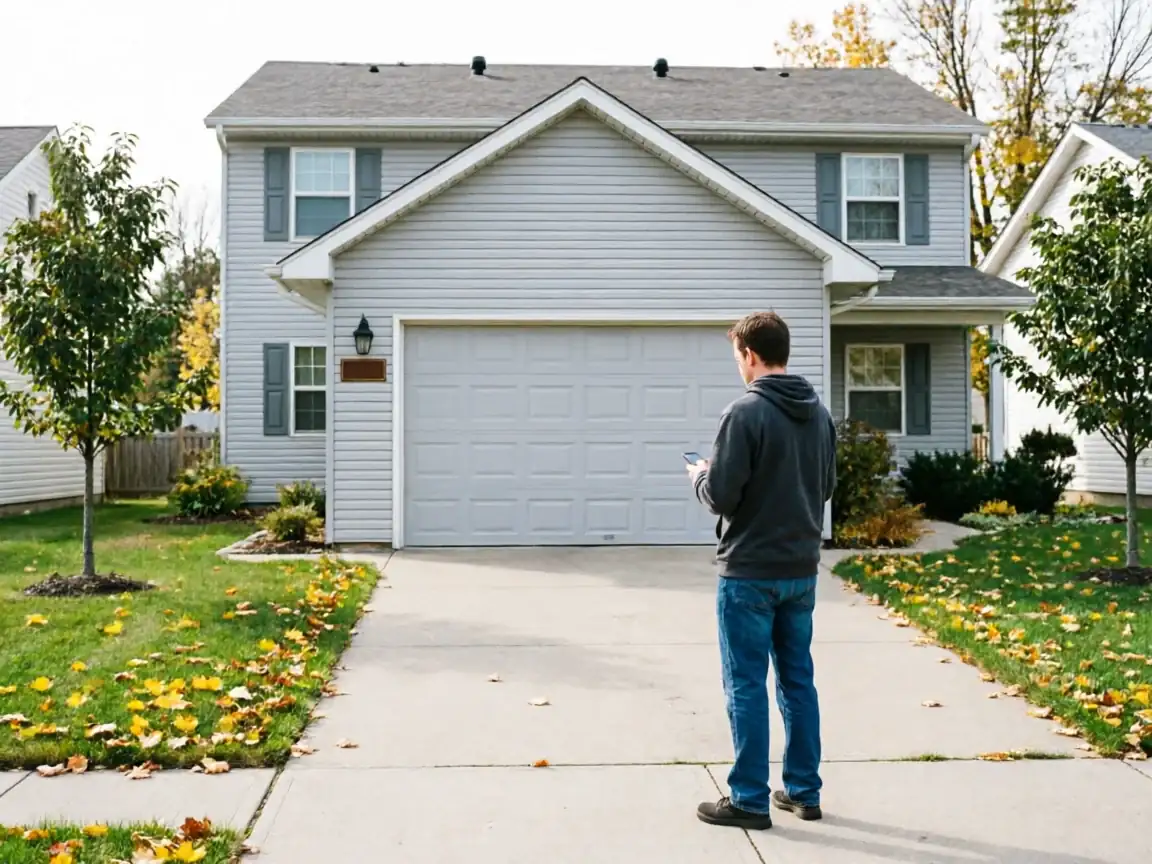
Maple Grove's housing stock runs from 1957 up through 2007
With the median build year around 1982, and that spread matters more than most homeowners think. A spring that's 40 years old has gone through decades of temperature swings it was never rated to survive indefinitely. Steel fatigues with every cycle, and cold makes steel brittle - so an older spring near the end of its life is far more likely to snap on the coldest mornings than on a mild October afternoon.
- 40 years
The area covers a wide mix of built eras across its named neighborhoods
And we see the difference door to door. A house near Elm Creek built in the 80s might still have its factory spring doing fine, while a similar-aged house two streets over has already had one replacement and is due for another. Age on the tag matters more than age of the house, but the two are connected - most of what we work on traces back to that 1957-2007 build window, and the springs installed then are reaching or past their expected cycle count now.
If your door is original to a house built in the early part of that range
The spring is a reasonable suspect before anything else.
The Seasonal Bit
Minnesota's cold band here is classified as severe, and that's not a marketing word - it's the difference between a spring that stretches smoothly and one that locks up stiff and snaps under tension it would have handled fine in July. Cold steel loses flexibility. A spring already worn thin from age doesn't bend through its coil the way it should; it resists, then gives all at once, usually on the coldest string of mornings in the stretch between December and February.
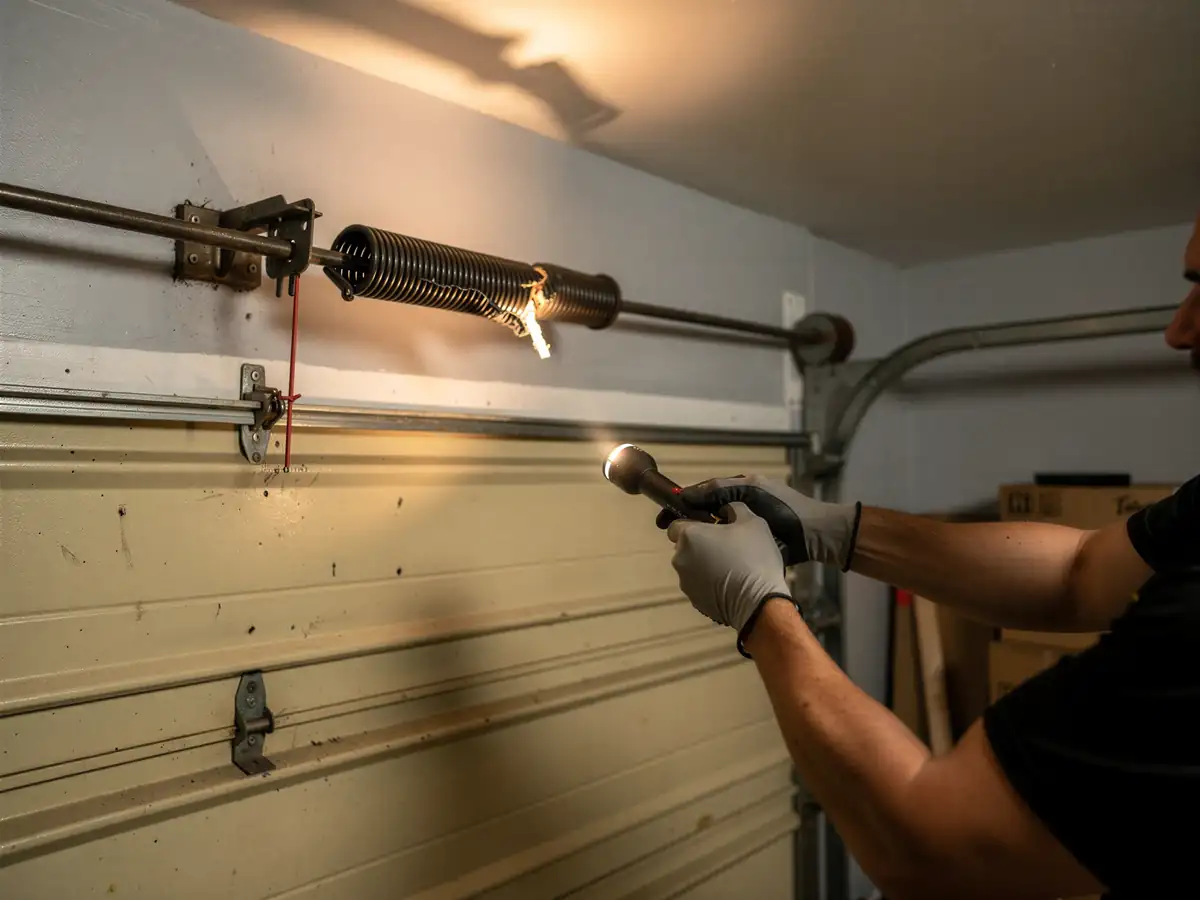
We get more spring-failure calls on the first genuinely cold snap of the season than at almost any other time, and it's not coincidence. The same spring that was fraying all autumn finally meets a morning cold enough to finish it off. If your door has felt heavier to lift by hand over the last few weeks, or the opener has started straining on the way up, that's usually the spring telling you it's close - before it's the kind of break that leaves the door stuck down with a car behind it.
Waiting until a spring goes in cold weather to call is the expensive way to do this. A spring that's visibly stretched or has a gap in the coil is worth replacing on your schedule, not the morning it's zero degrees and the door won't move.
What Is Going On
Across the roughly 152,000 owner-occupied houses in this service area, the spring failures we see cluster hard around two things: age of the spring and the week's low temperature. That's it - not a design flaw, not bad luck, just steel that's been cycling for decades finally meeting a cold snap it can't flex through.
With median household income here over $112,000, we also see more owners choosing to replace both springs on a double door at once rather than patch one side, since a mismatched pair just shifts the stress to whichever spring is older. That's a reasonable call on a door that's already a decade or two into its life, less so on a door that's five years old with one bad spring and a warranty gap on the other.
One honest limit: if your opener, track, and panels are all original to a house from the early end of that 1957-2007 range, a spring swap might buy you a year before something else on the same door needs attention. We'll tell you straight if that's the door you're standing in front of, rather than selling a spring job on a door that's closer to a full replacement.