Time on the Job
Corcoran is a small place - roughly 2,505 households, nowhere near the density of the inner-ring suburbs we also cover. That matters for off-track repairs because it means fewer duplicate housing tracts and more one-off setups: outbuildings, detached garages, pole-barn doors on acreage lots. The town sits about 6 miles from our Maple Grove base, so we're not driving across the metro to get to you.
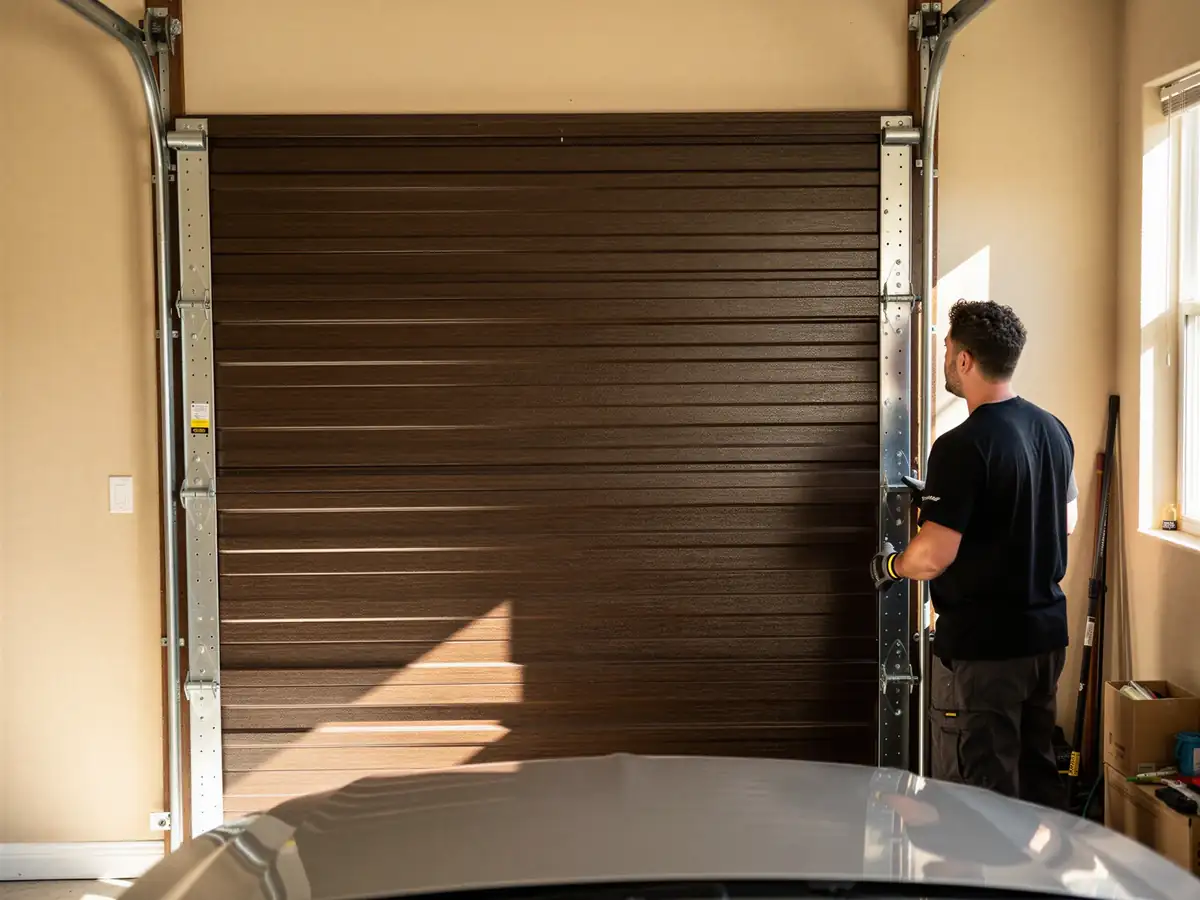
Most Corcoran houses were built around 1984, which lines up with the broader pattern across this service area - housing from the late 1950s through the mid-2000s, with the bulk going up in the 1980s and 90s. Doors from that era commonly run on steel track with roller brackets fastened straight to the jamb, not the adjustable track-and-stud mounts you see on newer builds. When one of those brackets works loose or a roller jumps the rail, the door doesn't just stick - it can bind hard enough to warp the track itself if someone keeps hitting the opener button. We see that failure pattern often enough on 1980s-era track that it's usually the first thing we check before touching anything else.
How to Book
We work Corcoran from our Maple Grove shop
There's no separate branch or crew stationed in town, just a tech dispatched the 6 miles out. Call or request service through our Corcoran service page and tell us what the door is doing: off the track entirely, grinding partway, or stuck part-open. That detail changes what we bring on the truck.
- 6 miles
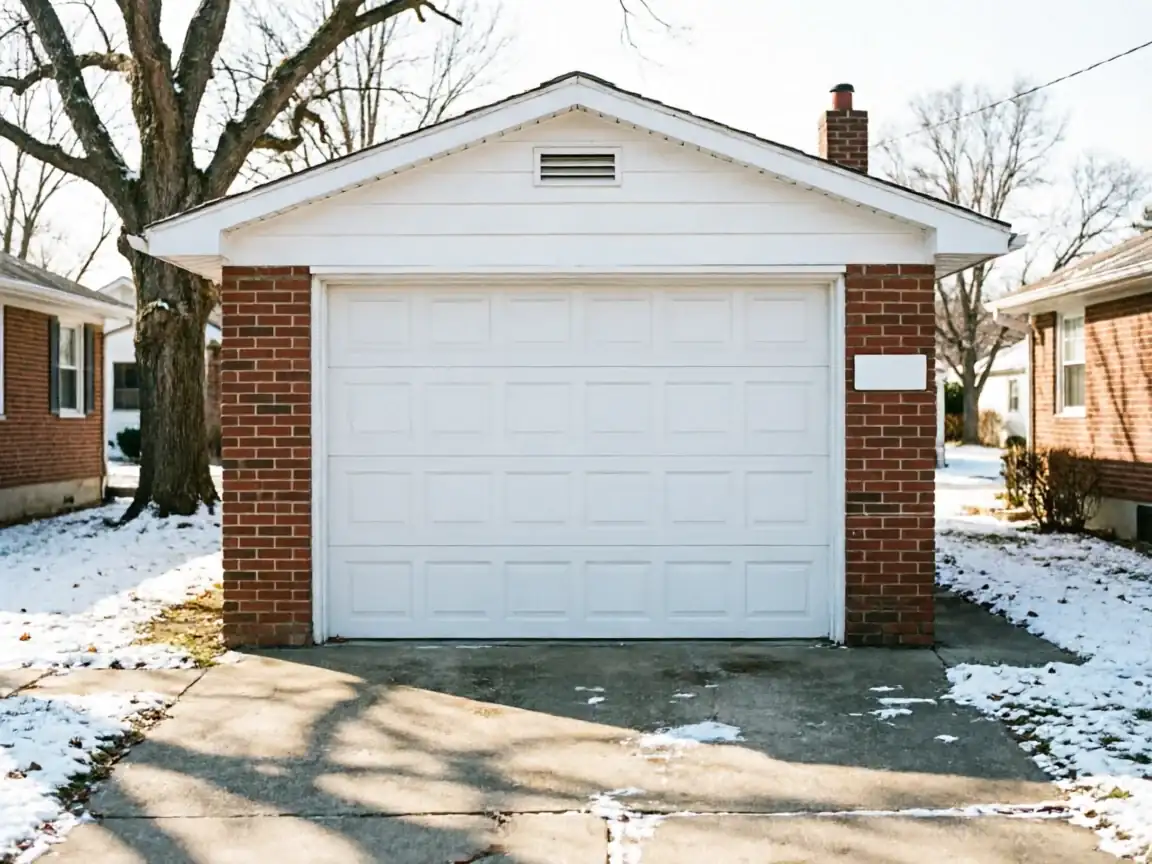
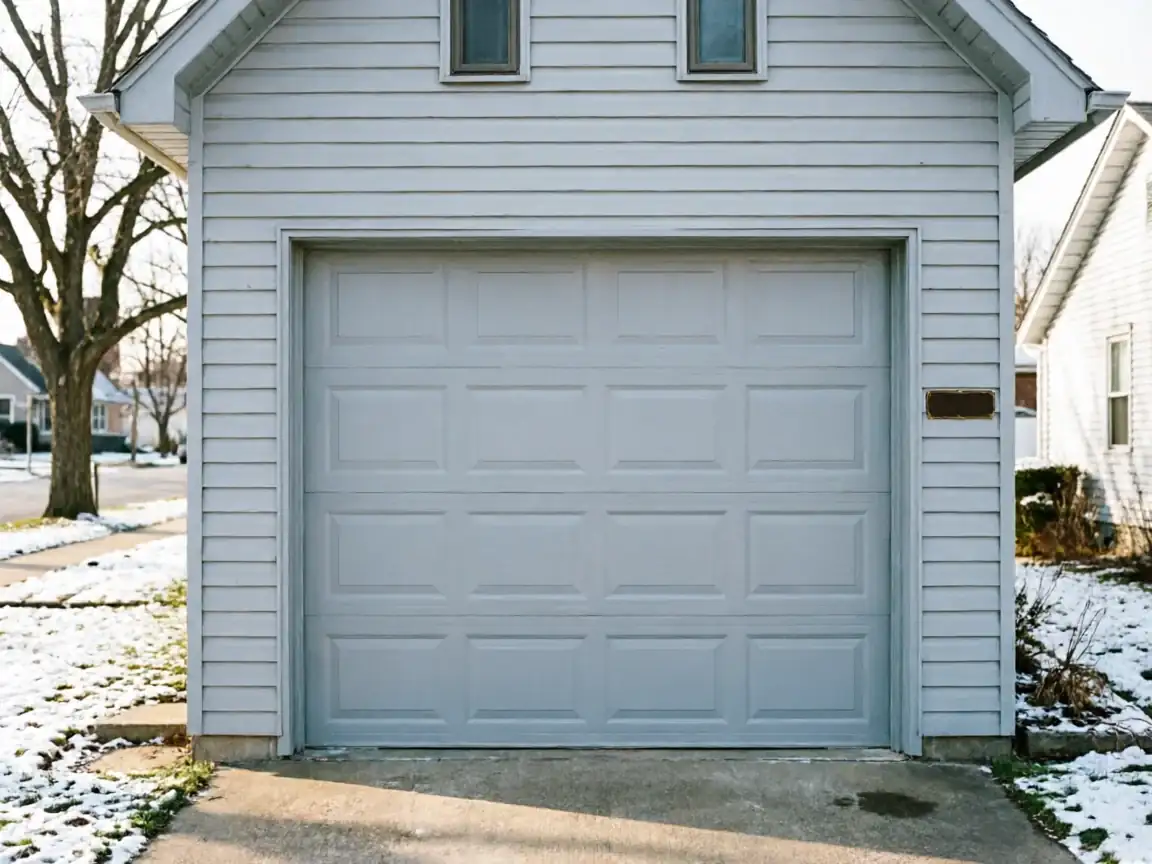
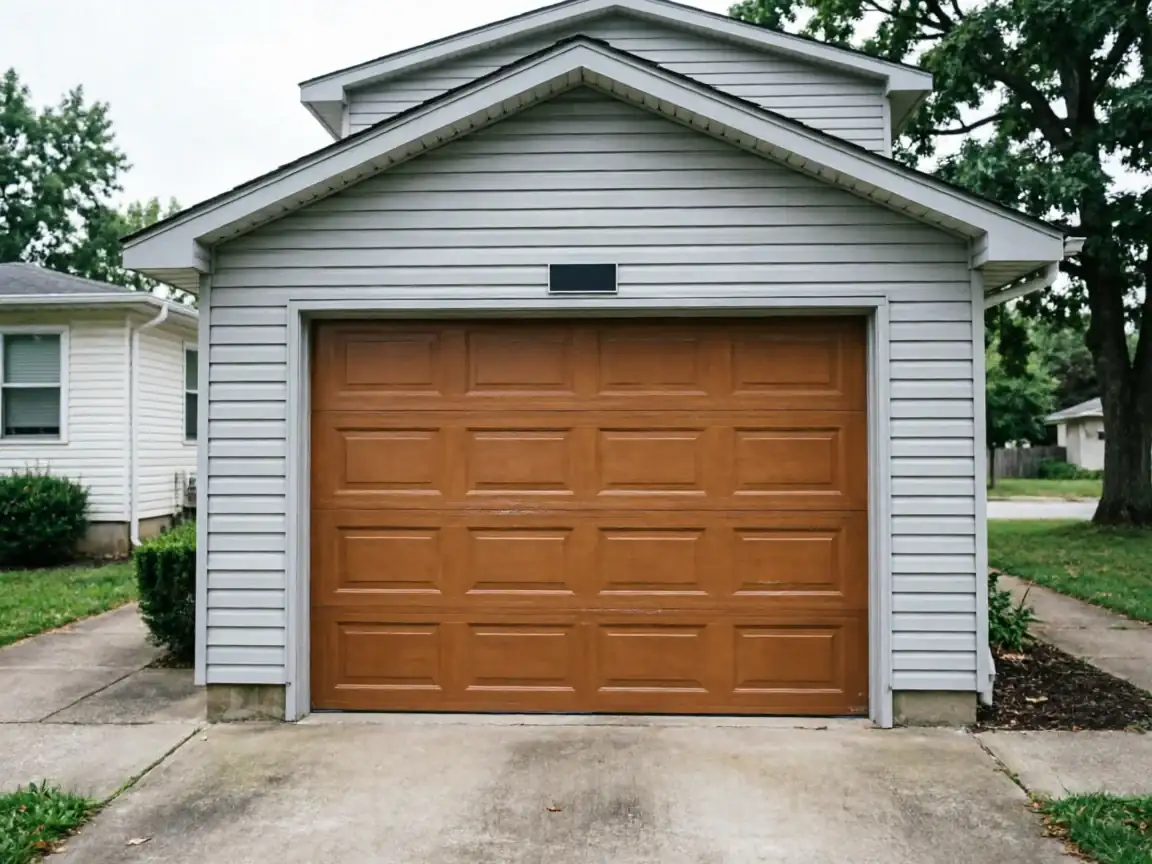
Because this area mixes town lots with larger rural parcels, give us a clear description of the garage itself
Attached, detached, pole building - when you call. It helps us show up with the right length of track stock and the right size rollers instead of guessing.
How We Fix It
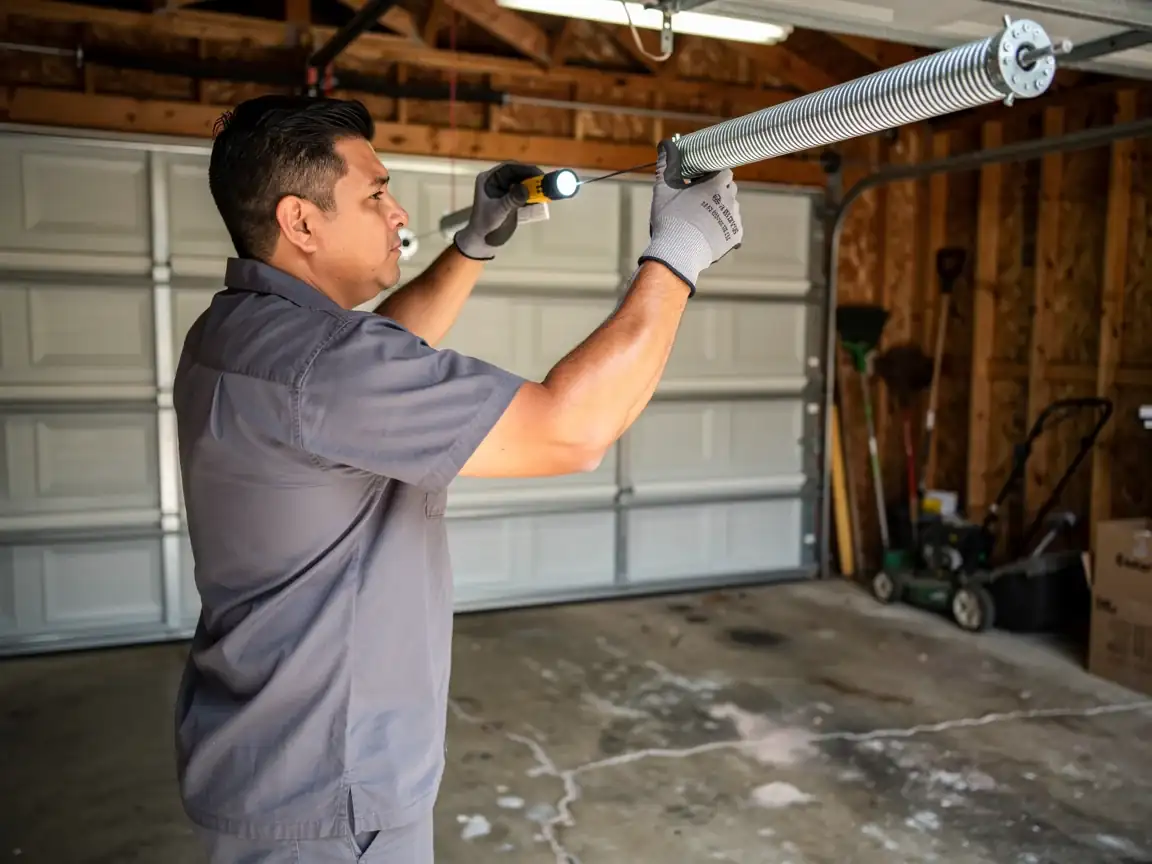
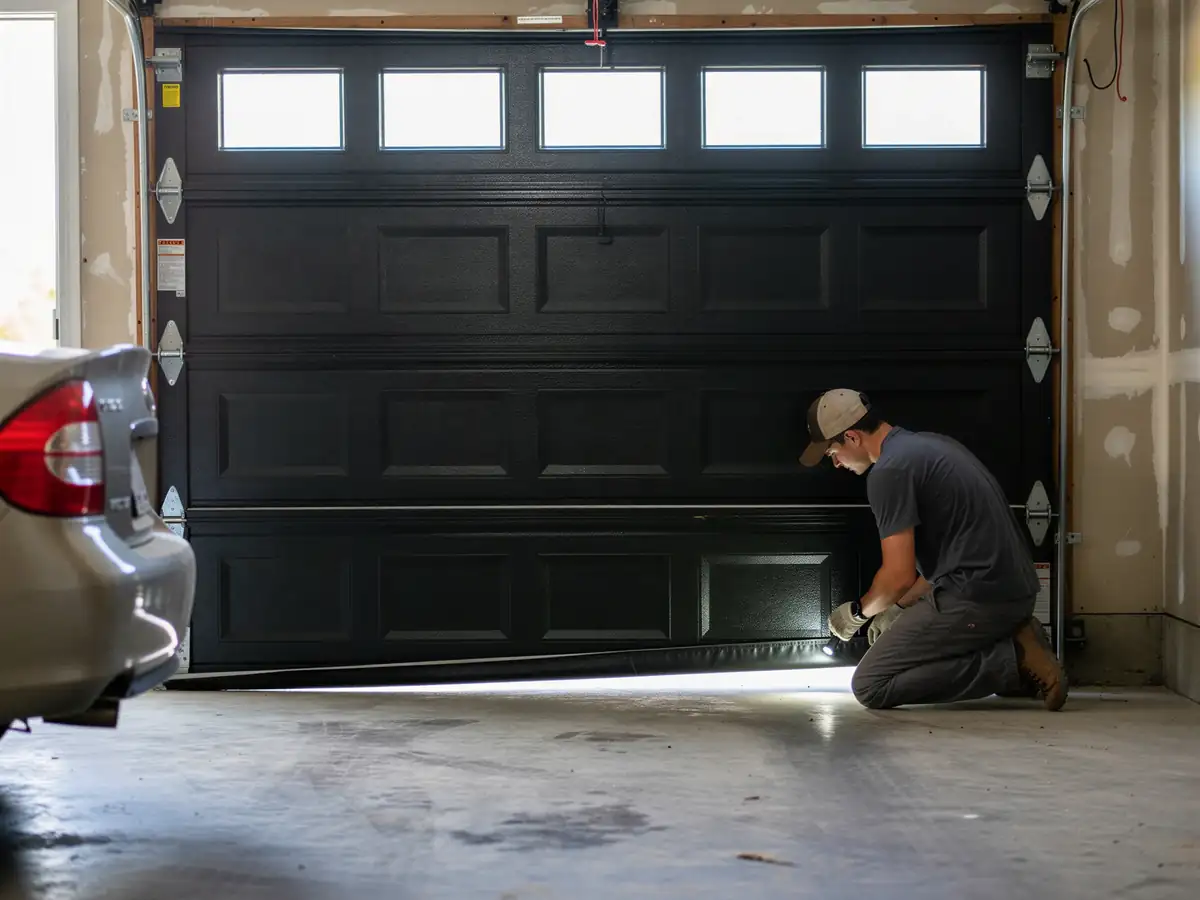
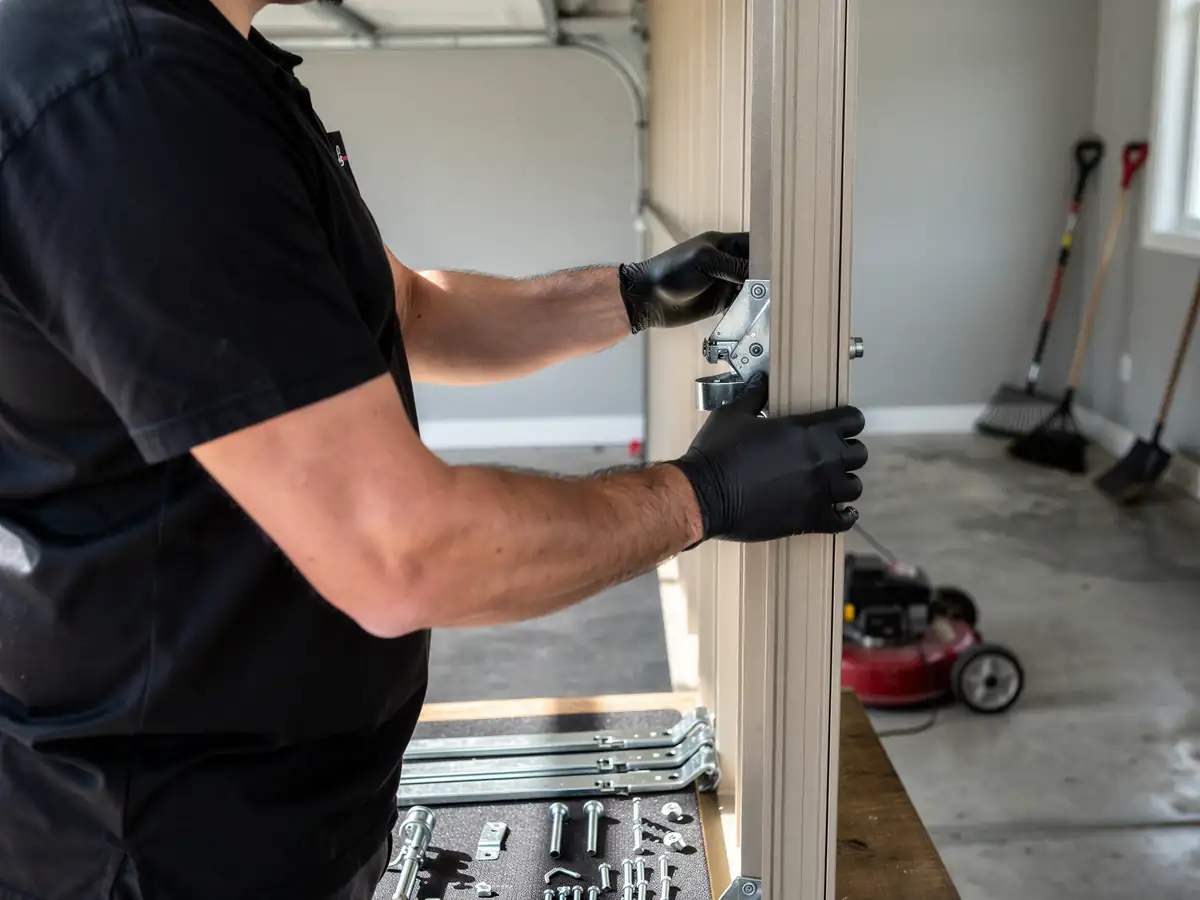
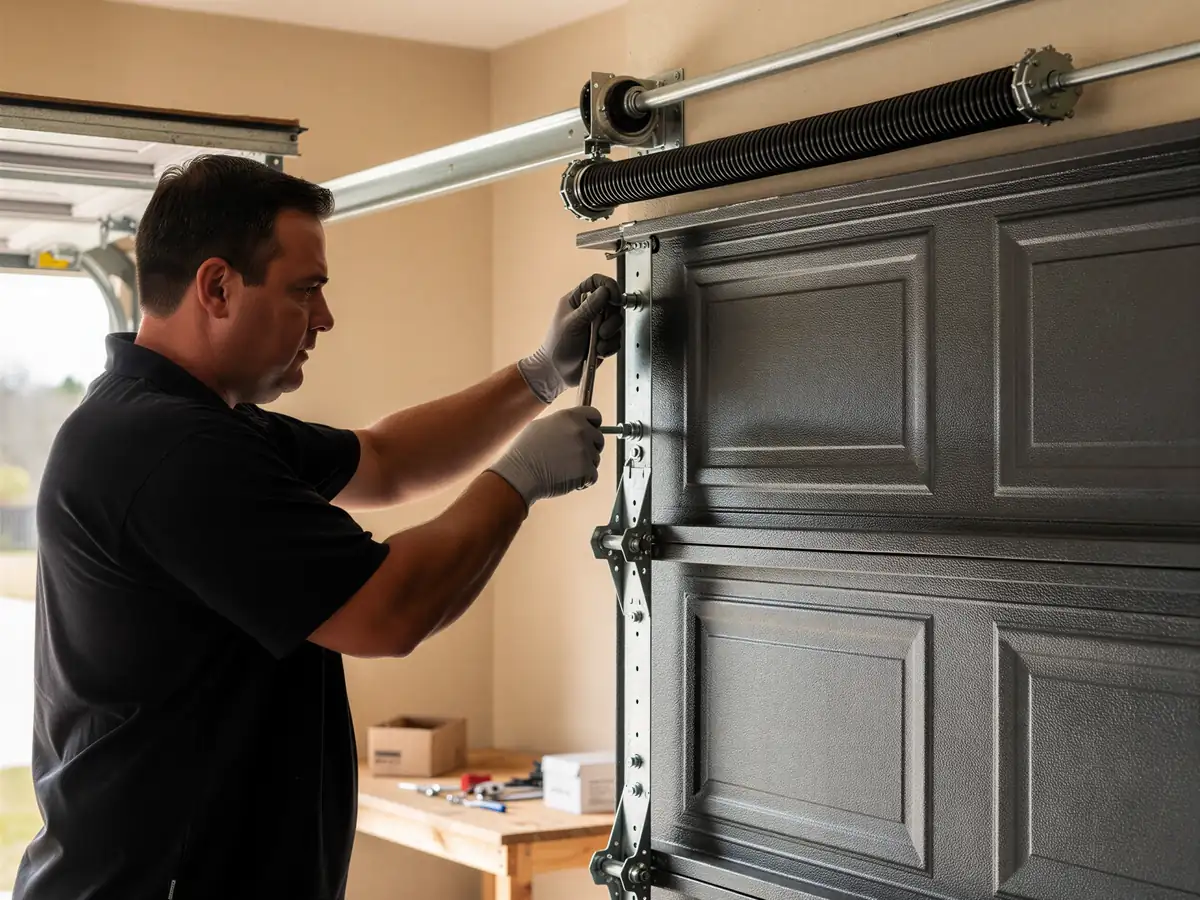
An off-track door almost always traces back to one of three things: a broken roller, a bent track, or a cable that's jumped its drum. On the 1980s-built stock common in Corcoran, we also check the track brackets themselves - original fasteners into a wood jamb loosen over three-plus decades, and a loose bracket lets the whole rail flex sideways under spring tension.
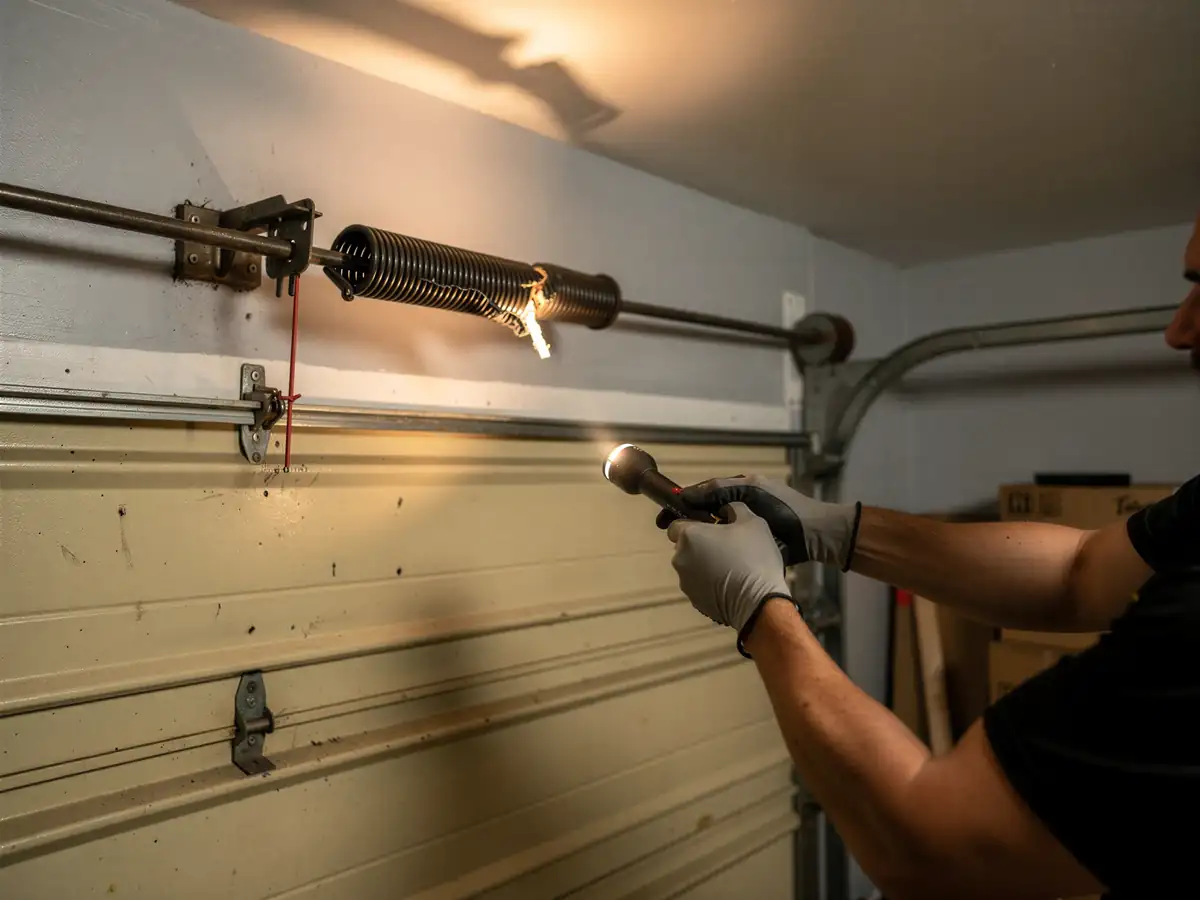
The fix depends on what's actually wrong. A jumped roller on an otherwise straight track is a short job - reseat it, check the alignment, done. A bent section of track has to be replaced, not hammered straight; a track that's been forced back into shape will jump again within weeks. If the cable came off the drum, we check the spring tension before touching the cable, because a door that dropped off-track under load often did so because a spring is already failing.
Cold-climate service area means lubricant and seal condition matter more here than in a milder region - hardened grease and a stiff bottom seal are common contributors to roller strain in winter, so we check both while we're under the door.
Can You Do This Yourself
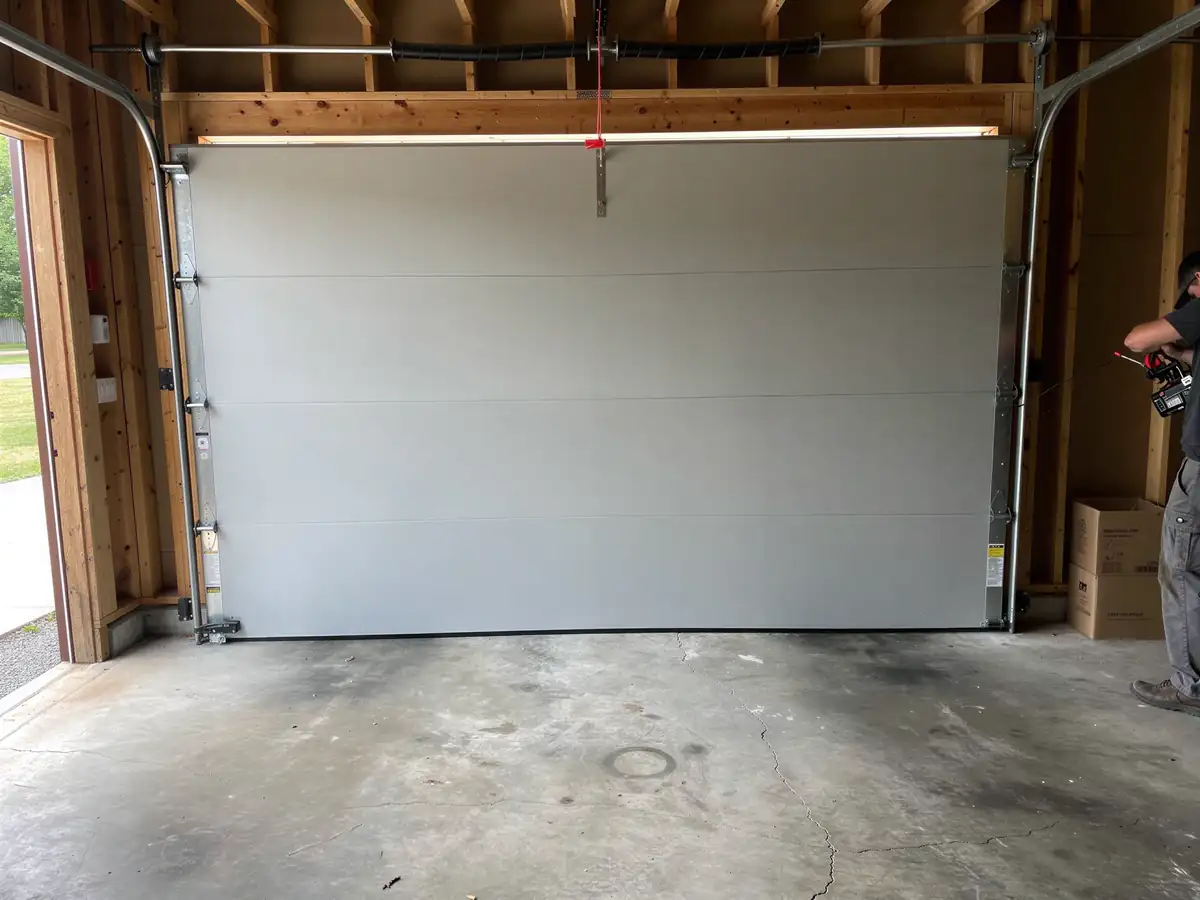
If the door is only slightly off and the opener still has slack in the chain, some homeowners can manually guide a roller back onto a straight track - carefully, with the door disconnected from the opener and supported so it can't fall. Beyond that, we'd tell you to stop.
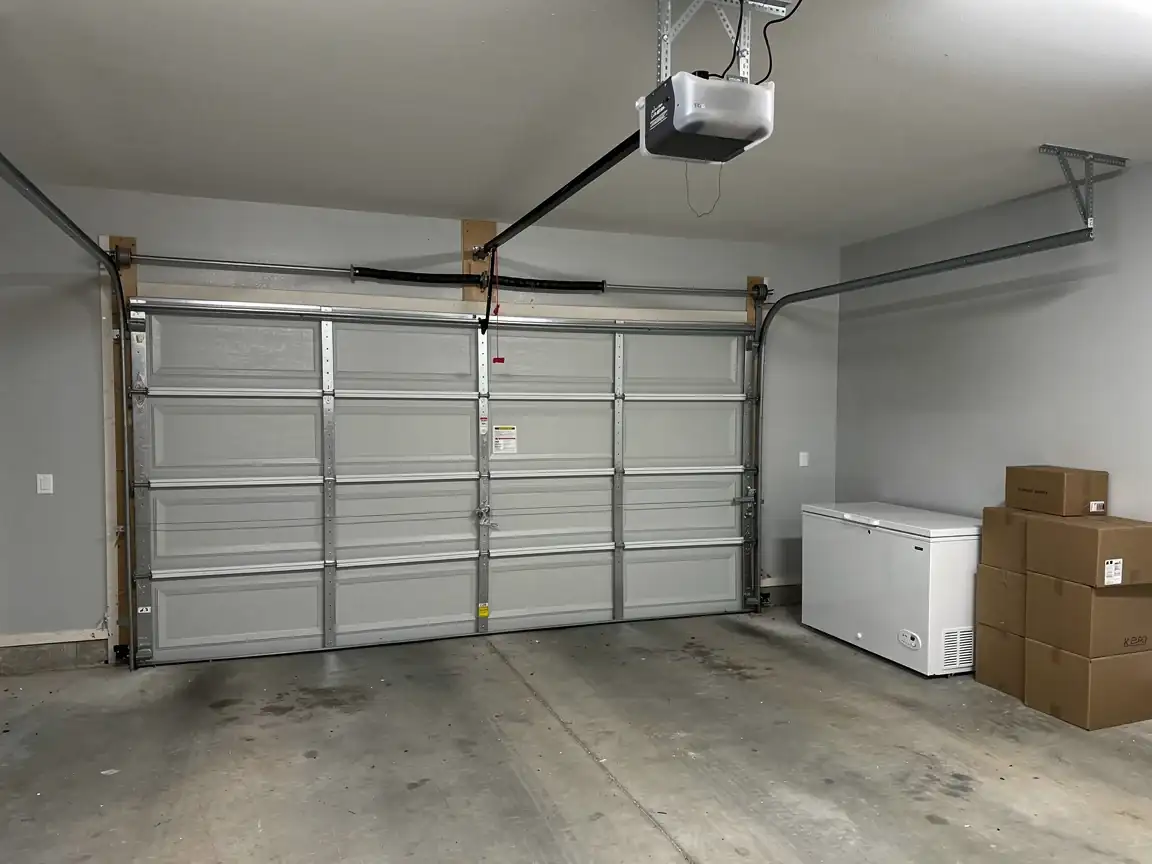
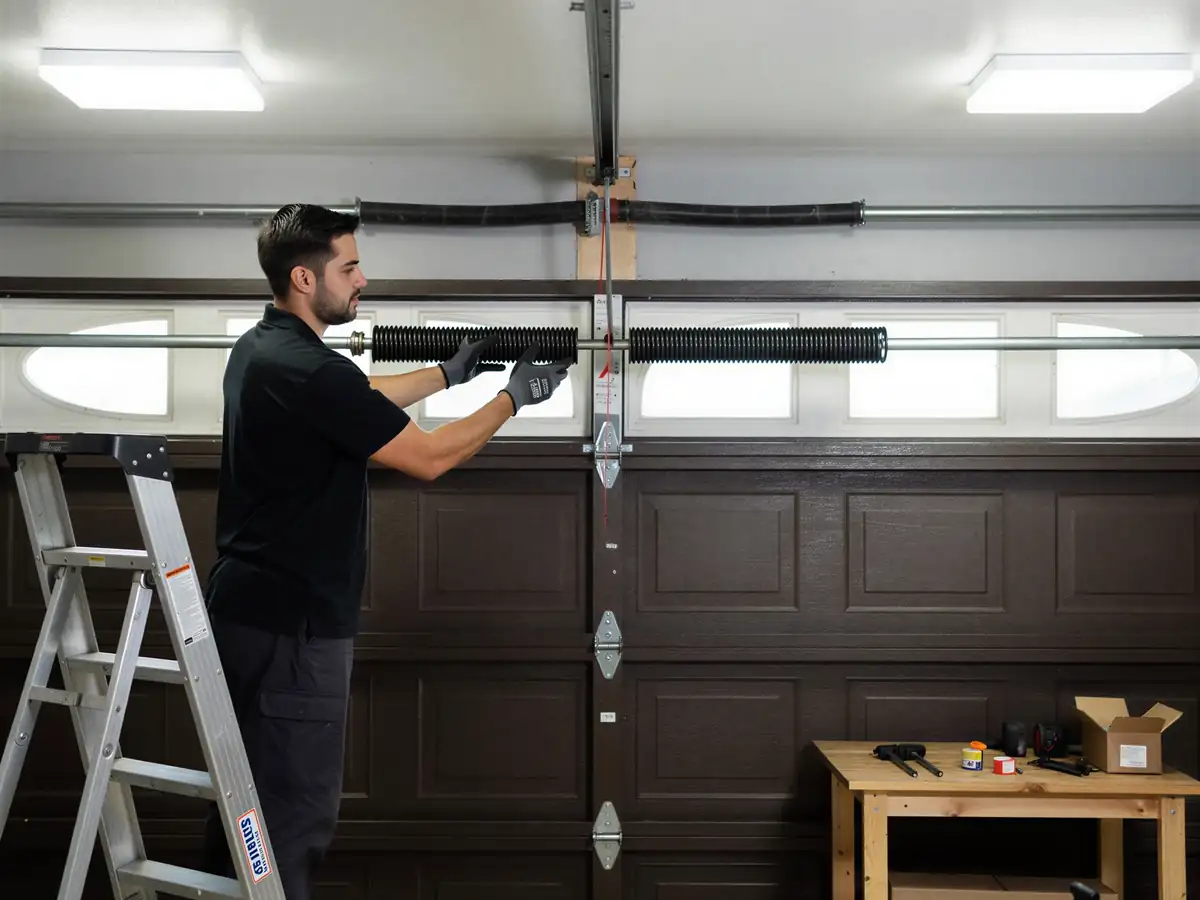
A door that's badly off-track is usually under spring tension even when it looks still, and a torsion spring on a double door holds enough force to break bones if it lets go while you're working near it. We also don't recommend forcing a bent track back into place yourself - it rarely holds, and a half-fixed door that comes off again while you're inside the garage is worse than the original problem. If you're not sure whether the issue is a simple roller or a bent rail, that's exactly the call to make before you touch it, not after.